



Description
Modular Large Diameter Pipe Cutters for PVC and PE
Product Overview
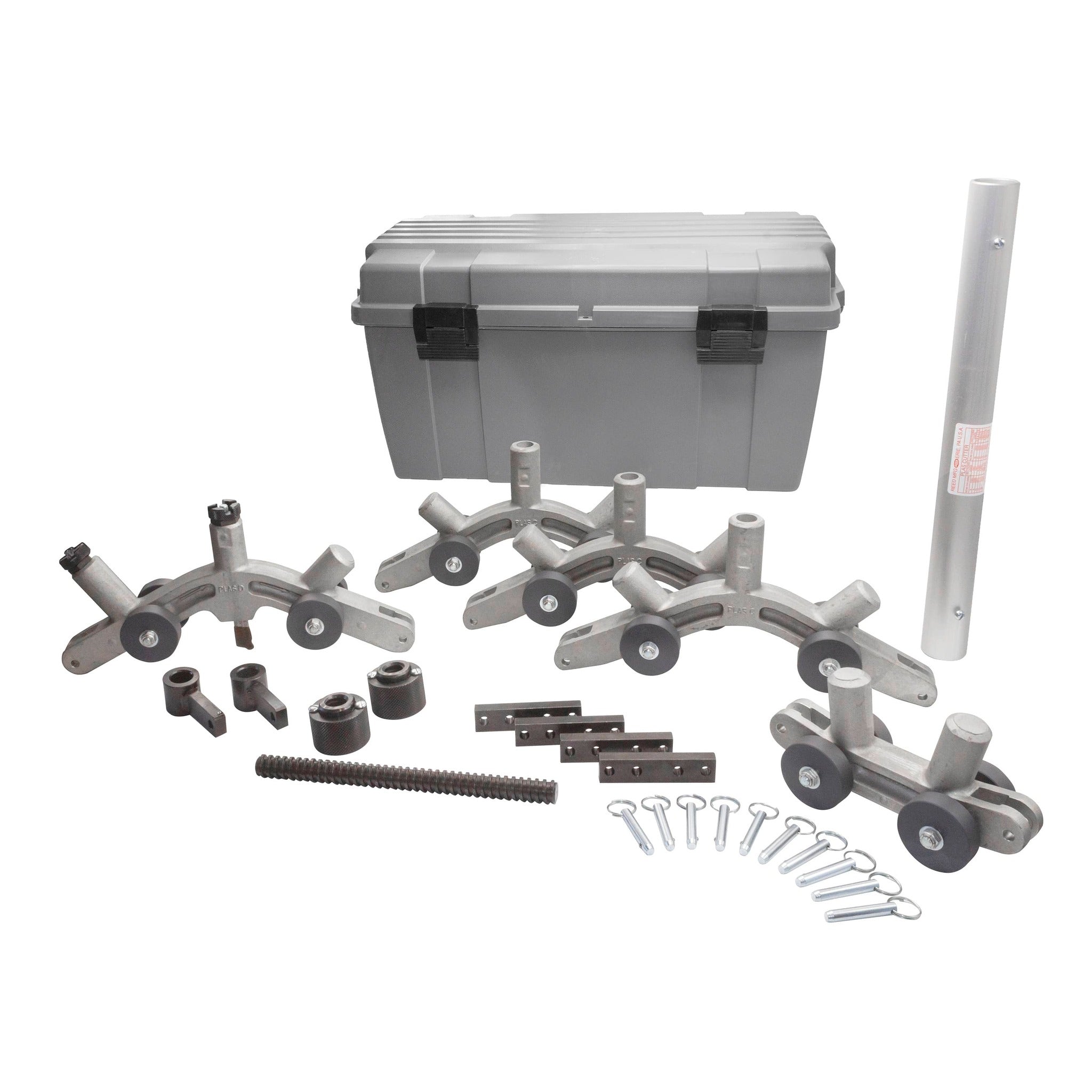
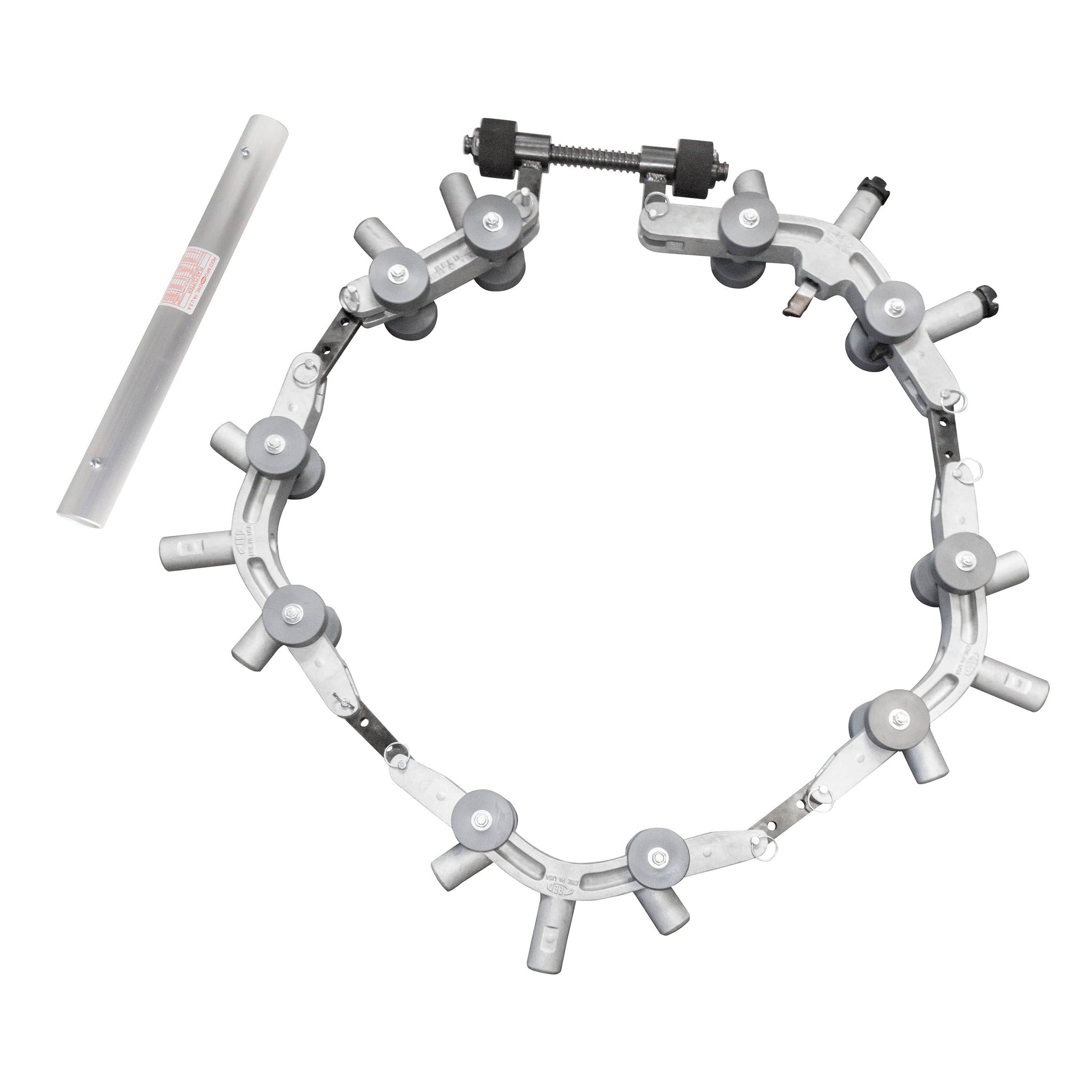
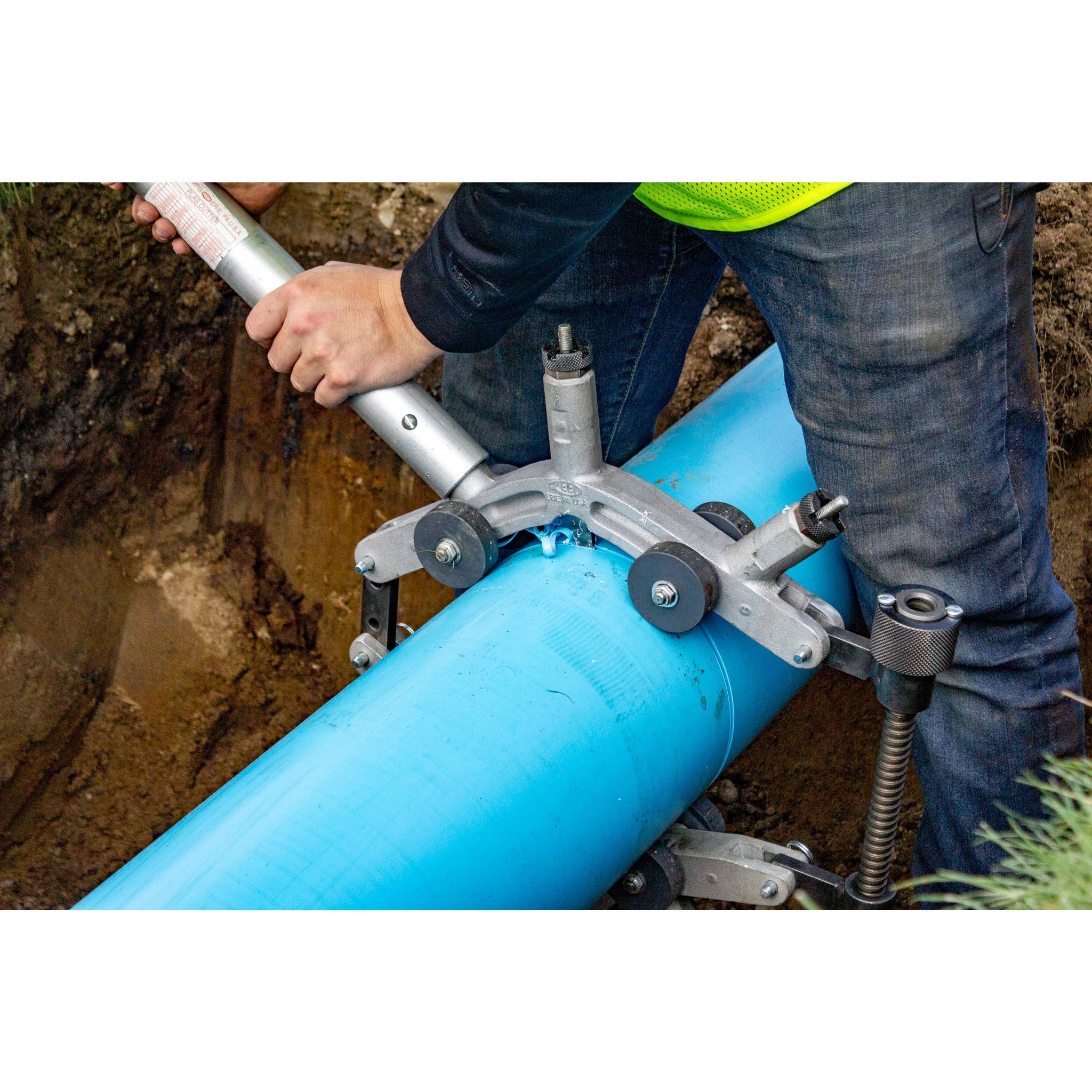
Each Reed PLAS pipe cutter uses a modular section design to cover a specific pipe size range. Sections A through D combine in different configurations: PLAS1 uses A, B, and C for 6 to 12-inch pipe, while PLAS2 uses B, two C sections, and D for 14 to 18-inch. The in-line rotary pipe cutter operates with only 6 to 8 inches of clearance.
Specifications

Key Features
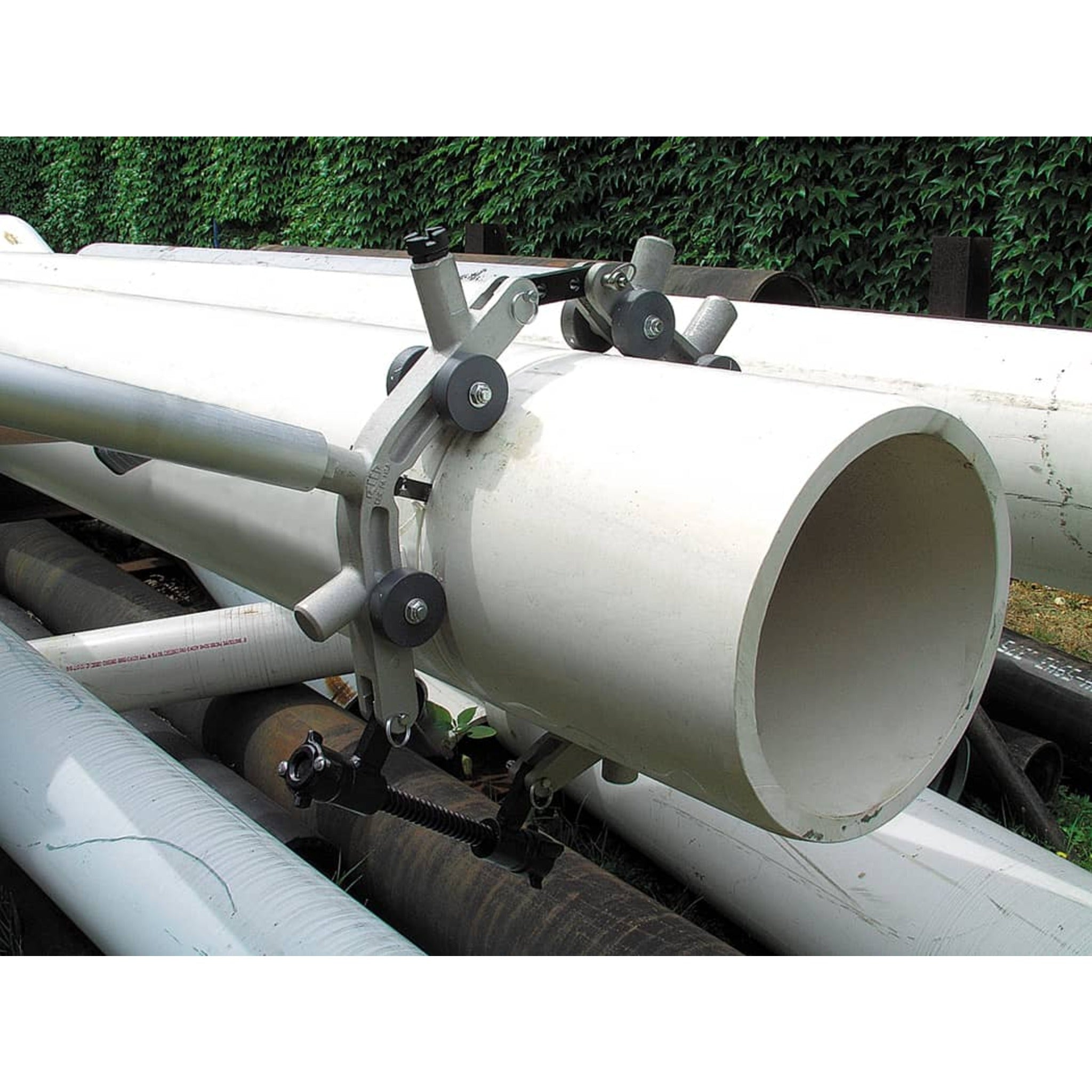
- This in-line rotary pipe cutter needs only 6 to 8 inches of clearance to rotate around the pipe. That reduces trench excavation compared to saws or snap cutters that require wider clearance.
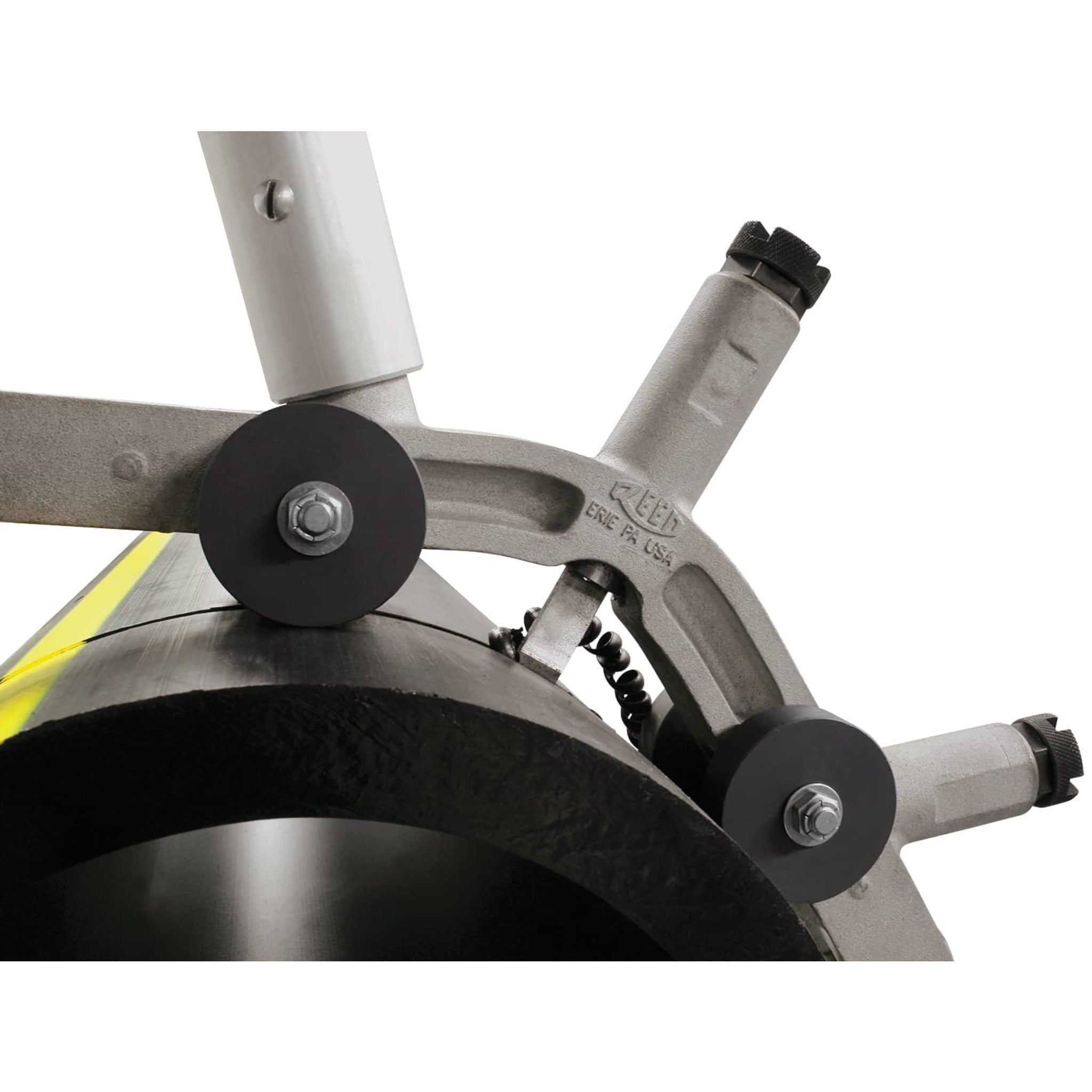
- Spring-loaded nuts on the roller assemblies let the cutter adjust to out-of-round pipe. The blade stays in contact with the pipe wall even on deformed sections, producing a clean cut without repositioning.
- Every PVC model is a cut and bevel pipe cutter. The carbide-tipped cut-off blade and optional PLAS4B bevel blade produce a 15-degree bevel on both sides of the cut in a single pass.
- Reed developed a hardened tool steel blade with a curved tip specifically for PE and HDPE pipe. The curved tip drives chips away instead of packing them, making this an effective HDPE pipe cutter for polyethylene water mains and gas lines.
- Each Reed PLAS pipe cutter can convert between PVC and PE by swapping the blade. PLAS replacement blades are available for both pipe materials, so one cutter body serves PVC and PE work.
- Outboard rollers keep this rotary PVC pipe cutter aligned on the pipe during every revolution. The rollers track the pipe surface and hold the blade at a consistent contact angle for a square cut.
PVC vs PE Cutting: Blade Types and Limits
Cutting PVC and PE pipe requires different blade designs because the two materials behave differently under a rotary blade. PVC is brittle and fractures cleanly along the cut line. PE is flexible and tends to deform, producing long strands instead of chips.
The carbide-tipped PLASPVCB blade cuts PVC Schedule 40, C900, C905, and CPVC up to a 2-inch wall thickness. On PVC models (PLAS1 and PLAS2), this blade pairs with the optional PLAS4B bevel blade to produce a 15-degree angle on both sides of the cut. This cut and bevel pipe cutter configuration eliminates the separate beveling step that saws require.
The hardened tool steel PLASPEB blade has a curved cutting tip that drives chips away from the cut. This design works with PE and HDPE, which deform rather than fracture. The PLAS1PE is an HDPE pipe cutter for pipe up to 12 inches with a maximum 2-inch wall thickness. The PLAS2PE handles 14 to 18-inch PE, with wall thickness limits of 2 inches at 14-inch pipe and 1.5 inches at 18-inch pipe.
Feed rate also differs between materials. PVC cuts best at a maximum one-quarter turn of the feed handle per revolution. PE allows one-quarter to one-half turn per revolution. Over-feeding either material risks blade damage or a rough cut edge.
Any PLAS in-line rotary pipe cutter can switch between PVC and PE by installing the alternate blade. No other modifications are needed. The cutter body, sections, and rollers are the same for both pipe materials.
Applications
A Reed PLAS pipe cutter handles water main, sewer, and transmission line work across municipal, utility, and industrial settings.
- Cutting PVC water mains (C900 and C905) during tie-ins, pipe breaks, and new installations. The 6 to 8-inch clearance lets crews cut in narrow trenches without widening the excavation.
- Cutting PE and HDPE mains for municipal water systems and gas distribution. The PLAS1PE and PLAS2PE use a hardened tool steel blade matched to polyethylene's flexibility and chip behavior.
- Transmission line work on PVC or PE pipe where a square cut is required for fusion or mechanical joints. A large diameter pipe cutter like the PLAS maintains alignment through outboard rollers for joint-ready pipe ends.
- In-trench repairs where the pipe cannot be removed. This in-line rotary pipe cutter produces no dust and drops chips at the cut rather than blowing debris into the line.
- Above-ground fabrication and stockpile cutting where crews need a portable plastic pipe cutter that produces consistent square and bevel cuts across multiple pipe sizes.
Buy Reed PLAS Pipe Cutters Online from Cleanflow
Cleanflow Utility Supply Company is an authorized Reed dealer serving customers across Canada and the United States. Free shipping on orders over $199, with a 30-day return policy. Email info@cleanflow.ca for returns or exchanges. The Reed PLAS pipe cutter line covers 6 to 18-inch PVC and PE pipe with four models on one modular platform.
Browse the full pipe tools collection at Cleanflow.
Frequently Asked Questions
What is an in-line rotary pipe cutter?
An in-line rotary pipe cutter wraps around the pipe and rotates a blade that scores progressively deeper until the pipe parts. Reed PLAS models need only 6 to 8 inches of clearance, making them a practical plastic pipe cutter for trench work on 6 to 18-inch pipe.
What is the difference between PLAS1 and PLAS2?
The difference between PLAS1 and PLAS2 is pipe size range. PLAS1 covers 6 to 12-inch pipe using sections A, B, and C at 52 lbs. PLAS2 covers 14 to 18-inch pipe using sections B, C, C, and D at 57 lbs. Both come in PVC and PE versions.
How do you cut PVC pipe in a trench?
Clamp a rotary PVC pipe cutter around the pipe, rotate it one full revolution, and advance the feed handle a quarter turn. Repeat until the blade cuts through the wall. A Reed PLAS in-line rotary pipe cutter needs only 6 to 8 inches of clearance around the pipe.
What is the best pipe cutter for large diameter PVC?
For PVC above 6 inches, a large diameter pipe cutter that wraps around the pipe and cuts in place produces the cleanest results. The Reed PLAS pipe cutter handles 6 to 18-inch PVC with a 2-inch maximum wall thickness and simultaneous beveling.
Is a rotary pipe cutter better than a saw for PVC?
A rotary pipe cutter vs saw depends on pipe size and location. For pipe above 6 inches in a trench, a rotary cutter produces a squarer cut with no dust. For smaller pipe above ground, Reed plastic pipe saws offer faster cuts.
Video Guide
Manuals & Documentation
How-To Articles

Similar Products
Featured collection


