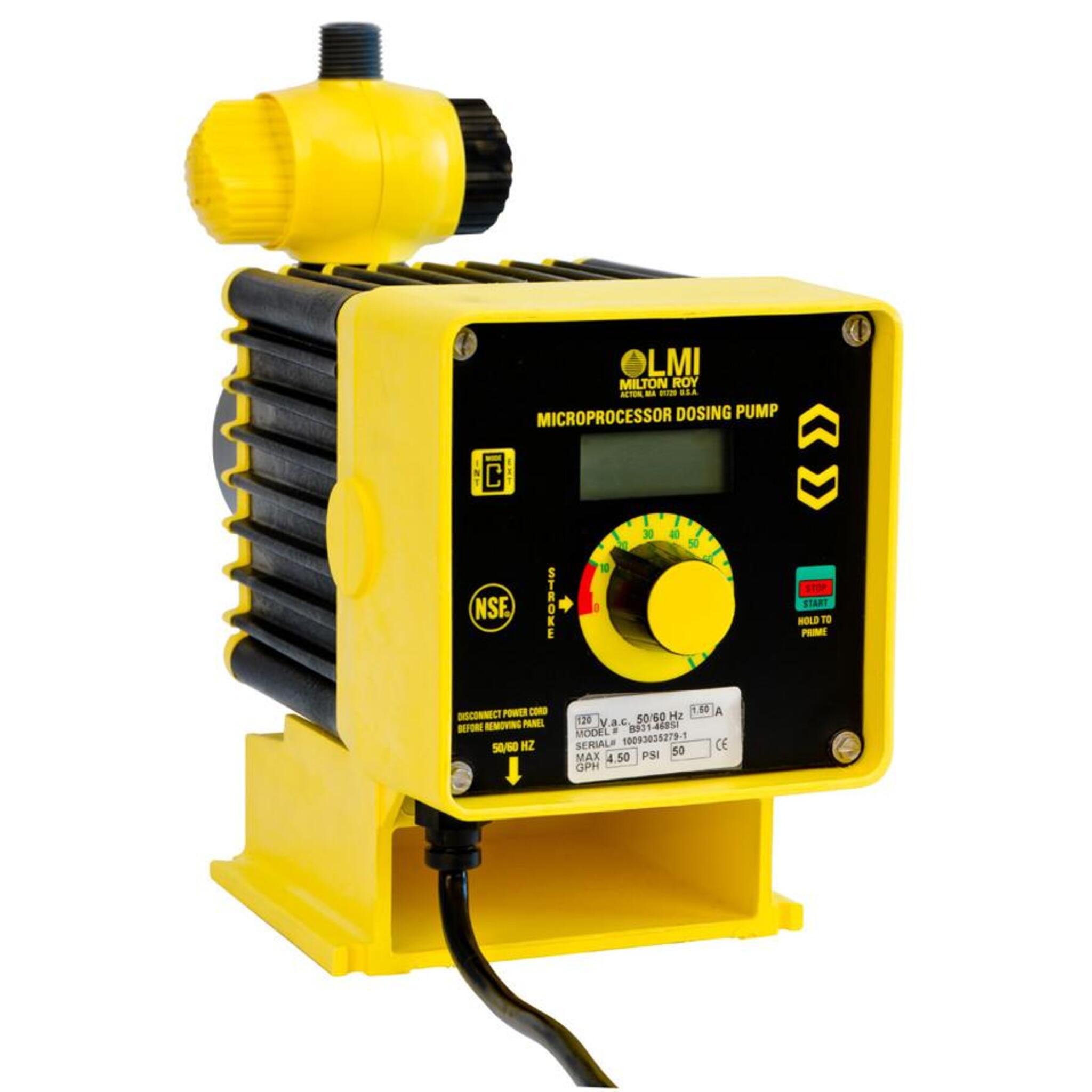
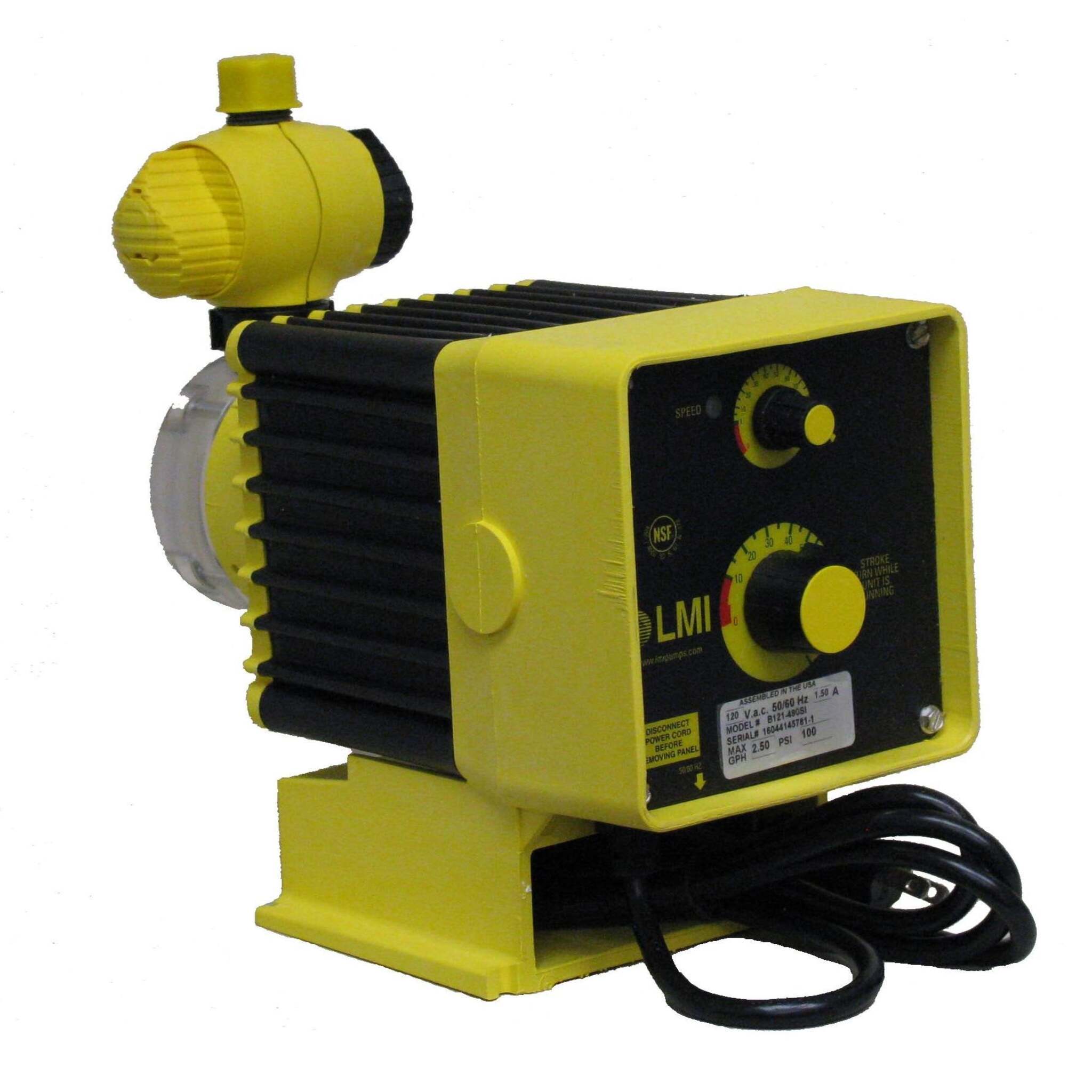
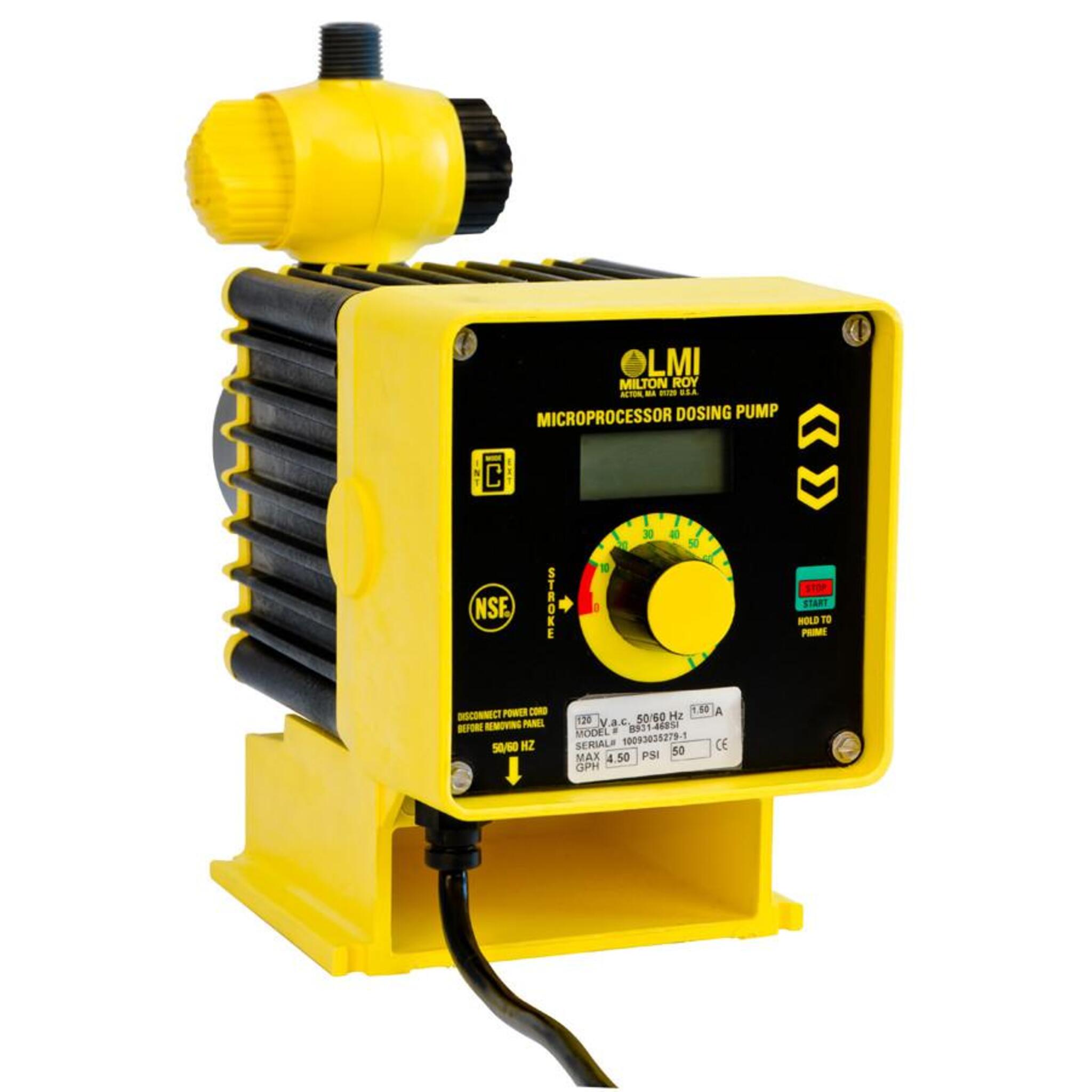
A chemical injection pump puts a measured amount of chemical into a pressurized line on every stroke, through an injection valve or a quill. Call it a chemical dosing pump, and you are describing the same machine by what it is set to deliver. Three things decide which one you need: the chemical, the pressure at the point of injection, and the signal that tells the pump how fast to run.
Cleanflow stocks chemical injection pumps from Chem-Tech, Pulsafeeder, LMI, and MEC-O-MATIC. All of them are electric chemical injection pumps, 115 or 230 V. There are no pneumatic or solar oilfield pumps here. Injection valves, foot valves, liquid ends, and rebuild kits are for chemical metering pumps.
Choose by the Chemical
Sodium hypochlorite and chlorine
Liquid chlorine for water treatment is sodium hypochlorite, and it gives off gas inside a pump head. In a standard diaphragm pump, that gas collects, the head loses prime, and the dose stops.
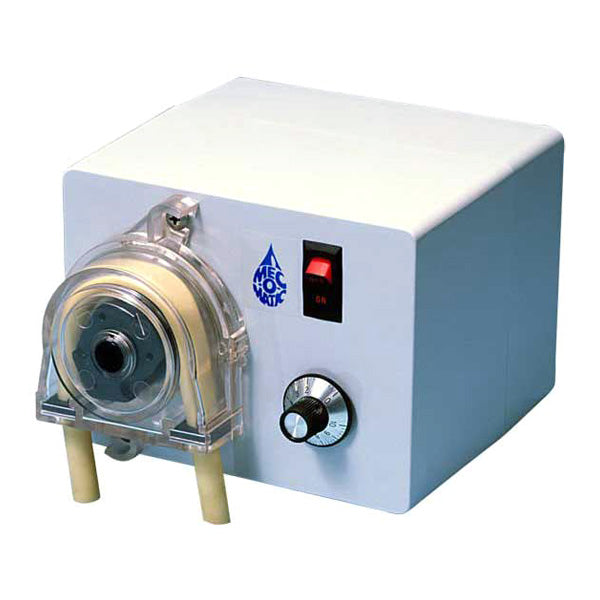
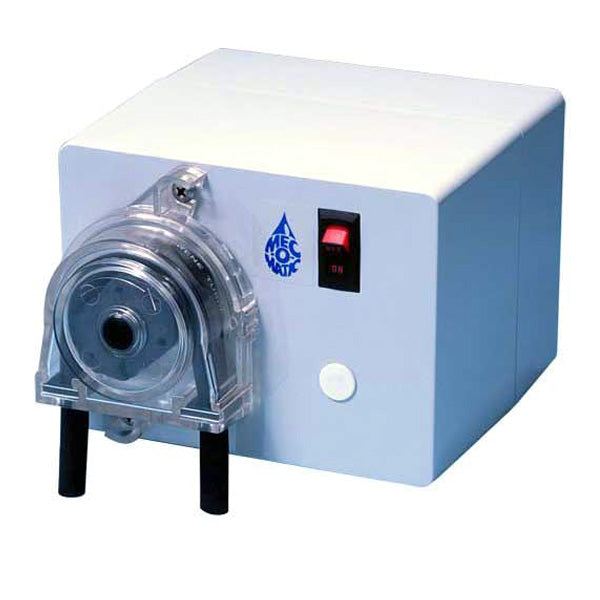
Two designs get around it. A peristaltic pump pushes gas and liquid through the tube together: the Chem-Tech XP and XPV, and the MEC-O-MATIC Dolphin and VSP.
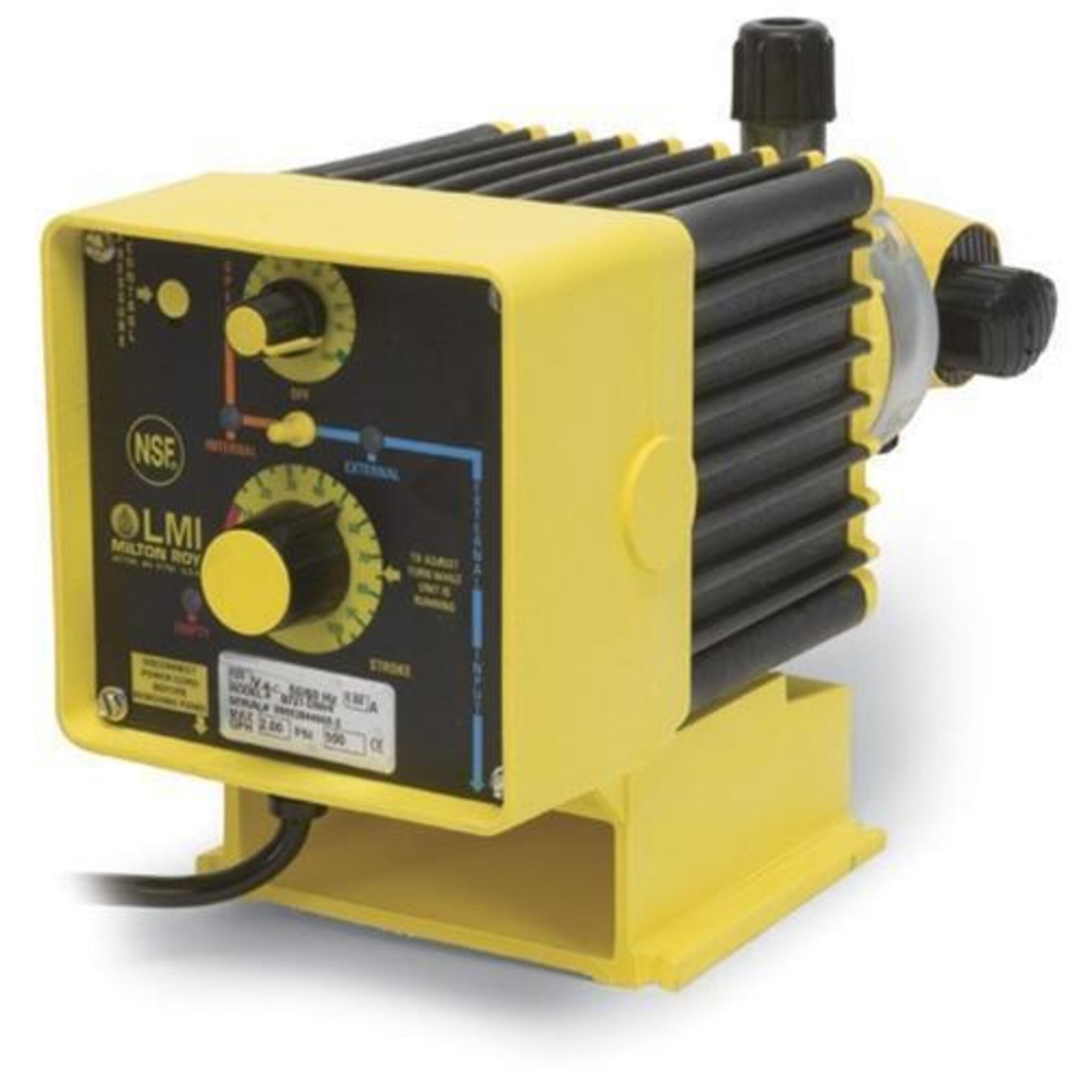
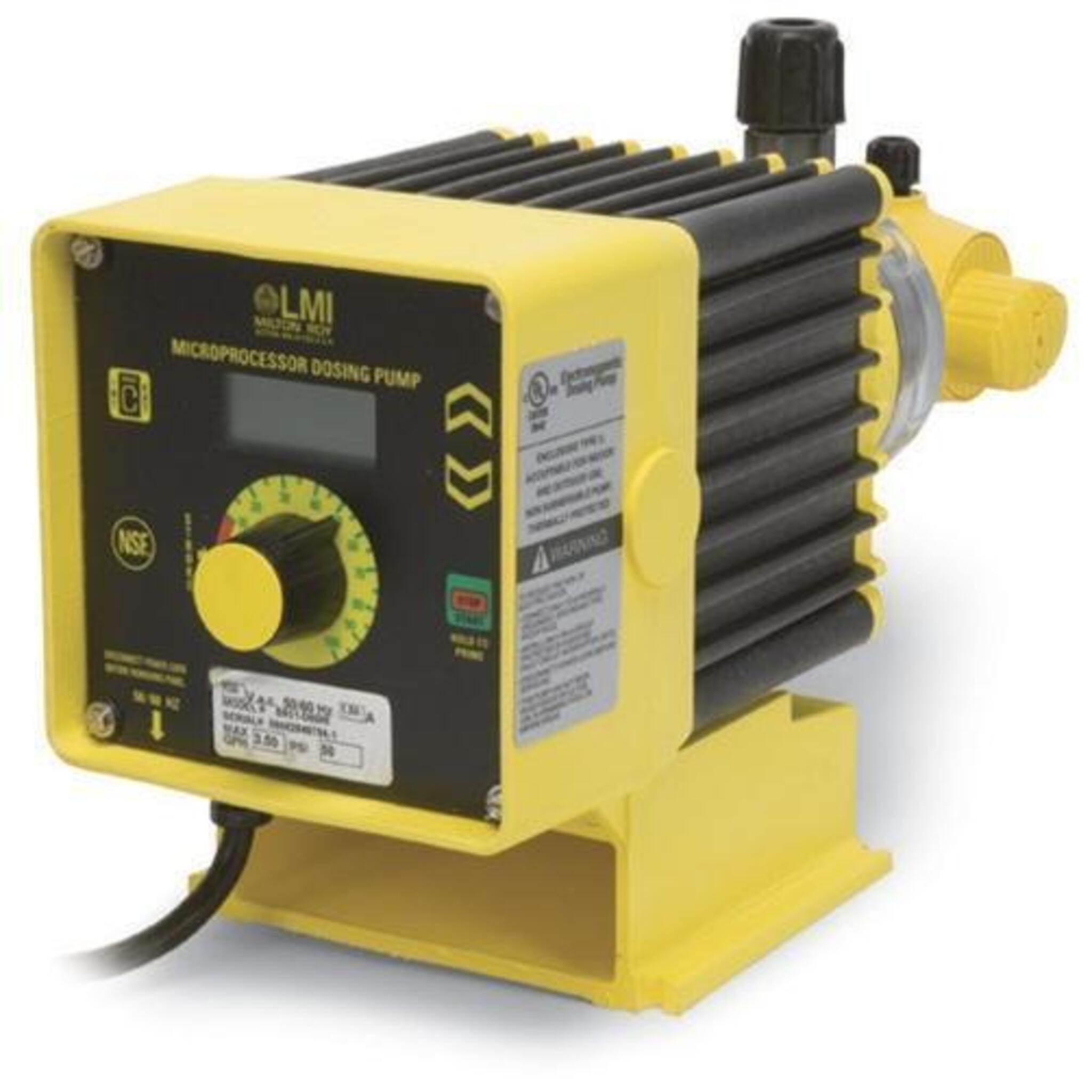
A degassing head vents the gas back to the tank: the Chem-Tech Series 100 Degas, the LMI C HI and B9 HI, the LMI B series in its chlorine-handling version, and the Pulsafeeder degassing head conversion kit for a PULSAtron already installed.
Any of them will hold a chlorine residual; choose between them on pressure and control below.
Acids, caustics and corrosion inhibitors
These do not off-gas, so the question is what touches the chemical. Pulsafeeder builds the PULSAtron C Plus and E Plus with glass-filled polypropylene, PVC or PVDF heads and PTFE-faced diaphragms. LMI's B and C series use clear acrylic heads with PVDF valve cartridges. The Chem-Tech XP and XPV run a Norprene tube as standard and a Fluran tube where Pulsafeeder calls for more chemical resistance.
Check your chemical against the manufacturer's compatibility chart for the head, the balls, the seats and the tube, then choose the pump.
pH, coagulant and other low-pressure feeds
Where the line pressure is low, a peristaltic pump with a simple speed control gives an accurate dose at the lowest cost. The MEC-O-MATIC Dolphin runs 13 to 97 GPD and the VSP 12 to 20 GPD, both at 25 PSI. For a steady, fixed dose at up to 100 PSI, the motor-driven Chem-Tech Series 100 covers 3 to 30 GPD.
Choose by Pressure and Flow
The pump has to beat the pressure at the injection point with margin, and on every model the pressure rating falls as the flow rises, so read both figures at the point you need. The table lists each pump on this page with its range as the manufacturer publishes it. High-pressure chemical injection pumps, for lines above 125 PSI, are the PULSAtron E Plus and the LMI B and C models at their smallest flows.
| Pump |
Type |
Flow |
Maximum pressure |
Control |
| Chem-Tech XP (low or high pressure tube) |
Peristaltic |
4 to 80 GPD |
25 to 125 PSI by model |
Fixed, adjustable with 20:1 turndown, water meter pulse, or 7-day timer |
| Chem-Tech XPV (low or high pressure tube) |
Peristaltic, variable speed |
8 to 100 GPD |
25 to 125 PSI by model |
100:1 turndown; 4-20 mA, Hall effect or water meter input |
| Chem-Tech Series 100 |
Mechanical diaphragm |
3 to 30 GPD |
100 PSI |
Adjustable stroke |
| Chem-Tech Series 100 Degas |
Mechanical diaphragm, degassing head |
15 to 100 GPD |
100 PSI; 60 PSI on the 100 GPD model |
Adjustable stroke |
| PULSAtron C Plus |
Solenoid diaphragm |
6 to 30 GPD |
80 PSI |
Stroke rate and length dials; external pace optional |
| PULSAtron E Plus |
Solenoid diaphragm |
3 to 600 GPD |
300 PSI on the smallest models, 20 PSI on the largest |
Dials standard; 4-20 mA or external pacing optional |
| LMI Two Dial B |
Solenoid diaphragm |
1.6 to 7.0 GPH |
150 PSI on the smallest model, 30 PSI on the largest |
Two dials; standard or chlorine-handling liquid end |
| LMI Two Dial C |
Solenoid diaphragm |
2.5 to 20 GPH |
150 PSI on the smallest model, 25 PSI on the largest |
Two dials |
| LMI B9 |
Solenoid diaphragm |
1.6 to 7.0 GPH |
150 PSI on the smallest model |
4-20 mA, LCD |
| LMI C9 |
Solenoid diaphragm |
2.5 to 20 GPH |
150 PSI on the smallest model |
4-20 mA |
| LMI C HI |
Solenoid diaphragm, auto-degassing |
2.3 to 7.8 GPH |
150 PSI on the smallest model |
Two dials |
| LMI B9 HI |
Solenoid diaphragm, auto-degassing |
1.4 to 6.8 GPH |
150 PSI on the smallest model |
4-20 mA |
| MEC-O-MATIC Dolphin |
Peristaltic |
13 to 97 GPD |
25 PSI |
1 to 100 percent timer |
| MEC-O-MATIC VSP |
Peristaltic, variable speed |
12 to 20 GPD |
25 PSI |
Speed knob |
The Pulsafeeder degassing head kit converts a PULSAtron of up to 30 GPD for hypochlorite service. The MEC-O-MATIC flow indicator and Viton tube kit are accessories for the Dolphin and VSP.
Choose by Control
There are three ways to set the dose.
-
Manual. Dials or a knob hold one rate until you change it. The C Plus, the two-dial LMI pumps, the XP, the Dolphin, and the VSP.
-
Water-meter pulse. The pump takes a contact from a water meter and doses in proportion to flow. The XP pulse-input model, and a PULSAtron fitted for external pacing.
-
4-20 mA. The pump follows a controller that reads a chlorine residual or a pH value. The E Plus, the LMI B9, C9 and B9 HI, and the XPV, which also accepts a Hall effect or water meter signal.
If the process flow varies through the day, a pulse or 4-20 mA pump keeps the dose right. If it does not, a manual pump is enough.
Where Chemical Injection Pumps Go
The same chemical injection pumps do four jobs.
-
Water treatment. Chlorination and pH correction at a municipal plant, a wastewater plant or a private well.
-
Boilers and cooling towers. Scale and corrosion inhibitor into feedwater and recirculating loops.
-
Agriculture. Fertigation and nutrient dosing through irrigation lines.
-
Industry. Process chemical feed on a production line and in power generation. Chemical injection pumps for oil and gas at up to 300 PSI, for inhibitor, biocide, and scale control on surface lines. These are electric pumps, not pneumatic or solar wellhead injectors.
Pulsafeeder lists all of these for every line stocked here. The pump is the same across them; the chemical, the pressure, and the signal pick the model.
The Four Brands
Pulsafeeder PULSAtron solenoid diaphragm pumps carry the widest pressure range on the page and NSF 61 on their PVDF and PVC degassing-head models. KOPkits and valves are in the Pulsafeeder collection.
Chem-Tech is Pulsafeeder's water-conditioning line: the peristaltic XP and XPV, certified by the WQA to NSF/ANSI/CAN 61 and 372, and the mechanical diaphragm Series 100. Tubes, grease, and KOP kits are in the Chem-Tech collection.
LMI, from Milton Roy, makes solenoid diaphragm pumps in two-dial and electronic versions, with auto-degassing chlorine models. Liquid ends and valves are in the LMI collection.
MEC-O-MATIC is Pulsafeeder's low-pressure peristaltic line for chlorine, pH, and coagulant feed.
Chemical Injection Pumps for Sale in Canada and the USA
Every chemical injection and dosing pump on this page ships from our Winnipeg warehouse across Canada and the USA, with free shipping on orders over $199, a 30-day return or exchange window through our returns portal, and each manufacturer's warranty. Send the chemical, the dose, the process flow, and the pressure at the injection point to info@cleanflow.ca or call 1-866-335-1078, and we will size the pump.
Chemical Injection and Dosing Pump FAQs
What is a chemical injection pump?
A positive displacement pump that delivers a set volume of chemical on each stroke into a line that is already under pressure, through a spring-loaded injection valve that stops the line from flowing back. The dose is set by stroke length, stroke rate, or motor speed, and it holds that dose whether the line pressure changes or not.
Which type of pump is most commonly used for chemical injection systems?
The diaphragm pump, solenoid-driven at the flows in the table above and motor-driven where a fixed dose is needed at higher flow. A peristaltic pump is chosen instead where the chemical off-gasses, as sodium hypochlorite does, or where the line pressure is low and simple speed control is enough.
What industries use chemical injection pumps?
Water treatment, agriculture, oil and gas, power generation, and industrial manufacturing, with the same pumps used across all of them.
Are these chemical injection pumps resistant to corrosive chemicals?
Each is offered in materials for a range of chemicals, but no single build suits every chemical. Match the head, balls, seats, and tube to your chemical on the manufacturer's compatibility chart before you order.
How do I select the right pump for my application?
Chemical first, then the pressure at the injection point, then the control signal. The three sections above take each in turn, and every product page carries the full specification.
Do these chemical dosing pumps require regular maintenance?
Yes. A diaphragm pump needs its liquid end inspected and its diaphragm and valve seats replaced on the schedule in the manual; a peristaltic pump needs its tube replaced. Both need the injection valve kept clear.
Are replacement parts available?
Yes. Liquid ends, injection and foot valves, peristaltic tubes and rebuild kits for every brand here are in chemical metering pumps.
Is a chemical injection pump different from a chemical dosing pump?
No. An injection pump is named for where the chemical goes, into a pressurized line through an injection valve; a chemical dosing pump is named for how much it delivers. Both are metering pumps, which is the engineering name, and both are sized the same way.