








Don't see the part you need?
We can supply much more than what's listed here, including the full range of the brands we carry. Send us the part or model number and we'll get back to you with a quote.


What are Chemical Metering Pumps?
Chemical metering pumps are precision devices used to deliver controlled amounts of chemicals into systems across industries such as water treatment, agriculture, and industrial processing. Designed to handle a variety of chemicals like acids and disinfectants, these pumps move a set volume on every stroke of a diaphragm or every turn of a peristaltic roller, driven by a solenoid or a motor.
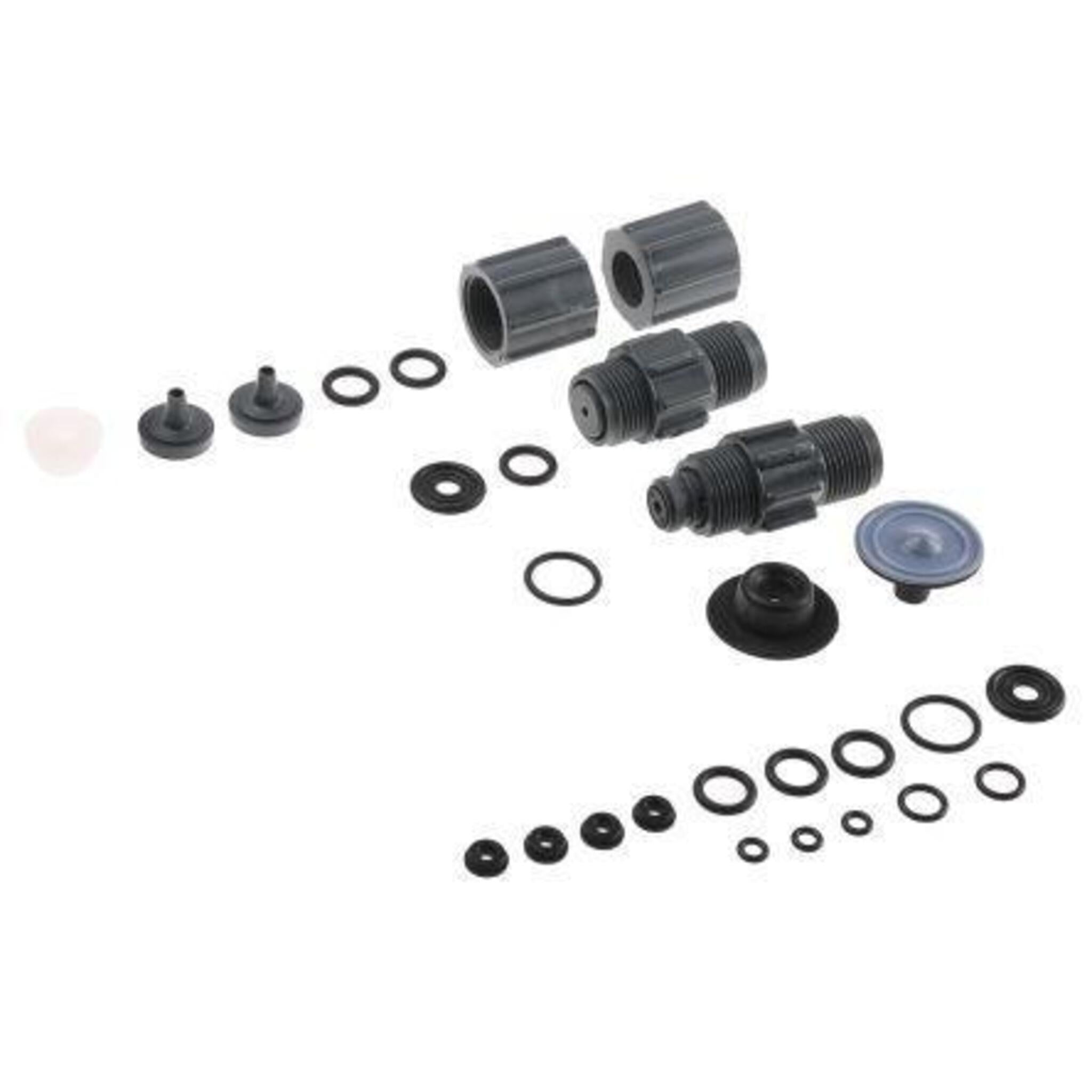
This collection is Cleanflow's full range of chemical pumps and the parts that keep them running: LMI, Pulsafeeder, Chem-Tech, ProMinent and MEC-O-MATIC pumps, plus liquid ends, injection valves and quills, foot valves, tubing fittings, KOP rebuild kits, calibration cylinders and relief valves.
To compare only the pumps, sized by the dose they deliver, see chemical injection and dosing pumps.
Types of Chemical Metering Pumps
- Solenoid diaphragm pumps: A solenoid pulses a PTFE-faced diaphragm; stroke length and stroke rate set the dose. The Pulsafeeder PULSAtron C Plus (6 to 30 GPD at 80 PSI) and E Plus (3 to 600 GPD, 20 to 300 PSI, optional 4-20 mA control) and the LMI B and C series (1.6 to 20 GPH, up to 300 psi on the smallest C models) are this type. They cover the widest pressure range on the page.
- Mechanical diaphragm pumps: A gear motor drives the diaphragm for steady output over long duty. The Chem-Tech Series 100 delivers 3 to 30 GPD at 100 PSI; its degassing versions reach 100 GPD at 60 PSI and are built for sodium hypochlorite.
- Peristaltic pumps: Rollers squeeze a Norprene or Fluran tube, so the chemical touches only the tube; the pump self-primes, and off-gassing chemicals pass through without vapour lock. The Chem-Tech XP (4 to 80 GPD, 25 to 125 PSI) and XPV (8 to 100 GPD, 100:1 turndown) and the MEC-O-MATIC Dolphin (13 to 97 GPD at 25 PSI) and VSP (12 to 20 GPD) are this type.
Factors to Consider When Selecting a Chemical Metering Pump
- Flow Rate and Pressure Requirements: Select a pump that meets the specific flow rate and operating pressure demands of the application. The pump must be capable of delivering the required chemical dosage accurately and consistently.
- Chemical Compatibility: Ensuring chemical compatibility is essential to prevent pump damage and maintain efficient operation. Since chemicals vary in properties such as corrosiveness, viscosity, and reactivity, the pump’s construction materials, including the diaphragm, valves, and seals, must be resistant to the chemicals being handled.
- Accuracy and Precision: For applications requiring precise dosing, such as water treatment or laboratory processes, the pump must deliver consistent and repeatable doses. This ensures the correct chemical concentration is achieved, avoiding issues like overdosing or underdosing.
- Maintenance and Reliability: Choose pumps that are easy to maintain and have readily available spare parts. Regular maintenance and inspections help ensure reliable performance and extend the pump’s operational lifespan.
Wetted Materials: Match the Pump to the Chemical
The parts a chemical metering pump wets include the head, fittings, check valve balls and seats, and the diaphragm or tube. Each brand offers them in a range of materials, and the right pump is the one whose wetted set matches the chemical on its manufacturer's compatibility chart.
- Heads and fittings: glass-filled polypropylene, PVC or PVDF (Kynar) on PULSAtron C Plus and E Plus, with 316 stainless steel heads available; clear PVC, PVC, polypropylene or 316 stainless on Chem-Tech Series 100.
- Diaphragms: PTFE-faced with a CSPE backing on PULSAtron; CSPE, Viton or PTFE-faced on Chem-Tech Series 100.
- Balls and seats: ceramic, PTFE, 316 stainless or Alloy C balls with PTFE, CSPE or Viton seat O-rings on PULSAtron.
- Peristaltic tubes: Norprene as standard on Chem-Tech XP and XPV, Fluran where Pulsafeeder calls for greater chemical resistance; Norprene or Viton on MEC-O-MATIC Dolphin.
- Suction and discharge tubing: clear PVC, white polyethylene or PVDF on PULSAtron; clear PVC, white or black polyethylene on Chem-Tech Series 100.
For sodium hypochlorite, the material question comes with a second one: the chemical off-gasses, so choose a peristaltic pump or a degassing head regardless of the material.
Explore Chemical Metering Pumps and Parts at Our Canadian Warehouse
Pulsafeeder E Plus Automatic Control Metering Pump
The Pulsafeeder E Plus is the widest-range solenoid diaphragm pump on this page, 3 to 600 GPD and 20 to 300 PSI with 100:1 turndown, and takes a 4-20 mA signal or external pacing as an option.
LMI Two Dial B Series Chemical Metering Pump
The LMI Two Dial B Series sets stroke length and stroke rate on two dials, runs to 7.0 GPH on the largest model, and comes with a standard or a chlorine-handling liquid end.
Chem-Tech XP Low Pressure Peristaltic Metering Pump
The Chem-Tech XP Low Pressure self-primes and passes off-gassing chemicals through its Norprene tube, with adjustable models at 20:1 turndown from 4 to 80 GPD, and ships with its strainer and injection valve.
MEC-O-MATIC Dolphin Series Peristaltic Metering Pump
The MEC-O-MATIC Dolphin covers 13 to 97 GPD at 25 PSI on a Norprene or Viton tube, for chlorine and pH feed where line pressure is low.
LMI Liquipro PVDF Injection Valve Assemblies
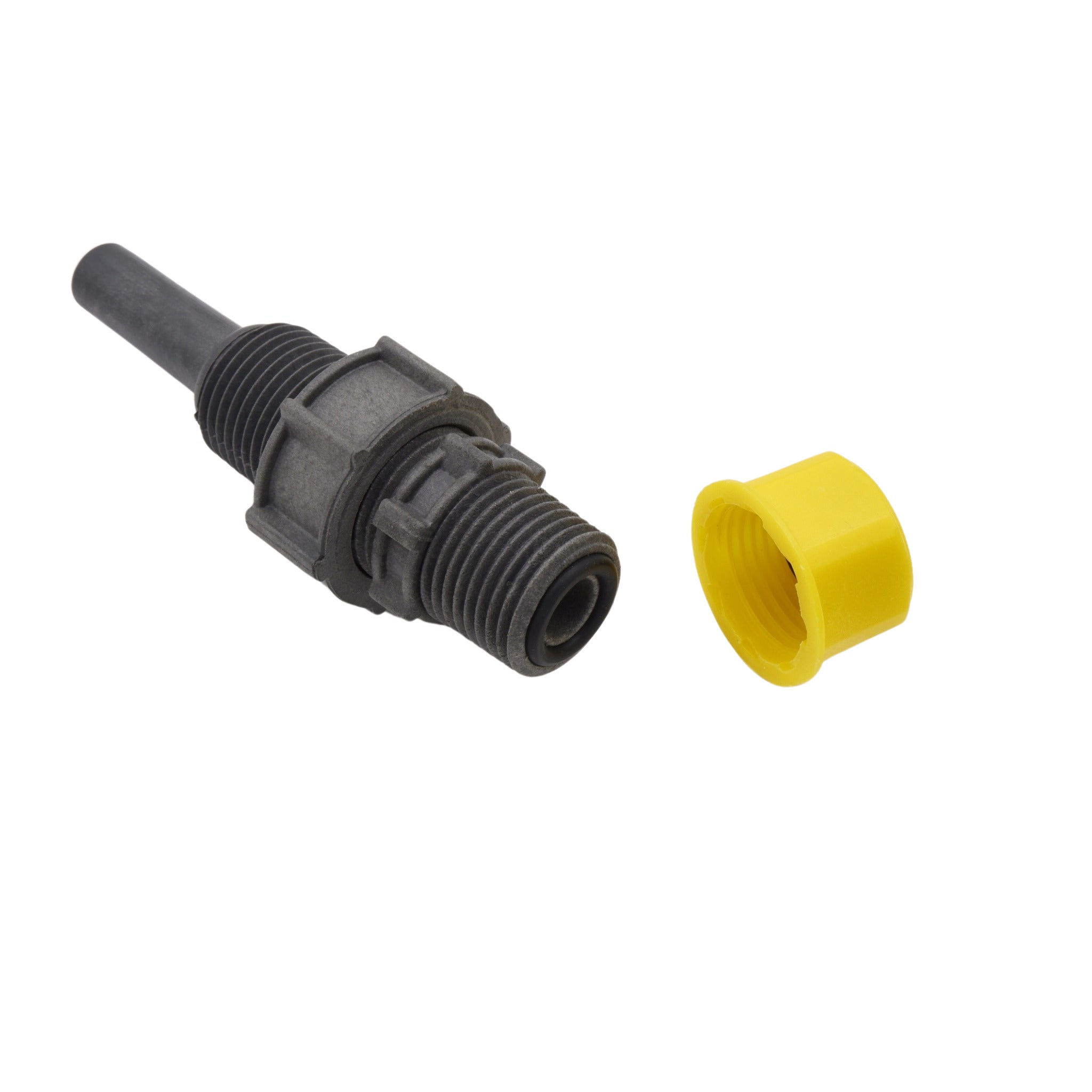
Injection valve assemblies for 1/4", 3/8" and 1/2" OD tubing, the check valve at the point where the chemical enters the line.
Chem-Tech Low Pressure Peristaltic Tubes
Replacement Norprene tubes for the XP and XPV with 1/4" fittings and pre-attached compression nuts, the one wear part a peristaltic pump has.
Koflo PVC Chemical Injection Quills
Injection quills in 1/2", 3/4" and 1" with a Viton check valve, Hastelloy spring and ceramic ball, so the chemical enters mid-stream rather than at the pipe wall.
Griffco PVC Calibration Cylinders
Calibration cylinders with a removable top, for checking a pump's delivered output against its setting on the suction side.
Shop Chemical Metering Pumps and Parts by Brand
- All the pumps, sized by dose: every pump on this page in one place, with a sizing guide.
- Chem-Tech: Pulsafeeder's XP and XPV peristaltic pumps and Series 100 diaphragm pumps, with their tubes and KOP kits.
- LMI and LMI repair parts: B and C series pumps, Liquipro and Roytronic liquid ends, injection valves, foot valves and ferrules.
- Pulsafeeder and Pulsatron repair parts: PULSAtron C Plus and E Plus pumps, KOPkits, injection, foot, and bleed valves.
- ProMinent repair parts: diaphragms, spare parts kits, tubing connectors, degassing vent and multifunction valves.
- Injection quills, calibration cylinders, corporation stops, and relief valves from Koflo and Griffco are in the grid above.
All the chemical metering pumps for sale on this page ship from our Winnipeg warehouse across Canada and the USA, with free shipping on orders over $199, a 30-day return or exchange window through our returns portal, and each manufacturer's warranty on every pump and part.
Not sure which chemical pump fits your chemical and line pressure? Call 1-866-335-1078 or email info@cleanflow.ca with the chemical, the flow, and the pressure at the injection point.
Frequently Asked Questions
1. Are chemical metering pumps suitable for corrosive chemicals?
Yes, chemical metering pumps are designed to handle a wide range of chemicals, including corrosive substances. However, it is important to select a pump with materials of construction that are compatible with the specific chemical being dosed.
2. Can chemical metering pumps handle high-pressure applications?
Yes. The Pulsafeeder E Plus is rated to 300 PSI and the LMI C series to 300 psi on their smallest models; the Chem-Tech XP and XPV peristaltic pumps reach 125 PSI. Pressure falls as capacity rises, so check the rating at the flow you need.
3. What maintenance tasks are typically required for chemical metering pumps?
Routine maintenance tasks for chemical metering pumps may include checking for leaks, inspecting and replacing diaphragms or peristaltic tubes, cleaning valves, lubricating moving parts, and verifying calibration.
4. Can chemical metering pumps be remotely controlled and monitored?
Yes, by control signal. The Pulsafeeder E Plus and the LMI B9 and C9 accept a 4-20 mA signal; the Chem-Tech XPV accepts 4-20 mA, Hall effect and contacting-head water meter inputs; the Chem-Tech XP takes pulses from a water meter. Monitoring over the internet needs a separate controller.
5. What safety precautions should be followed when working with chemical metering pumps?
When working with chemical metering pumps, it is important to wear appropriate personal protective equipment, follow proper chemical handling procedures, and have measures in place to contain and respond to spills or leaks. Additionally, it is crucial to be familiar with the specific safety guidelines outlined in the chemicals' safety data sheets (SDS).
7. How does a metering pump work?
A solenoid or a motor pushes a diaphragm, or rollers squeeze a tube, moving a fixed volume with each stroke or turn. Check valves on the suction and discharge sides keep the chemical moving one way. On a solenoid diaphragm pump, the dose is set by stroke length and stroke rate; on a mechanical diaphragm pump, by the motor-driven stroke; on a peristaltic pump by tube size and motor speed. A pulse from a water meter or a 4-20 mA signal changes the rate automatically on the models that accept one.