

Rain gear that works for a short walk may fail during a full shift at a treatment plant. The best waterproof work clothing for a plant matches the task, exposure, and cleaning procedure.
For active rounds, start with waterproof breathable workwear that can release body moisture. For washdowns and dirty jobs, a smooth PU- or PVC-coated shell may be easier to rinse or wipe. Choose a heavier ripstop shell where snagging and abrasion are common. And if the job involves treatment chemicals, confirm chemical-specific test data before relying on any garment.
What Waterproof Workwear Needs to Do in a Plant
This helps you separate basic rain protection from the protection needed near sewage or chemicals.
Operators may face rain, hose spray, standing water, and contaminated surfaces. Outdoor crews may also need high visibility around vehicles. One garment may not cover every exposure.
Start with the facility’s hazard assessment. It should identify the liquid involved, how contact could happen, and how long exposure may last. Use that information to choose waterproof PPE, gloves, face protection, and work boots as one system.
The CDC recommends liquid-repellent coveralls, waterproof gloves, and rubber boots for workers who handle human waste or sewage. It also advises removing contaminated work clothing before leaving the worksite. Gear must protect during the task and be cleanable afterward.
Waterproof vs Water Resistant Workwear
Here is what the common terms mean and why they matter on a plant floor.
Water-resistant fabric is designed to resist some water, but it may not keep the wearer dry during prolonged rain or pressurized spray.
Waterproof fabric has a coating or membrane that resists water penetration. Hydrostatic-head testing measures a fabric’s resistance to water penetration under pressure. It does not prove protection against sewage, pathogens, or treatment chemicals.
Taped or welded seams close the small openings created during garment construction. A waterproof fabric can still leak when its seams, zipper, or cuffs are not protected. When comparing a taped-seam work jacket, check whether all seams are sealed and how the front closure is covered.
DWR, or durable water repellent, is an outer finish that helps water bead and roll away. It is not the garment’s main waterproof barrier. When the finish wears down, the face fabric may absorb water and feel heavy even if the inner membrane still blocks rain.
Best Waterproof Workwear for Wastewater Operators
The picks below cover different jobs. None is the right answer for every plant.
Helly Hansen Manchester 70127 Rain Jacket
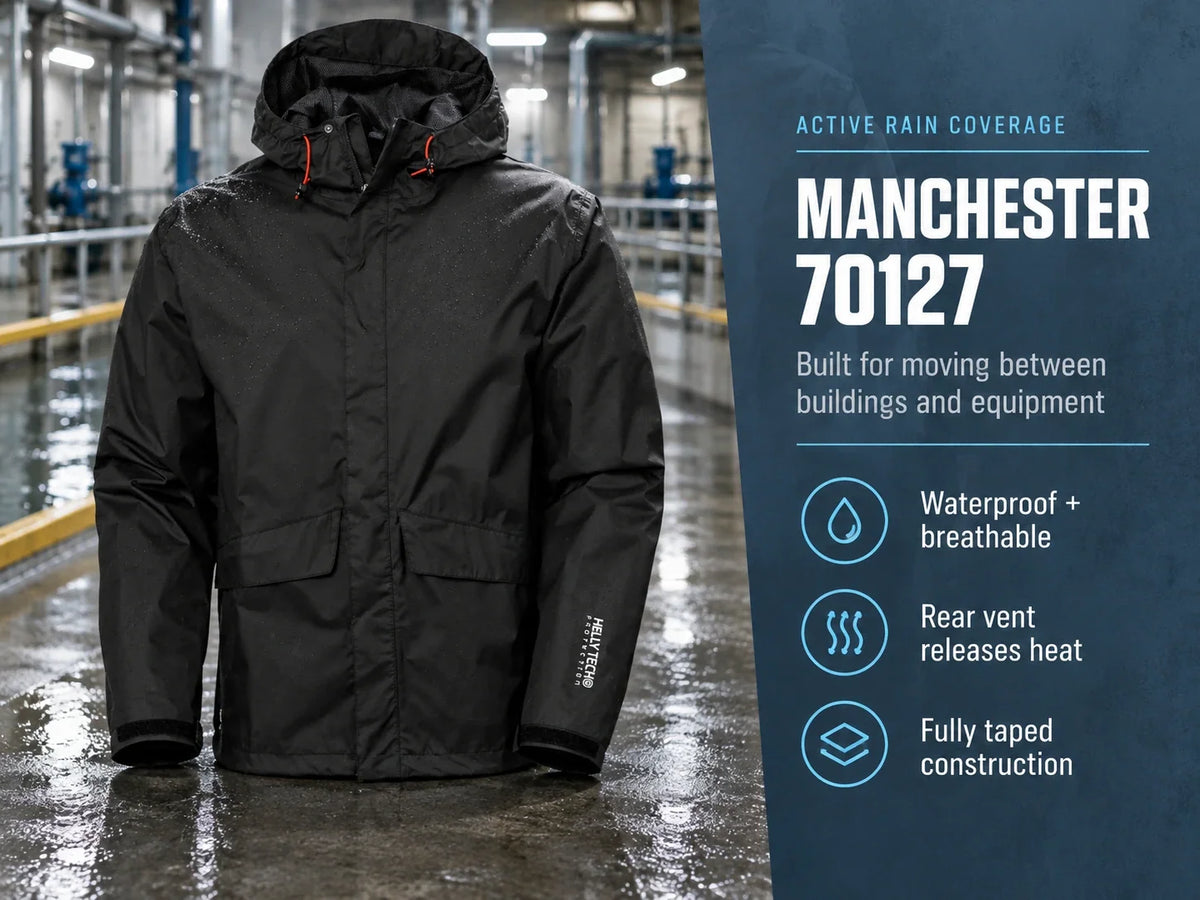
The Helly Hansen Manchester 70127 Rain Jacket suits operators moving between buildings, inspecting equipment, or climbing stairs. Its waterproof, breathable HELLY TECH construction and rear vent release heat and moisture during active rounds. Fully taped construction limits water entry at the seams.

Helly Hansen Gale 70282 Jacket and 70582 Bib
The Gale 70282 Jacket and 70582 Bib suit wet shifts with frequent movement. Stretch fabric moves during kneeling, climbing, and reaching, reducing restriction during maintenance. The bib’s welded seams limit water entry as the wearer moves.

Helly Hansen Mandal 70129 Jacket and 70529 Bib
The Mandal 70129 Jacket and 70529 Bib suit dirty, wet areas where rainwear needs regular rinsing or wiping. The smooth PVC-coated surface simplifies clean-up, while micro-welded bib seams limit water entry. The bib also resists oil and mildew. Confirm compatibility before use around treatment chemicals.

Helly Hansen Luna 70286 Jacket and 70486 Pants
The Luna 70286 Jacket and 70486 Pants provide waterproof, breathable coverage with a women-specific fit. The extended jacket back maintains coverage while reaching or bending. An adjustable waist and lower legs control loose fabric and help the pants fit over work layers and boots.

Helly Hansen Alta 70261 Hi Vis Rain Jacket
The Helly Hansen Alta 70261 Hi Vis Rain Jacket helps operators stay visible around outdoor structures, roadside access points, and moving vehicles. Lightweight, flexible PU fabric supports movement. A packable hood and adjustable waist adapt the coverage when inspections move between sheltered and exposed areas.

Viking 3907FRJ Jacket
The Viking 3907FRJ jacket and 3907FRP bib pants provide non-insulated, waterproof and windproof coverage for outdoor rounds and wet maintenance. Both use 300D trilobal rip-stop polyester with polyurethane (PU) backing. The durable shell resists abrasion and snags during work around equipment.
The jacket has a detachable Stormblaster hood, a storm flap over the zipper, adjustable cuffs, and front and back vents. The bib pants have quick-release suspenders, an elasticized waist, and a detachable bib. Their 13-inch leg zippers make them easier to put on over work boots. Check the garment label for the visibility class and level required at your site.
The flame-resistant (FR) fabric is tested for limited, momentary contact with an open flame under ASTM D6413. These garments are not intended for hydrocarbon flash fires, electric arcs, or welding sparks. Waterproofing alone does not confirm protection against treatment chemicals or sewage. Check product-specific protection data against the plant’s hazard assessment.

Viking Journeyman 3307J Jacket and 3307P Bib
The Viking Journeyman 3307J Jacket and 3307P Bib use 420D nylon with PVC backing for snag-prone maintenance and field work. Double-stitched, taped, and heat-sealed seams help prevent leaks. Four front and four back vents release heat during active work, balancing heavy coverage with airflow.

Choose the Right Garment Format
This shows where each format fits and where water can still enter.
Waterproof Jacket and Bib Overalls
A jacket and bib overlap at the waist and stay in place while climbing or bending. This setup suits outdoor rounds, wet maintenance, and work near open tanks. For waterproof bib overalls used at work, check the seam construction, suspender adjustment, and leg opening before ordering.
Two Piece Rain Suit
A matched suit is simple to issue and replace. It suits general rain and occasional spray. Check the waist overlap, hood, and cuffs.
Waterproof Pants
Waist pants are quick to remove but provide less overlap than bibs while kneeling or reaching.
One Piece Coveralls
Coveralls reduce waist gaps. They can be harder to remove cleanly, so the facility needs a clear doffing procedure.
High Visibility Rainwear
Hi-vis rainwear helps around traffic and mobile equipment. Select visibility, waterproof, and chemical protection separately. One certification does not replace another.
PU vs PVC vs Breathable Membranes
Each material solves a different problem. Compare the work being done before comparing jacket prices.
| Material | Main benefit | Limitation | Better fit |
|---|---|---|---|
| PU-coated fabric | Available in flexible, lightweight rainwear | Chemical resistance must be verified | Routine wet work and outdoor rounds |
| PVC-coated fabric | Blocks water and may be easy to rinse or wipe | Can trap heat during active work | Washdowns and less-active wet tasks |
| Breathable membrane | Releases body moisture during active work | Cleaning must follow the garment label | Inspections, walking and active maintenance |
| Neoprene system | Used in some chemical-resistant garments | Compatibility depends on product-specific test data | Verified industrial exposure |
No material name proves compatibility with every chemical. Check the substance, concentration, contact time, and test results. ASTM F903 tests how protective-clothing materials resist liquid penetration under specified conditions. ASTM F739 measures permeation through protective-clothing materials during continuous contact. Ordinary rainwear may have neither claim.
Waterproof Does Not Mean Chemical Protective
This is the most important limit to understand before purchasing rainwear for a plant.
Waterproof testing deals with water. Chemical testing checks whether a specific liquid penetrates, permeates or damages the material. Seams, zippers and garment gaps also matter.
Before approving gear for chemical handling, check:
- The exact chemical and concentration
- Splash, spray or continuous-contact exposure
- Test method and breakthrough time
- Seam and closure performance
- Required gloves, boots and face protection
- Cleaning or disposal procedure after contact
If the supplier cannot provide suitable chemical data, treat the garment as rainwear only.
Cleaning Waterproof Workwear After Sewage Contact
This helps protect the worker without damaging the garment’s waterproof barrier.
Follow the plant’s exposure-control and decontamination procedure first. Remove contaminated outerwear before entering clean areas. Keep it separate from personal clothing and ordinary laundry.
Remove surface contamination only in the approved area. Then follow the sewn-in label for wash temperature, drying, ironing, and chemical use. Those instructions vary by garment and coating.
The CDC’s general sewage guidance uses a 0.05% chlorine solution for contaminated work clothing. But that method can conflict with some waterproof garment labels. If the site procedure and care label do not agree, the safety lead should select compatible gear or a disposal method. Replace gear that cannot be cleaned safely.
Layering for Cold and Wet Canadian Work
A waterproof outer layer blocks rain and can reduce wind exposure, but it does not provide insulation. Start with a moisture-managing base layer, then add insulation for the weather and activity level. Leave enough room to move without stretching seams or lifting the jacket above the bib. Add waterproof gloves and work boots that match the plant’s impact, puncture, slip, and chemical hazards.
When to Replace Waterproof Workwear
Inspect rainwear after cleaning and before the next shift. Remove it from service when you find:
- Cracked, peeling or sticky coating
- Loose or separated seam tape
- Holes or tears that cannot be repaired correctly
- Damaged zippers, snaps or cuffs that leave gaps
- Persistent leaks after proper cleaning and maintenance
- Contamination that cannot be removed safely
- Reflective material that no longer provides the required visibility
Compare Waterproof Workwear for Your Plant
Start with the task, exposure, and cleaning procedure. Then compare materials, garment format, visibility and verified protection claims in Cleanflow’s Industrial Rainwear collection.
Frequently Asked Questions
Is waterproof rainwear enough for wastewater work
Not always. It can protect against rain and routine water exposure. Sewage contact or chemical handling may require garments with suitable penetration, permeation, or whole-garment test data. Follow the facility’s hazard assessment.
Is PVC or breathable rainwear better for plant operators
A smooth PVC-coated shell may be easier to rinse or wipe after routine wet work. Breathable rainwear helps release body moisture during walking and inspections. The better choice depends on activity, cleaning needs and exposure.
Can waterproof workwear be disinfected after sewage contact
Only when the disinfectant and cleaning method are compatible with the garment. Follow the plant procedure and sewn-in label. Remove gear from service if it cannot be cleaned without damaging the coating, membrane or seams.
Should operators wear a jacket and bib or a rain suit
A jacket and bib give better overlap for climbing, kneeling and work near open tanks. A matched rain suit is practical for general rain and occasional spray. Check the task, fit, and entry points before choosing.