



Description
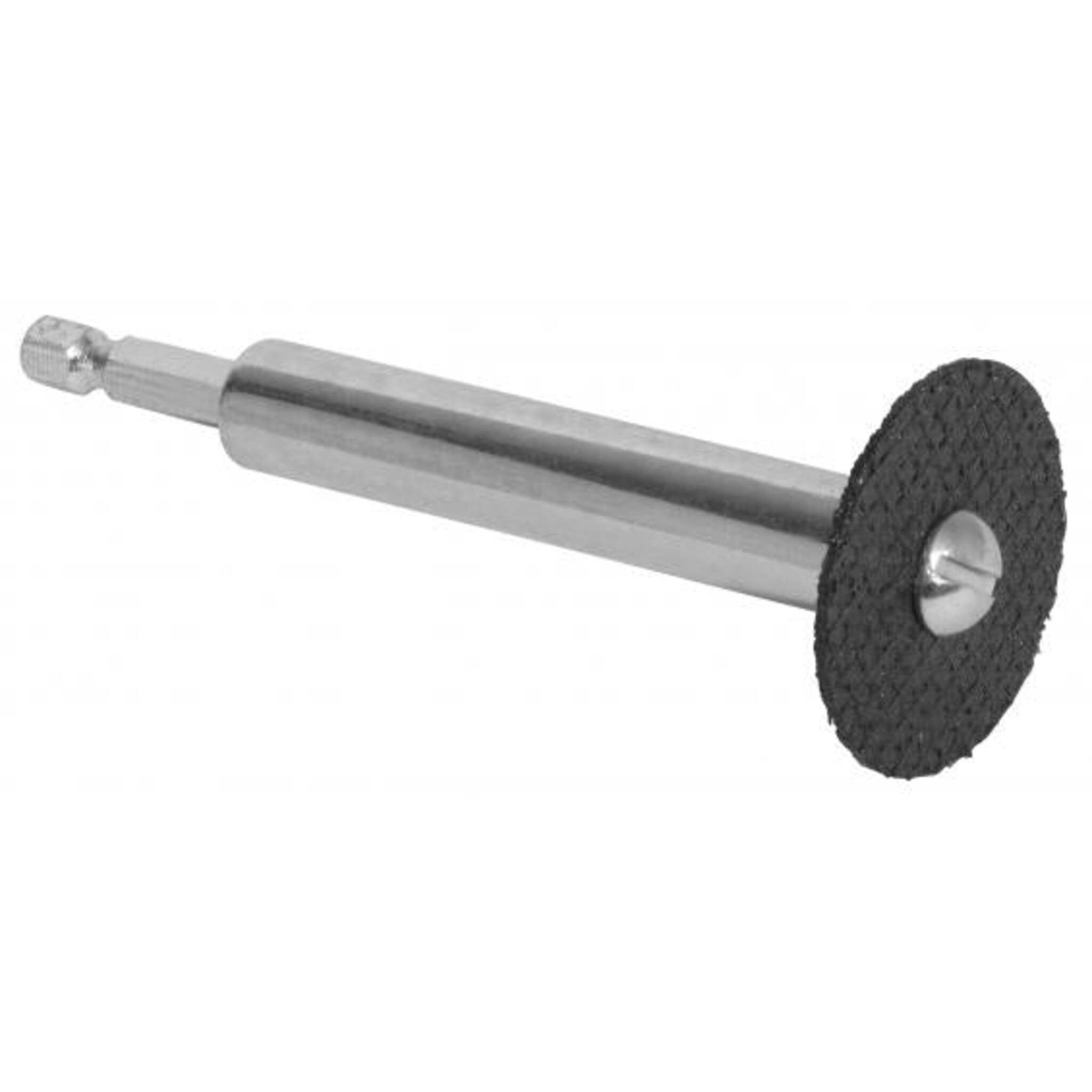
1-1/2 in Abrasive Blade Internal Pipe Cutter with 4 in Shaft
Overview
Pipes embedded in concrete sit where a saw-tooth blade would grind apart on contact. The Reed IC1A internal pipe cutter handles this with a 1.53 in abrasive blade that cuts PVC, CPVC, and ABS from the inside. Chuck the 4 in shaft into any 3/8 in drill to cut pipe below floor level, through ceilings, or around pool drains.
Specifications
| Specification | Detail |
|---|---|
| Catalog No. | IC1A |
| Item Code | 04500 |
| Blade Type | Abrasive |
| Replacement Blade | IC1RA (Item Code 04502, 5-pack) |
| Blade Diameter | 1.53 in / 38.8 mm |
| Blade Cutting Depth | 0.50 in / 13 mm |
| Shaft Length | 4 in |
| Pipe Materials | PVC, CPVC, ABS, PEX, PE, PP |
| PVC Grades | Schedule 40, Schedule 80, Thin Wall |
| Weight | 0.2 lbs / 0.1 kg |
| Drill Requirement | Standard 3/8 in (not included) |
Key Features
- The abrasive blade withstands direct contact with concrete, stone, and other hard surfaces that would destroy a saw-tooth blade in seconds. This makes the Reed IC1A internal pipe cutter the correct choice when the pipe runs through or sits against concrete or stone.
- Cuts from the inside of the pipe outward, reaching locations that external cutters cannot access. This internal plastic pipe cutter works in wall cavities, ceiling spaces, and sub-slab drains where there is no clearance for an outside tool.
- This PVC pipe cutter for drill use fits any standard 3/8 in chuck with no adapters needed. The flat on the shaft locks without spinning, and best results come from running between 350 and 450 RPM.
- The 4 in shaft reaches pipes that sit a few inches below the finished surface. For deeper pipes or cuts that need a controlled depth stop, Reed makes the IC1SL with a 7 in shaft and adjustable guide.
- An optional IC7/8RS blade (Item Code 04509) lets the IC1A cut 1 in PVC and CPVC pipe. The Reed internal pipe cutter replacement blade mounts with the same washer and screw as the standard abrasive disc.
Abrasive vs Saw Tooth Blade
Reed makes two short-shaft internal plastic pipe cutters in this family: the IC1A (abrasive) and the IC1S (sawtooth). The choice between an abrasive blade pipe cutter and a saw-tooth model comes down to the material surrounding the pipe.
| Feature | IC1A (Abrasive) | IC1S (Saw Tooth) |
|---|---|---|
| Blade Diameter | 1.53 in | 1.26 in |
| Cutting Depth | 0.50 in | 0.38 in |
| Shaft | 4 in | 4 in |
| Cuts Plastic Pipe | Yes | Yes |
| Cuts Wood (Sink Lugs) | No | Yes |
| Survives Concrete Contact | Yes | No |
| Best For | Floor-level cuts near concrete or hard surfaces | Open-access plastic cuts and sink lug removal |
The IC1A vs IC1S decision depends on the job. If the blade might touch concrete, tile, or stone during the cut, use the Reed IC1A internal pipe cutter. Concrete destroys a saw-tooth blade on contact. If the pipe is exposed with clearance on all sides, the IC1S cuts faster because its heat-treated saw teeth are more aggressive in clean plastic. The IC1S also cuts wood, so plumbers use it for removing sink lugs.
See Cleanflow's internal pipe cutter size guide to compare all six models in the Reed lineup.
Applications
The Reed IC1A internal pipe cutter works as a PVC pipe cutter for drill-powered, inside-the-pipe cutting. Also called an inside pipe cutter by many plumbers, it handles jobs where an external cutter has no room to operate.
- Cutting drain pipe flush with or below a concrete slab for closet flange replacement. The abrasive blade pipe cutter tolerates brief contact with the surrounding concrete without losing its edge.
- Removing damaged pipe sections in ceiling spaces and wall cavities during remodel work.
- Trimming PVC and CPVC risers around in-ground pool plumbing, where pipes often sit in poured concrete collars.
- New construction rough-in work where stub-outs need to be cut to final height at floor level.
- Sprinkler system repairs in tight mechanical rooms where PEX or CPVC supply lines run against framing.
Buy Reed IC1A Internal Pipe Cutter Online from Cleanflow
Cleanflow Utility Supply Company is an authorized Reed dealer serving customers across Canada and the United States. Free shipping on orders over $199, with a 30-day return policy. Email info@cleanflow.ca for returns or exchanges. The Reed IC1A internal pipe cutter is the abrasive-blade model for concrete-contact applications, and replacement IC1RA blades (5-pack) are available separately.
Browse the full Reed collection.
Frequently Asked Questions
What is the difference between the Reed IC1A and IC1S?
The IC1A has a 1.53 in abrasive blade with 0.50 in cutting depth. The IC1S has a 1.26 in saw-tooth blade with 0.38 in cutting depth. Both use a 3/8 in drill and 4 in shaft. Choose the IC1A for near-concrete work; choose the IC1S for open plastic cuts and sink lug removal.
How do you cut PVC pipe below floor level?
To cut pipe below floor level, insert the cutter into the pipe and run a 3/8 in drill at 350 to 450 RPM. The blade spins outward through the pipe wall. As a closet flange pipe cutter, the IC1A is the right model when the drain line sits in a concrete slab.
What replacement blade does the Reed IC1A use?
The IC1RA abrasive replacement blade (Item Code 04502, 5-pack) fits the Reed IC1A internal pipe cutter. Remove the screw and washer, slide off the worn disc, and mount the new one. An optional IC7/8RS blade (#04509) adds the ability to cut 1 in. PVC and CPVC.
Can the Reed IC1A cut through concrete?
No. The IC1A cuts plastic pipe, not concrete. Its abrasive blade survives accidental contact with concrete and hard surfaces during a pipe cut. Sawtooth blades break on these materials. The abrasive blade pipe cutter grinds past contact points but is not a concrete cutting tool.
What drill speed works best with an internal pipe cutter?
An inside pipe cutter performs best between 350 and 450 RPM. Excess speed generates heat in the abrasive disc, and too-slow speeds stall in thick pipe walls. A standard 3/8 in drill with a variable speed trigger gives the operator full control over cutting pace.
How-To Articles

Similar Products
Featured collection


