

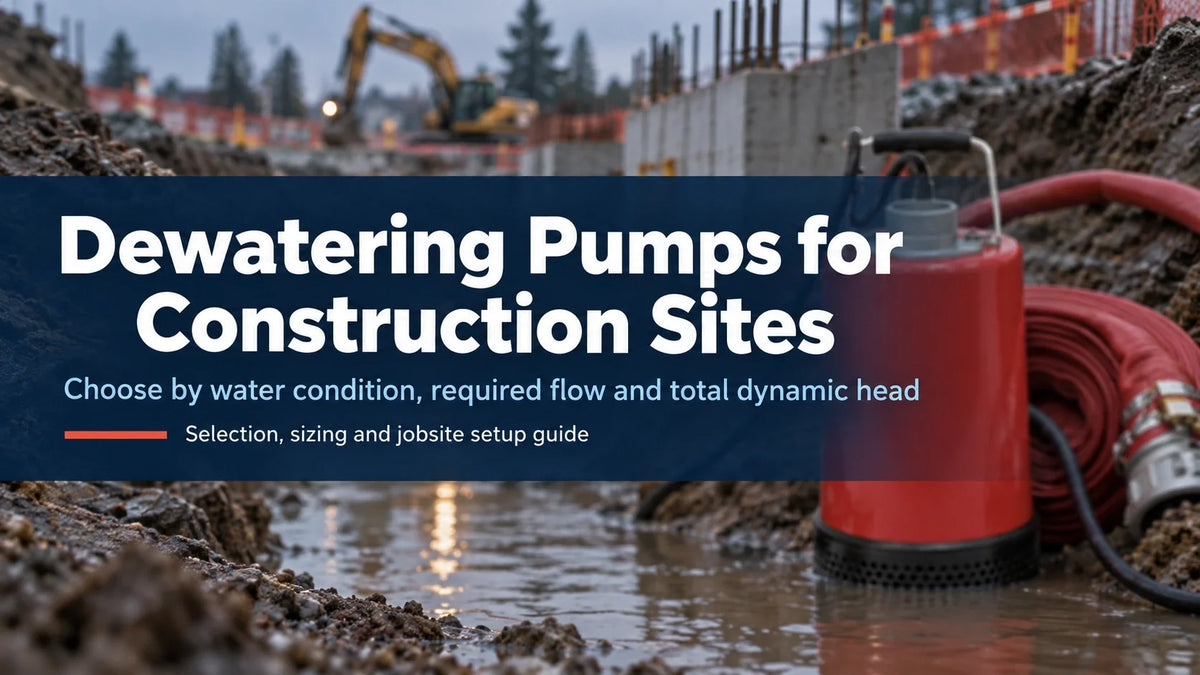
Choose a standard submersible pump for clear water, a trash pump for water carrying stones or debris, a puddle sucker for shallow cleanup, and a diaphragm pump for thick mud. Then size it by the required flow at the site’s total dynamic head, not by maximum GPM alone.
This guide covers portable open pumping and sump pumping. Wellpoints, deep wells, and eductor systems lower groundwater differently and may require an engineered dewatering plan.
Pump Selection at a Glance

A trash pump is not automatically a sludge pump. Check the intended liquid and maximum solids passage before placing any pump in dirty water.
What to Check Before Selecting a Pump
- Peak inflow: The pumping rate must stay ahead of rainwater, runoff, or groundwater entering the work area.
- Water condition: Note fine silt, gravel, wood scraps, thick mud, and the largest debris likely to reach the intake.
- Total dynamic head: Add the vertical lift to friction loss through the hose, fittings, and valves.
- Power: Confirm available voltage and electrical capacity, or plan for an outdoor gas- or diesel-powered pump.
- Discharge: Identify an approved outlet that will not flood another work area, erode soil, or send sediment off-site.
Unknown chemicals, fuel, sewage, or contaminated groundwater need separate review. Confirm pump compatibility and the approved treatment or disposal method before pumping.
Best Dewatering Pumps for Construction Sites
These models cover common construction conditions. They are grouped by application rather than ranked because the right choice depends on water, debris, required flow, and head.
Multiquip ST2037: Clear-Water Pits and Trenches

The Multiquip ST2037 is a 1 HP, 115V submersible pump with a 2-inch discharge. It delivers up to 73 GPM and 37 feet of head. Because it operates in the water, the crew does not need to install or prime a suction hose.
Best suited for: Clear-water sumps, trenches, and excavations with suitable 115V power.
Jobsite outcome: Quick setup for routine drainage without running a gasoline engine beside the excavation.
The ST2037 has no solids-handling allowance. Choose another model when gravel, stones, or construction debris can reach the intake.
Multiquip ST2038P: Low-Level Water on Flat Surfaces

The Multiquip ST2038P is a 1 HP, 115V puddle sucker made for clear water left on slabs, floors, and other flat surfaces. It moves up to 60 GPM and provides up to 38 feet of head.
Best suited for: Final water removal from concrete slabs, floors, and shallow collection areas.
Jobsite outcome: Less standing water left for wet vacuums, squeegees, or mops.
Multiquip ST2040T: Dirty Water Where Power Is Available

The Multiquip ST2040T combines a submersible design with trash-pump solids handling. Its 1 HP, 115V motor delivers up to 79 GPM and 40 feet of head. It can pass solids up to one inch.
Best suited for: Powered sites with dirty water, sediment, and small construction debris.
Jobsite outcome: Fewer stops for clogs while pumping directly from a pit or trench.
Multiquip QP2TH: Portable Gas-Powered Dewatering

The Multiquip QP2TH is a 2-inch trash pump powered by a Honda GX160 gasoline engine. It delivers up to 211 GPM, 98 feet of head, and 25 feet of suction lift. It can pass solids up to one inch.
Best suited for: Remote trenches, excavations, and temporary dirty-water removal.
Jobsite outcome: Portable, higher-volume pumping where electrical power is unavailable or inconvenient.
Multiquip QP3TH: Higher-Volume Construction Dewatering

The Multiquip QP3TH has a 3-inch suction and discharge with a Honda GX240 gasoline engine. It moves up to 396 GPM, provides up to 95 feet of head, and passes solids up to 1.5 inches.
Best suited for: Larger excavations, stormwater removal, and sustained dirty-water inflow.
Jobsite outcome: More capacity when a 2-inch pump cannot lower or maintain the required water level.
Multiquip QP205SH: Long or Elevated Discharge Runs

The Multiquip QP205SH is a compact, Honda-powered high-pressure pump that delivers up to 106 GPM. It has a 2-inch suction connection plus one 1.5-inch and two 1-inch discharge outlets.
Best suited for: Pumping uphill or across a long run where pressure matters more than maximum volume.
Jobsite outcome: Useful flow at a distant or elevated discharge point where a standard transfer pump may fall short.
Multiquip QP4TK: Large, Sustained Dewatering Jobs

The Multiquip QP4TK is a 4-inch diesel trash pump with electric start. It delivers up to 475 GPM, provides up to 85 feet of head, and passes solids up to two inches.
Best suited for: Major excavations, construction bypass work, and high-volume remote dewatering.
Jobsite outcome: Sustained capacity for inflow that could overwhelm smaller portable pumps.
Multiquip MQD2HA: Mud and Sludge Removal

The Multiquip MQD2HA is a positive-displacement diaphragm pump powered by a Honda GX120 engine. It moves up to 50 GPM and passes solids up to 1⅝ inches.
Best suited for: Muddy sumps, sludge and debris-heavy water where solids handling matters more than high flow.
Jobsite outcome: More reliable removal of thick material with fewer impeller-related clogs.
Size the Pump by Flow and Total Dynamic Head
You need two numbers: the required flow and the total dynamic head. Set the flow target first.
For a pit with ongoing inflow:
Required flow = Stored water ÷ Drawdown time + Ongoing inflow
Suppose a pit holds 3,000 gallons, must be lowered in 60 minutes and still receives 20 GPM. The starting requirement is 70 GPM: 50 GPM to remove the stored water plus 20 GPM to keep up with inflow.
That is a planning estimate. Changing groundwater or rainfall may require reserve capacity or a backup pump.
Next, calculate the resistance the pump must overcome. For a basic system discharging into open air:
TDH = Static Head + Friction Loss
Add the required outlet pressure when the discharge must remain pressurized.
If the outlet is 18 feet above the water and the hose and fittings add 22 feet of friction loss, the system has 40 feet of TDH.
Maximum flow and maximum head occur at different points on the pump curve. A pump advertised at 200 GPM only qualifies if its curve supplies the required GPM at 40 feet. Do not choose from the maximum-flow number alone.
Construction Dewatering Pump Setup
1. Prepare the Collection Point
Direct water toward a stable sump or low point. Keep the intake out of loose soil so it does not pull unnecessary mud into the pump. Do not place it where flowing water could undermine an excavation wall.
2. Position the Pump Safely
Place an engine-driven pump on firm, level ground close to the water and beyond the area that could flood. Lower a submersible pump by its lifting point or an approved rope—never by its power cable.
3. Build an Airtight Suction Side
Surface pumps require a rigid or reinforced suction hose. Lay-flat discharge hose can collapse under suction. Keep the run short, seal every connection, and fit the correct strainer.
4. Route the Discharge Hose
Use a hose diameter that supports the required flow and distance. Avoid sharp bends, kinks, and unnecessary reductions. Secure the hose and protect it from vehicles, crushing, and sharp edges.
5. Check Power, Fuel and Priming
Confirm voltage, starting current, cable condition, and generator capacity for an electric pump. Check fuel, oil, and ventilation for an engine-driven unit. Fill a wet-prime centrifugal pump as directed before starting it.
6. Inspect the First Discharge
Check for leaks, unstable hoses, unusual vibration, and steady flow. Confirm that the discharge is not flooding another work area, causing erosion, or releasing sediment where it is not permitted.
Monitor the System While It Runs
Conditions can change after rain or as excavation work disturbs the soil. Check the pump often enough to catch problems before the water level rises.
- Watch the water level and discharge flow.
- Clear blocked strainers before flow drops sharply.
- Check suction connections for air leaks.
- Inspect hoses for movement, kinks, and damage.
- Prevent dry running unless the pump is designed for it.
- Monitor fuel, electrical supply, and generator load.
- Check the discharge point for sediment and erosion.
Construction Pump Selection Checklist
Have these details ready before comparing the dewatering pump range:
- Required flow in GPM and estimated peak inflow
- Total dynamic head
- Largest expected solids and water condition
- Suction lift, hose size, hose length, and required pump accessories
- Available voltage or fuel
- Expected operating time and backup needs
- Approved discharge location
Choose a Pump That Matches the Whole System
The best construction dewatering pump is not the model with the largest number on the label. It is the pump that handles the water and debris while meeting the required flow at the site’s actual head.
Compare Cleanflow’s construction dewatering pumps using your required GPM, TDH, water condition, and available power.
Frequently Asked Questions
What type of pump is best for construction site dewatering?
Use a standard submersible pump for clear water, a trash-rated pump for debris, a puddle sucker for low-level cleanup, and a diaphragm pump for thick mud. The final choice depends on flow, TDH, solids, and power.
How do you size a construction dewatering pump?
Estimate the peak inflow, set the required GPM, and calculate TDH. Then check the pump curve to confirm that the model can deliver the required flow at that head.
Can a trash pump handle mud?
A trash pump can handle dirty water and solids within its rating. Thick mud may require a diaphragm or slurry-rated pump. Check the permitted solids size and intended liquid before pumping.
Where should a construction dewatering pump be placed?
Place a submersible pump in a stable collection point with its intake protected from loose soil. Position a surface pump on firm ground, close to the water and as low as safely practical.