

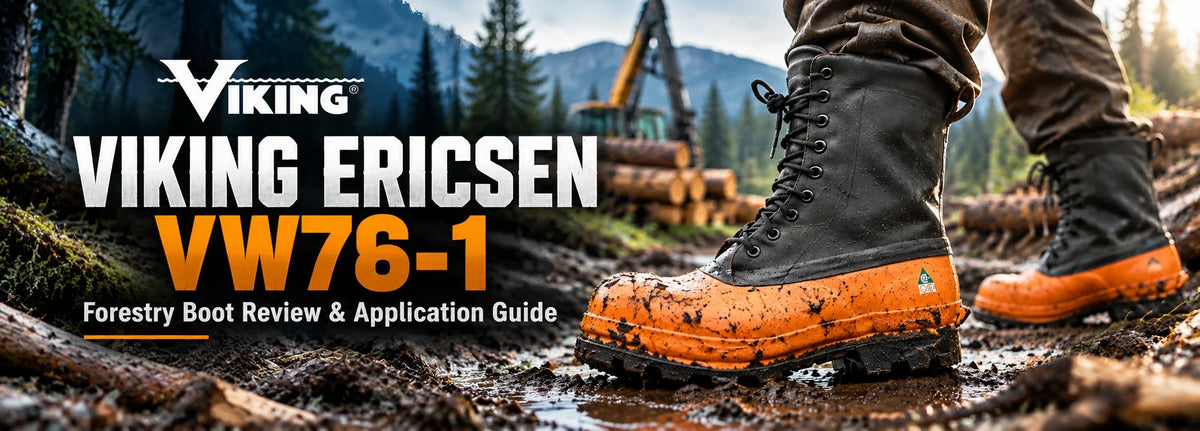
Need one pair of boots for mud, wet brush and rough forestry ground? The Viking Ericsen VW76-1 combines a vulcanized waterproof upper, Grade 1 steel toe and plate, a reinforced heel and a nitrile lug sole in one lace-up forestry boot. The secure upper helps limit foot movement on uneven ground, while the waterproof construction is built for wet outdoor work.
This VW76-1 review explains where the boot works best, what its safety markings cover, how it differs from the spike-equipped VW76S-1 and how to care for it between shifts.
Is the Viking Ericsen VW76-1 Right for Forestry Work?
Start with the worksite. Choose the Ericsen when the job combines wet ground, uneven footing and a requirement for steel toe-and-plate protection. The laces secure the shaft around the ankle, while the vulcanized waterproof upper helps keep the foot dry in mud, rain and shallow water below the collar.
That makes it useful for planting, seeding, harvesting, log inspection, plant maintenance and arborist ground work. But it isn't the right boot when the job calls for metal-free footwear, certified chainsaw protection or more flexibility for long hours behind the wheel.
| Choose the Ericsen when | Choose another boot when |
|---|---|
| The job involves mud, wet brush or shallow water below the boot collar. | The hazard assessment requires chainsaw-protective footwear. |
| Grade 1 steel toe and plate protection are required. | The site requires metal-free footwear. |
| A lace-up shaft and reinforced heel are useful on uneven ground. | Most of the day is spent driving or walking on finished indoor floors. |
| A standard nitrile lug sole suits the terrain. | Steel traction spikes are required; choose the spike-equipped VW76S-1. |

Where Does the Viking Ericsen Forestry Boot Work Best?
Here's where the Ericsen earns its keep: wet, uneven ground where a waterproof, ankle-secure boot matters. Its nylon, rubber and polyester upper is vulcanized for waterproof protection, while the natural-rubber bottom separates the foot from mud and shallow water.
The lace-up closure gives you a closer hold around the foot and ankle than a loose pull-on boot. That matters on side slopes, loose soil and logging debris, where excess movement can make each step less stable. The supportive build can feel stiff during long periods of driving, so this is primarily an outdoor work boot.
Ballistic nylon provides cut-resistant protection across the front portion of the boot. The reinforced heel supports another high-wear area, and a rear pull tab makes the boot easier to put on. Waterproof protection ends at the collar, so deeper water can still enter from the top.
What Protection Does the VW76-1 Provide?
The protection setup is straightforward. A Grade 1 steel safety toe helps protect the front of the foot from impact and compression. A steel puncture-resistant plate helps block sharp objects from below. Together, they suit sites that require safety footwear rather than plain-toe rubber boots.
The boot also carries CSA Omega electrical-shock resistance to 18 kV. That rating matters when the job calls for ESR footwear. But it doesn't replace lockout procedures, insulated tools or any other controls in the hazard assessment.
Electrical resistance can decline as footwear becomes worn, damaged or wet. Inspect the boots regularly and replace them after a major toe impact or sole penetration, even when the damage isn't obvious from the outside.

What Does the NBR Lug Sole Handle, and When Do Spikes Help?
Underfoot, the lug sole and steel spikes solve different problems. NBR stands for nitrile rubber. The VW76-1 uses an oil-, chemical- and slip-resistant nitrile lug sole. Its deep tread is built for mud, loose soil and wet outdoor ground.
But resistance isn't the same as complete protection. Chemical type, concentration, temperature and contact time all affect performance. When chemical exposure is part of the job, match the complete boot to the site's chemical-resistance requirements rather than relying on the outsole alone.
The standard VW76-1 is the lug-sole model. The VW76S-1 is a separate version fitted with steel traction spikes for slippery terrain. Choose between the two models before ordering instead of treating the standard boot as a do-it-yourself spike installation project.
Think of steel spikes like winter cleats: useful on frozen ground, but awkward on smooth hard surfaces. They can reduce stability on concrete, metal steps, vehicle pedals and finished floors. No lug pattern or spike system prevents every slip, so the terrain and walking surface still matter.
Is the Viking Ericsen a Chainsaw Boot?
The distinction is simple: forestry-ready doesn't mean chainsaw-rated. The Ericsen is a forestry safety boot, not a substitute for certified chainsaw-protective footwear. Its ballistic nylon front provides cut-resistant protection across the front portion, but it isn't chainsaw protection.
Steel toe and plate certifications cover impact, compression and sole puncture hazards. Chainsaw work is different. It requires footwear tested for contact with a moving chain. If that hazard is part of the task, follow the job's PPE requirements and use the specified protection class.
How Should You Clean and Store the Boots?

- Good care doesn't need to be complicated. Clear the grit, wash off mud and let the boots dry slowly. That routine protects the upper, preserves the lug channels and makes damage easier to spot before the next shift.
- Remove loose debris. Brush dried mud from the upper, laces and lug channels before rinsing.
- Rinse with cool water. Use mild soapy water and a soft cloth for stubborn dirt. Avoid solvents and aggressive cleaners.
- Clean the outsole. Clear stones, bark and packed soil from the lugs. Check the tread and sole for cuts, cracks or separation.
- Air-dry naturally. Loosen the laces, open the tongue and allow air to circulate. Keep the boots away from heaters, radiators, vehicle vents and prolonged direct sunlight.
- Store upright. Use a cool, dry and ventilated area. Do not fold the shaft or place heavy equipment on the boots.
Before the next shift, inspect the laces, heel reinforcement, upper, tread and the joint between the upper and sole. If you find cracks, separation, exposed safety components or severe tread loss, take the boots out of service. Replace them after a major toe impact or sole puncture because protective components can be damaged without a clear mark on the outside.
Who Should Choose the Viking Ericsen VW76-1?
The final decision comes down to the ground you're working on. Choose the VW76-1 when you need a waterproof forestry boot with a secure lace-up hold, steel toe-and-plate protection and a nitrile lug sole. It makes sense for wet planting sites, harvesting, inspection routes, maintenance work and uneven outdoor ground.
Choose the VW76S-1 when steel traction spikes are required for slippery terrain.
If you're comparing Viking work boots in Canada, choose another model when the job requires chainsaw certification, metal-free protection, permanent caulks or dedicated cold-weather insulation. Start with the hazard assessment. Then consider the terrain and how you'll move through the day.
Review the Viking Ericsen VW76-1 forestry boots or browse more specialty work boots for other application-specific options.