



Description
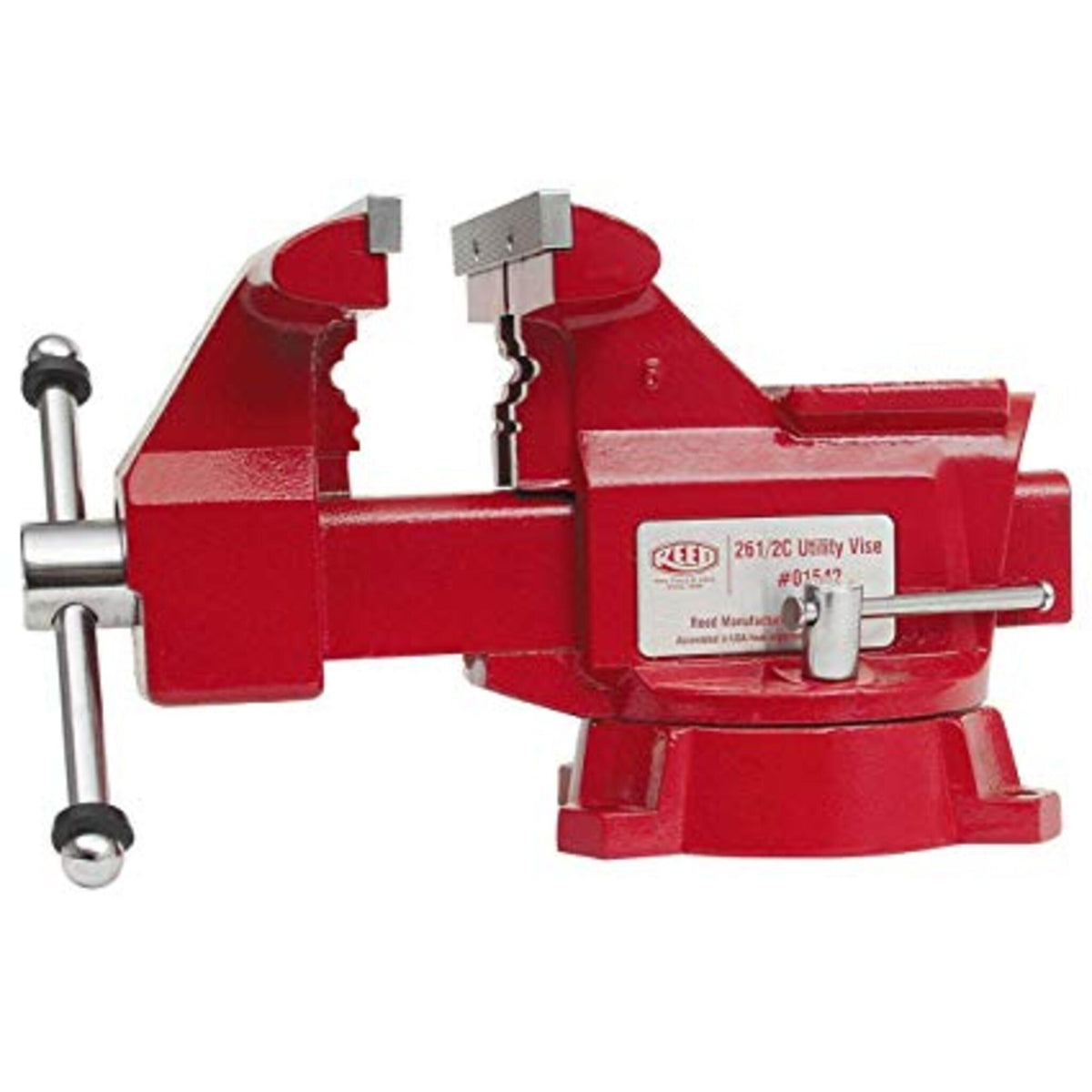
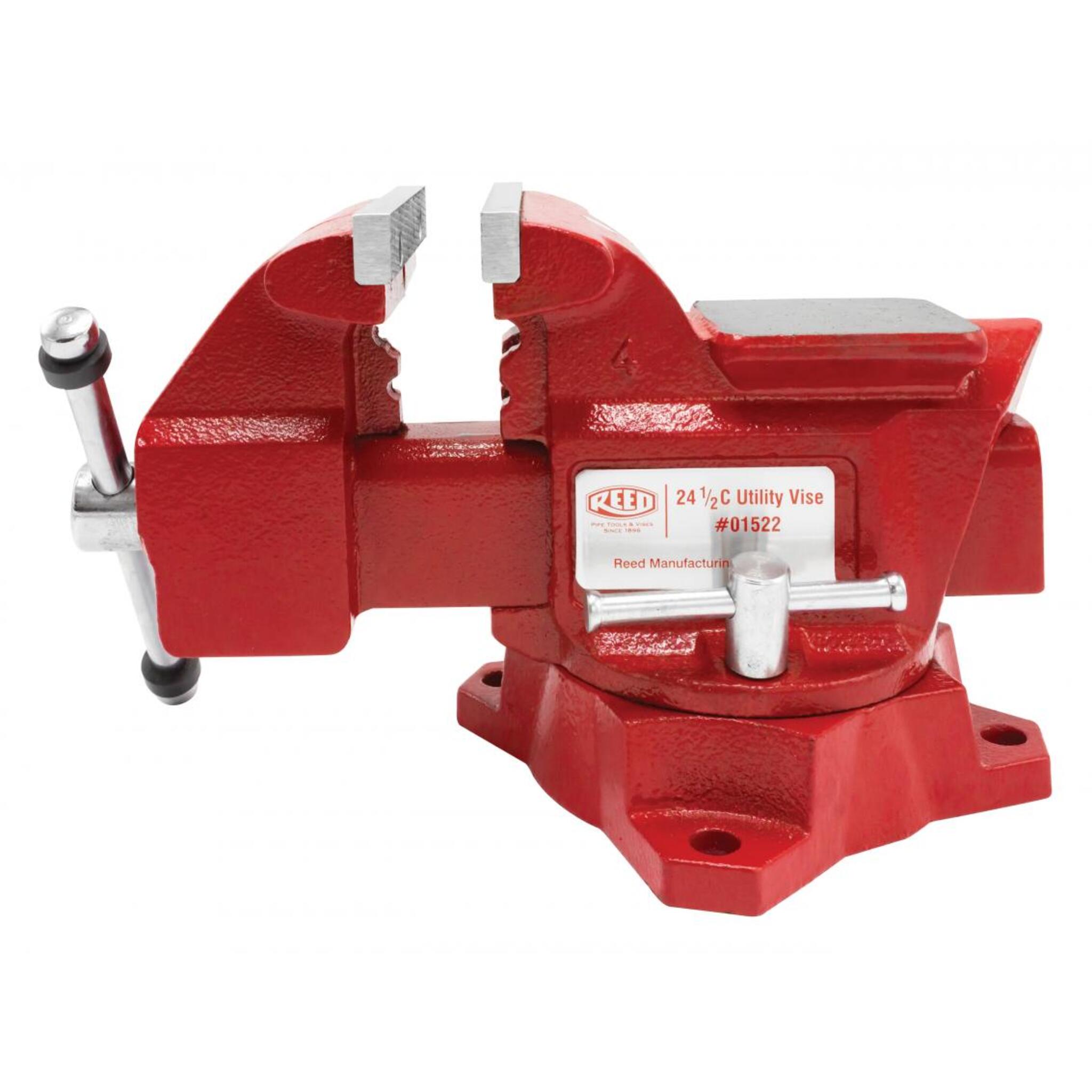
Cast Iron Bench Vise with Swivel Base, Pipe Jaws, Anvil, and Horn
Product Overview
Most bench vises use 30,000 PSI gray cast iron for the entire body, including the base where clamping forces hit hardest. The Reed utility workshop vise pairs a 30,000 PSI cast iron body with a 60,000 PSI ductile iron base that resists cracking under impact. This cast iron bench vise with swivel base comes in four jaw widths, each with pipe jaws, anvil, and horn.
Key Features
- 60,000 PSI Ductile Iron Base. The base absorbs the most impact on any heavy-duty bench vise. Reed casts this one from 60,000 PSI ductile iron that flexes under hammer blows and heavy clamping instead of cracking.
- Pipe Jaws, Anvil, and Horn. This workshop vise with pipe jaws clamps flat stock in the main jaws and grips pipe in the V-jaws. The anvil and horn handle light shaping. One bench vise with anvil and horn does the work of three separate tools.
- Swivel Base with Positive Locking. The base rotates to any angle and locks in place. Repositioning a long pipe or angled workpiece takes seconds instead of unclamping and reclamping.
- Replaceable Hardened Steel Jaw Facings. The serrated jaw facings are hardened steel, bolted in place with screws. When the serrations wear smooth, replace the facings instead of the entire vise.
Specifications

All models: 30,000 PSI gray cast iron body, 60,000 PSI ductile iron base, swivel base with positive locking, pipe jaws, anvil, horn, replaceable hardened steel serrated jaw facings, rubber washers on handle to reduce finger pinching. Imported.
How to Choose Your Vise Size
What size bench vise do I need? Reed makes four models in this series:
- 24 1/2C (4 1/2 in jaw, 17.4 lbs) — light bench work and smaller workbenches.
- 25 1/2C (5 1/2 in jaw, 27.0 lbs) — general workshop tasks.
- 26 1/2C (6 1/2 in jaw, 41.0 lbs) — plumbing, pipefitting, and heavy trade work.
- 26B (6 in jaw, 4 3/16 in throat, 60.0 lbs) — deepest throat for thick stock.
When comparing a bench vise 4 inch vs 6 inch, the tradeoff is jaw reach versus stability. A 6 inch bench vise like the 26 1/2C resists rocking on heavy cuts but weighs over twice as much as the 24 1/2C. For most workshops, the 25 1/2C or 26 1/2C covers the widest range of tasks.
Applications
- Plumbing and pipefitting shops where a workshop vise with pipe jaws clamps both pipe and flat fittings without switching tools.
- HVAC and mechanical rooms where technicians clamp tubing, threaded rod, and sheet metal on a heavy-duty bench vise mounted to a Canbuilt bench grinder and vise stand.
- Fabrication and maintenance shops use a bench vise with anvil and horn for clamping, light hammering, and bending without switching tools.
- Job sites need a bench vise for pipe work that grips and releases fast between cuts. This cast iron workshop vise bolts to any portable or fixed bench.
Buy Reed Utility Workshop Vises Online from Cleanflow
Cleanflow Utility Supply Company is an authorized Reed supplier. The Reed utility workshop vise is a heavy-duty bench vise with a 60,000 PSI ductile iron base, pipe jaws, anvil, horn, and swivel base. Available in four sizes from 4 to 6-inch jaw widths, this cast iron workshop vise serves plumbers, contractors, and shop owners across Canada and the USA. Professionals buy Reed vises and other pipe and waterworks tools from Cleanflow.
Free shipping on orders over $199. Returns accepted within 30 days. Email info@cleanflow.ca for returns or exchanges.
Frequently Asked Questions
What is the best bench vise for workshop use?
The best bench vise for workshop use depends on the work. For mixed tasks including pipe, flat stock, and light metalwork, a cast iron bench vise with swivel base, pipe jaws, and anvil covers the widest range. Match jaw width to your typical workpiece size.
What size bench vise do I need?
A 4 to 5 inch jaw suits small parts and light bench work. A 6-inch bench vise handles larger stock, pipe fittings, and trade work. Throat depth also matters: deeper throats grip thicker materials farther from the edge. Choose based on the largest workpiece you clamp regularly.
What is the difference between cast iron vs ductile iron vise construction?
Gray cast iron (30,000 PSI) is rigid but brittle and can crack under sudden impact. Ductile iron (60,000 PSI) flexes before breaking, absorbing shock without fracturing. Reed uses ductile iron for the base, where clamping and impact forces concentrate, and gray cast iron for the body.
Can I use a bench vise for pipe work?
Yes, if the vise has built-in pipe jaws. The Reed utility workshop vise includes V-shaped pipe jaws below the main flat jaws. These grip round pipe and tubing without the pipe rolling or slipping. For dedicated pipe-only clamping, a Reed chain vise is the alternative.
Are the jaw facings on Reed vises replaceable?
Yes. All four models use hardened steel serrated jaw facings held by screws. When the serrations wear down, order replacement facings from Reed (part numbers vary by model). The base plate, main vise nut, and clamp bolt are also available as replacement parts.
How-To Articles

Similar Products
Featured collection


