

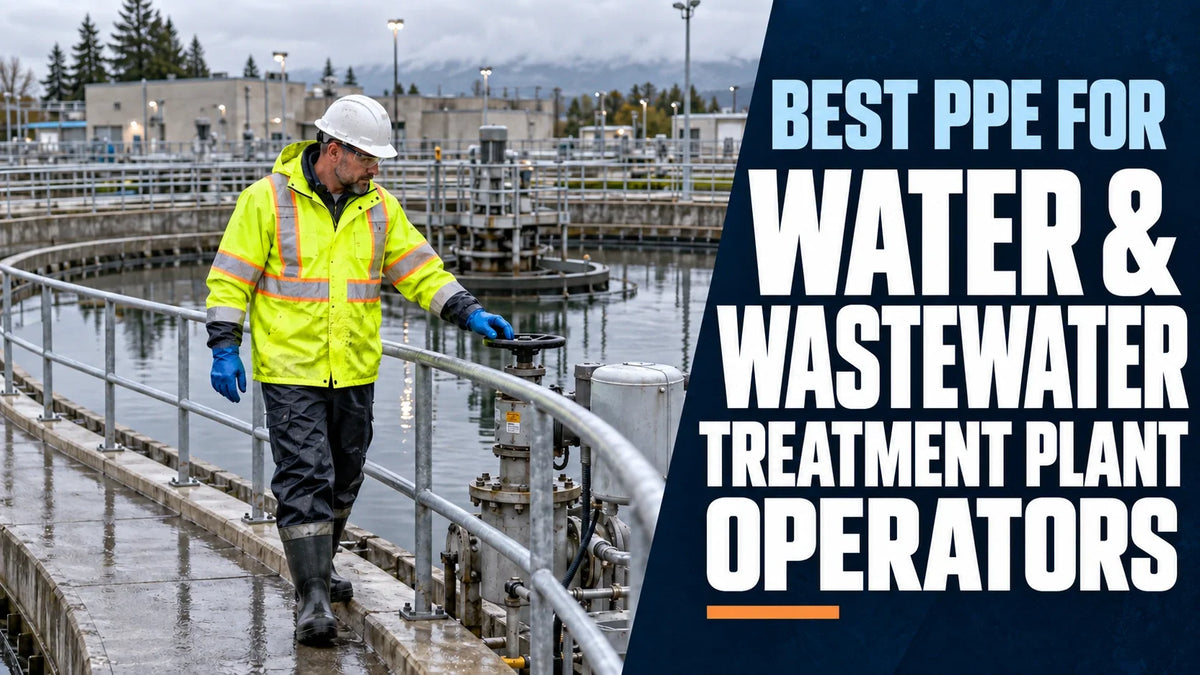
The best PPE for water and wastewater treatment plant operators depends on the task, work area, and exposure. Most operators need waterproof safety boots, task-specific gloves, splash protection, and washable or waterproof workwear. Depending on the work area, you may also need hearing protection, disposable coveralls, cold-weather gloves, high-visibility rainwear, or flotation protection.
Use this list to narrow down the gear that fits your job. Start with your work area, wet floors, chemical handling, outdoor rounds, or winter conditions, then check your workplace’s PPE rules before buying.
Best PPE by Work Area
1. Best Boots for Wet Process Areas: Bekina StepliteX X290

Best for: Wet process areas, routine plant rounds, and equipment washdown where operators need waterproof, easy-to-clean safety footwear.
Bekina StepliteX X290 safety boots use a waterproof foamed polyurethane upper with a composite safety toe and puncture-resistant midsole. The moulded construction is easier to rinse after wet work than stitched leather footwear.
An anti-clogging, slip-resistant sole helps shed debris, while washable footbeds can be removed for cleaning. Choose the X290 when frequent washdowns and wet floors are part of the shift.
Why it works
- Waterproof foamed polyurethane construction
- CSA Z195-14 Grade 1 safety protection
- Composite safety toe and puncture-resistant midsole
- Slip-resistant, anti-clogging sole
- Removable, washable footbeds
- PU remains flexible down to –30°C
Before you buy: The –30°C figure describes material flexibility, not guaranteed warmth. Check compatibility with the exact chemical, concentration, and contact time before using these boots for chemical handling.
2. Best Boots for Outdoor Utility Work in Mild Conditions: Baffin Blackhawk STP

Best for: Outdoor valve work, lagoon inspections, and muddy plant grounds in mild conditions where tall waterproof boots and puncture protection are required.
Baffin Blackhawk STP safety boots combine a tall, moulded waterproof shell with a steel safety toe and plate. The self-cleaning outsole helps shed debris, while the anti-fatigue midsole and arch-supporting insole provide cushioning during plant rounds.
Choose the Blackhawk STP when you need a slip-on boot for wet outdoor work and underfoot puncture protection. Its tall shell offers more splash coverage than a shorter lace-up boot.
Why it works
- CSA and ASTM safety approvals
- Steel safety toe and puncture-resistant plate
- Self-cleaning lug outsole
- Moulded waterproof construction
- Tall slip-on coverage
- Anti-fatigue midsole
- Moulded cup insole with arch support
Before you buy: Choose the STP version with both toe and plate protection. These boots are not insulated winter footwear. Confirm chemical suitability separately, and use extra care on algae, grease, ice and smooth wet concrete.
3. Best Safety Boots for Drier Indoor Maintenance: Baffin Monster 6

Best for: Workshops, control buildings and indoor mechanical areas with occasional wet floors, but no standing sewage or continuous washdown.
Baffin Monster 6 safety boots have a waterproof leather upper with a breathable membrane, composite safety toe, and composite puncture-resistant plate. A padded collar and dual-density polyurethane midsole add cushioning for routine maintenance.
Choose this lace-up boot for comparatively dry maintenance areas and occasional wet floors. Its leather upper and laces need more careful cleaning after contamination than the moulded Bekina X290 or Baffin Blackhawk STP.
Why it works
- CSA and ASTM safety approvals
- Composite safety toe and plate
- Waterproof leather upper with breathable membrane
- Dual-density polyurethane midsole
- Anti-fatigue insole and base technology
- Oil- and acid-resistant rubber outsole with deep lugs
Before you buy: Waterproof construction does not prevent liquid from entering over the collar. Use taller moulded boots for standing water or repeated washdowns. The outsole’s oil and acid resistance does not establish chemical protection for the whole boot.
4. Best Rain Suit for Routine Wet Work: Viking 2900G Open Road

Best for: Outdoor maintenance, rainy weather, and routine wet work without a defined chemical-splash hazard.
Viking 2900G Open Road rainsuit is a three-piece set made from 150-denier ripstop polyester with PVC backing. It includes a jacket, detachable hood, and bib pants.
Heat-sealed and taped seams help keep water out. Vents, adjustable cuffs and a generous fit support layering and movement. Choose it over hi-vis rainwear only when the site does not require a specific visibility class.
Why it works
- Waterproof and windproof
- Jacket, hood and bib pants included
- Ripstop outer fabric
- Adjustable wrists and leg openings
- Ventilation for routine outdoor work
- Room to layer over work clothes
Before you buy: This suit is made for rain, not chemical splashes. Use chemical-protective clothing when your job involves treatment chemicals.
See more options in the industrial rainwear collection.
5. Best High-Visibility Rain Suit: Pioneer 150D

Best for: Loading areas, vehicle routes, outdoor structures, and work near snowplows, vacuum trucks, or mobile equipment.
Pioneer 150D hi-vis rain suit combines waterproof construction with fluorescent material and reflective tape. The two-piece set includes a hooded jacket and bib pants.
The jacket is listed as meeting CSA Z96-15 Class 2 Level 2 and ANSI/ISEA 107-2020 Class 3 Type P and R. Choose it over the Viking 2900G when visibility around vehicles or equipment is part of the job.
Why it works
- Waterproof 150D polyester with polyurethane backing
- StarTech reflective tape
- CSA and ANSI/ISEA visibility ratings
- Full back vent
- Adjustable bib pants
- Storage pouch included
Before you buy: Ask which hi-vis class your site requires before buying. The jacket is listed as CSA Z96-15 Class 2 Level 2, but your workplace or province may require a different class. Keep the reflective areas clean so they remain visible.
6. Best Long-Cuff Chemical Gloves: Showa Atlas 772

Best for: Tank dipping, chemical transfer, wet maintenance, and sewage work where forearm coverage is necessary.
Showa Atlas 772 nitrile gloves extend approximately 26 inches and cover more of the forearm than a standard gauntlet glove. They use a fully coated nitrile sleeve, a double-coated palm, and a rough grip.
The glove is certified under EN ISO 374 for protection against certain chemicals and microorganisms. Its long cuff is useful when splashes can reach beyond the hand and wrist.
Why it works
- Extended arm coverage
- Fully coated nitrile construction
- Double-coated palm
- Rough grip for wet or oily handling
- EN ISO 374-1 Type B certification
- EN ISO 374-5 certification
Before you buy: Nitrile does not protect against every chemical. Check Section 8 of the chemical’s safety data sheet. The part that lists protective equipment and make sure nitrile is suitable. Replace the glove if it becomes swollen, cracked, soft, discoloured, punctured, or dirty inside.
These gloves protect your hands; they do not protect you from breathing hydrogen sulphide. H₂S work requires gas monitoring, ventilation and the respiratory and emergency equipment required by your workplace.
Browse other options in the chemical-resistant gloves collection.
7. Best Breathable Shell for Outdoor Rounds: Helly Hansen Manchester 2.0

Best for: Outdoor inspections and maintenance where rain and wind are the main hazards but high-visibility or chemical-certified clothing is not required.
The Helly Hansen Manchester 2.0 shell jacket provides waterproof, breathable weather protection. It is listed to EN 343:2019 for protection against rain.
Articulated sleeves, an adjustable hood, and extended back support movement during inspections and equipment checks. Compared with a full PVC-backed rain suit, this shell is a better starting point when mobility and breathability matter more than full-body coverage.
Why it works
- Waterproof and breathable shell
- EN 343:2019 rain-protection rating
- Adjustable detachable hood
- Articulated sleeves
- Extended back coverage
- Reflective details
Before you buy: Reflective details do not make this a certified hi-vis jacket. Choose different gear if your job requires a specific visibility class, chemical-splash protection, flame resistance, or arc protection.
8. Best Boots for Cold Outdoor Winter Work: Bekina Thermolite Z090GG

Best for: Outdoor tanks, lift stations, lagoons, and exposed structures where prolonged winter cold calls for insulated, waterproof safety boots.
Bekina Thermolite Z090GG safety boots combine waterproof, extra-thick micro-foam polyurethane with a composite safety toe and midsole. Their insulated construction is rated to –50°C, while the extra-wide fit provides room through the toe, vamp and shaft.
A slip-resistant, self-cleaning sole helps shed debris, and washable footbeds simplify cleaning between shifts. Choose the Thermolite for prolonged cold exposure; its heavy insulation may be too warm for heated indoor areas.
Why it works
- Thermal rating to –50°C
- Waterproof micro-foam polyurethane construction
- CSA Z195-14 Grade 1 safety protection
- Composite safety toe and puncture-resistant midsole
- Extra-wide toe, vamp and shaft
- Slip-resistant, self-cleaning sole and washable footbeds
Before you buy: The –50°C rating does not guarantee comfort for every worker. Time outdoors, activity, socks and fit all matter. Separate traction aids may be needed on ice. Confirm compatibility with the exact chemical and concentration before chemical contact.
See more options in the safety boots collection.
9. Best Disposable Coveralls for Chemical-Splash Tasks: DuPont Tychem 2000

Best for: Short-duration maintenance and chemical-handling tasks where the workplace requires disposable clothing for limited liquid-splash protection.
DuPont Tychem 2000 coveralls use a coated barrier fabric and include a hood, elastic wrists, and elastic ankles. They provide more splash protection than ordinary work clothing, while the disposable design helps prevent contaminated garments from being taken home.
Choose Tychem 2000 over standard disposable coveralls when the task involves a known liquid-splash hazard and the garment has been checked against that chemical.
Why it works
- Coated barrier fabric
- Limited liquid-splash protection
- Attached hood
- Elastic wrists and ankles
- Full-body disposable coverage
- Helps contain contaminated clothing at the worksite
Before you buy: Tychem 2000 is not a universal chemical suit and does not make a hazardous atmosphere safe. Confirm that the exact garment, seams, and fabric are suitable for the chemical, concentration, and expected contact. Follow your workplace’s instructions for putting it on, removing it, and disposing of it.
10. Best Winter Gloves for Cold, Wet Maintenance: Showa 477

Best for: Outdoor rounds, drainage work, and handling wet or oily tools in cold weather.
Showa 477 insulated gloves combine an insulated acrylic liner with a full nitrile coating and a foam-nitrile grip. The coating helps keep cold liquids and oil away from the hands, while the textured palm improves control on slippery tools and pipe.
Choose the Showa 477 for cold, wet maintenance where grip and hand movement matter. Keep the longer Showa Atlas 772 for tasks that require extended forearm coverage or verified chemical protection.
Why it works
- Insulated acrylic liner
- Full nitrile coating
- Foam-nitrile palm grip
- Grip suited to wet and oily surfaces
- Flexible, close-fitting construction
- Elastic wrist cuff
Before you buy: These gloves are water-resistant, not intended for prolonged immersion, and they do not replace chemical gloves selected for a specific treatment chemical. Low-temperature flexibility is not a guarantee of warmth for every worker or exposure time.
11. Best Flotation Vest for Open Tanks and Lagoons: Mustang Survival Industrial Mesh Vest

Best for: Work beside open tanks, lagoons, channels, docks, and other areas where a fall could create a drowning hazard.
The Mustang Survival industrial mesh shoulder flotation vest combines high visibility, SOLAS reflective tape, and open sides that support movement. Its work-oriented design is easier to wear around tools and equipment than a bulky recreational jacket.
Choose this style when the job requires flotation protection without heavily restricting the arms or shoulders during inspections and maintenance.
Why it works
- Work-oriented flotation design
- High-visibility outer material
- SOLAS reflective tape
- Mesh shoulder construction
- Open sides for mobility
- Adjustable fit
Before you buy: A flotation vest is only one part of water-edge safety. Use the type and buoyancy your workplace requires, fasten it correctly, and inspect it before every use. Guardrails, fall prevention, and rescue planning may still be required.
Safety Gear You Should Not Choose on Your Own
Some safety equipment needs more than a product recommendation. Your workplace must choose it for the actual hazard and train you to use it safely.
- Chemical splash goggles and face shields
- Respirators, cartridges, supplied-air respirators and SCBA
- Portable and fixed gas monitors
- Confined-space entry, retrieval and rescue equipment
- Fall protection
- Hearing protection selected without a workplace noise assessment
- Arc-rated or flame-resistant clothing
- Chemical protective suits that have not been checked against the exact chemical
A face shield usually goes over chemical goggles; it does not replace them. Respirators must also be selected, fitted, and maintained through your workplace’s respiratory-protection program.
PPE for Hydrogen Sulphide Exposure
Hydrogen sulphide can collect in pits, wet wells, and other low areas. It can become deadly quickly, and you cannot rely on smell because the gas can stop you from noticing its odour. Read the guidance from WorkSafeBC.
No ordinary boot, glove, or rain suit makes an area with uncontrolled hydrogen sulphide safe.
- Atmospheric testing before entry
- Continuous gas monitoring
- Ventilation
- Alarm and evacuation procedures
- A written exposure-control plan
- A respiratory-protection program
- Confined-space permits and supervision
- Non-entry rescue equipment
- Trained rescue personnel
The right respirator depends on the measured gas level and the work being done, so follow your workplace’s gas-monitoring, confined-space, and respiratory-protection procedures.
How to Clean Wastewater Operator PPE
Dirty PPE can carry sewage, chemicals, and other contamination into your vehicle or home. Clean it at the worksite whenever possible and keep it separate from personal clothing.
- Remove heavy dirt and contamination in the designated cleaning area.
- Take the gear off carefully so the dirty outer surfaces do not touch your skin or clean clothing.
- Wash hands with soap and water immediately after removing PPE.
- Clean reusable gear with the method approved for that item. The wrong cleaner can damage boots, gloves or rainwear.
- Dry boots, gloves and rainwear completely before storage.
- Keep contaminated PPE separate from personal clothing.
- Inspect every item before returning it to service.
The CDC recommends goggles, splash protection, liquid-repellent coveralls, waterproof gloves and rubber boots for workers handling sewage. It also advises removing work clothing and boots before leaving the worksite and cleaning contaminated clothing regularly. Use only cleaning products that are safe for the gear.
Replace PPE When It Can No Longer Protect the Worker
- A boot is cracked, punctured, or leaking
- The outsole tread is worn smooth
- A glove is swollen, brittle, softened, or punctured
- Chemical contamination cannot be removed safely
- Rainwear has torn fabric or damaged seams
- Reflective material is damaged or permanently obscured
- A protective toe, plate, or closure has been compromised
- The manufacturer’s inspection criteria require replacement
Replace damaged safety gear instead of patching it in a way that could weaken its protection.
Example PPE Changes During One Wastewater Plant Shift
An operator begins the morning with indoor pump inspections, performs an outdoor clarifier check, and later helps connect a sodium hypochlorite delivery. The PPE changes with the task:
- Indoor pump room: CSA safety shoes, normal workwear, safety glasses, and task-appropriate gloves.
- Outdoor clarifier in rain: waterproof safety boots and hi-vis rainwear over the required base PPE.
- Entry near a wet well: normal PPE is not enough. Atmospheric testing, confined-space procedures, gas monitoring, and rescue controls are required before entry.
The lesson is simple: wastewater operator PPE is selected by the task, not just by the job title.
Frequently Asked Questions
What PPE should a wastewater treatment plant operator wear?
Most wastewater operators need waterproof or water-resistant safety footwear, gloves suited to the task, eye protection, and washable or waterproof work clothing. Some jobs also require a face shield, hi-vis rainwear, disposable chemical clothing, hearing protection, flotation protection, gas monitoring or respiratory protection.
What are the best water treatment operator boots?
For wet process areas, start with tall waterproof boots that have the CSA protection your job requires and an outsole suited to the floor. If you handle chemicals, make sure the boot material is suitable for them.
Are waterproof boots chemical resistant?
No. Waterproof boots keep water out, but that doesn't mean they resist every chemical treatment. Check whether the boot material is suitable for the exact chemical you handle.
Is a respirator enough protection from hydrogen sulphide?
No. A respirator is only one part of H₂S protection. Gas monitoring, ventilation, safe work procedures, and an emergency plan are also required. Use only the respiratory equipment approved for the measured gas level and the job.
How often should wastewater PPE be replaced?
There is no single replacement schedule. Check PPE before every use and replace it when it leaks, cracks, tears, loses grip, cannot be cleaned safely, or no longer works as intended.