

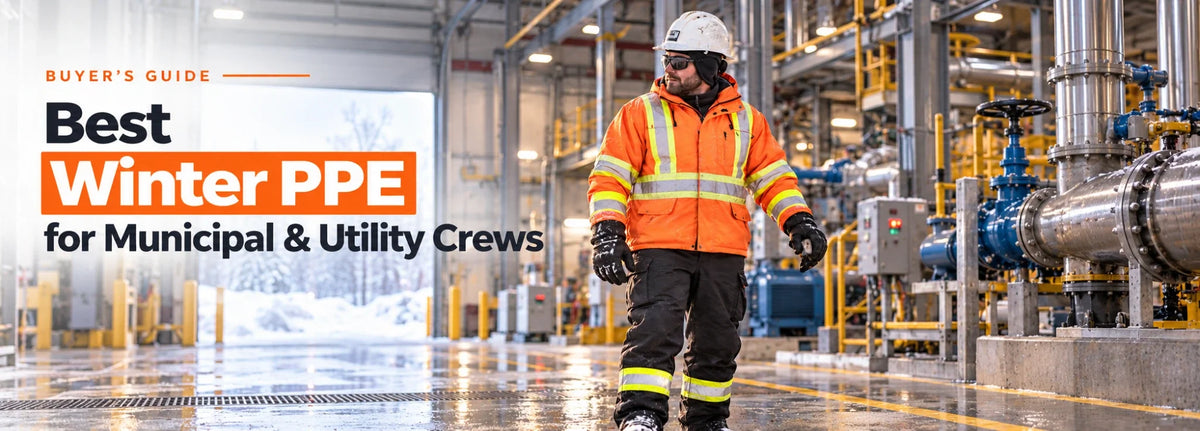
The best winter PPE for municipal and utility crews combines a moisture-managing base layer, insulated high-visibility outerwear, waterproof lower-body protection, CSA-certified winter safety footwear, task-matched gloves, and head protection that works with required safety equipment.
Active workers need breathable, adjustable layers. Crews standing outdoors for long periods need more insulation and coverage.
That difference matters. A worker repairing a valve, clearing snow, or walking an inspection route generates far more body heat than someone directing traffic or monitoring an exposed site. One heavy outfit is not the answer for every shift.
This guide covers practical winter PPE in Canada for municipal, water, sewer, and utility workers. The products are organized by function, so you can choose the pieces that match your work instead of buying an identical kit for everyone.
Winter PPE Picks at a Glance
| Winter PPE needs | Example product | Typical work conditions |
|---|---|---|
| Active-work base layer | Helly Hansen Lifa 75105 | Walking, inspections, and changing activity |
| Adjustable hi-vis jacket | Viking Handyman 6328J | General municipal and utility work |
| Severe-cold parka | Viking Professional 6450J | Stationary and exposed work |
| Waterproof bib pants | Tough Duck SB06 | Snow, spray and kneeling |
| Wet-work boots | Bekina XC90BR | Water, sewer, mud and slush |
| Severe-cold safety boots | Baffin Titan STP | Cold outdoor sites, snow and slush |
| Wet-work gloves | Showa TEMRES 282-02 | Slush, hoses and wet equipment |
| Precision gloves | Tough Duck WG12 | Controls, tools and inspections |
What Should Be in a Winter PPE System?
A complete system should help manage sweat, block wind and water, maintain visibility, and protect the worker without making routine movement difficult. It normally includes:
- A moisture-wicking base layer
- An insulated, waterproof and high-visibility outer layer
- Waterproof bib pants or insulated coveralls when lower-body exposure is high
- Insulated safety boots selected for water, snow, ice, and the required jobsite rating
- At least two glove options for wet work and detailed tasks
Temperature ratings help compare products, but they do not guarantee comfort. Wind, exposure time, activity, moisture, socks, fit, and individual cold tolerance all change how warm a worker feels.
A complete cold-weather system can include both certified PPE and supporting winter workwear. Visibility garments, safety footwear and other protective equipment must meet the requirements identified by the workplace hazard assessment.
Winter PPE does not replace a cold-stress plan. Employers should also assess wind chill, exposure time and workload; provide warm, dry break areas; establish suitable work-rest schedules; and train workers to recognize frostbite and hypothermia.
For general Canadian guidance on cold exposure and control measures, consult the Canadian Centre for Occupational Health and Safety.
1. Start With a Base Layer That Moves Moisture
The first layer should move perspiration away from the skin. Cotton can hold moisture and become uncomfortable once activity slows, especially when a worker moves from shovelling, climbing, or walking into a truck or control room.
The Helly Hansen Lifa Crewneck 75105 is a practical option for active work. Its synthetic Lifa construction moves moisture away from the body, while flatlock seams and the absence of shoulder and side seams reduce rubbing under jackets and suspenders.

It works well for inspection routes, snow clearing, and service calls where workers regularly move between vehicles, buildings, and outdoor sites.
For slower work or longer exposure, choose a warmer Lifa Max or merino base layer. The goal is not to wear the warmest possible layer at all times. The goal is to stay dry enough that you don't become chilled when your activity drops.
2. Use an Adjustable Hi-Vis Jacket for Changing Conditions
Municipal and utility shifts rarely stay at one activity level. A worker may drive, unload equipment, walk an exposed site, and then complete a physical repair. An adaptable jacket makes more sense than a single heavy parka for this type of work.
The Viking Handyman 6328J 7-in-1 Jacket is a practical option for changing winter conditions. It combines a 300-denier polyester shell with PU backing, sealed seams, 250 gsm insulation, and multiple wearing configurations. It is waterproof and windproof, with protection to -30°C.

The jacket also includes a detachable hood and side ventilation zippers. Those features make it easier to release heat before the inner layers become damp. Applicable fluorescent high-visibility configurations comply with CSA Z96:22 Class 2, Level 2 and can provide Class 3 coverage when worn with the matching compliant bib pants.
It is well suited to road maintenance, water and sewer service calls, public works and snow operations where conditions change throughout the shift.
Confirm that the selected colour and configuration provide the visibility class required for the job. A removable vest or reversible inner layer should not be assumed to provide the same rating in every configuration.
3. Choose a Heavier Parka for Long, Low-Activity Exposure
A highly insulated parka becomes more useful when the job involves standing, monitoring, or working in exposed areas for extended periods. It can be excessive for continuous physical work.
The is suited to long, low-activity work in severe cold. It uses a 300-denier trilobal ripstop polyester shell, 250 gsm ThermoMAXX insulation, and sealed waterproof construction. The published protection rating is -50°C, and the parka is designed as high-visibility winter outerwear. The fluorescent green 6450JG model complies with CSA Z96:22 Class 2, Level 2 and becomes Class 3 when worn with the matching compliant garment.

Choose it for traffic control, extended outdoor monitoring, remote infrastructure sites, and other work with long periods of low movement.
Treat the temperature figure as product guidance, not a guarantee that every person will remain comfortable at -50°C. Add or remove layers based on activity, wind and exposure time.
4. Protect the Lower Body From Wind, Slush and Snow
A warm jacket cannot compensate for soaked or unprotected legs. Snowbanks, kneeling, spray and wind can cool the lower body quickly, particularly during valve work, roadside repairs and water-main calls.
The Tough Duck SB06 Hi-Vis Bib Overalls are a practical general-purpose choice when workers need waterproof and breathable protection with a broad size range. They have taped seams, a fleece upper bib, insulated lower legs, reflective material, and side-leg zippers. Sizes run from XS to 5XL.

The Viking Handyman 6328P Bib Pants are a good alternative for workers using the matching 6328J jacket. They use a waterproof and windproof 300-denier shell, 250 gsm insulation, and a published rating to -30°C. The long leg zippers also make them easier to put on over winter boots.

These bibs suit wet snow, roadside spray, hydrant work, valve maintenance, and shifts with repeated kneeling or contact with snow-covered surfaces.
Leave enough room for base and mid layers. Bibs that fit too tightly can compress insulation and make climbing, kneeling, and vehicle entry more difficult.
5. Match Winter Safety Boots to the Surface
There is no single best winter boot for every municipal crew. Water and wastewater work often requires a tall, seamless waterproof boot. Roadside and facility work may place more emphasis on traction across snow, frozen ground, and uneven surfaces.
For Water, Slush and Wet Utility Work
The Bekina StepliteXCi XC90BR is well suited for consistently wet work. Its one-piece foamed polyurethane construction creates a seamless waterproof shell. The boot is rated to -40°C and carries CSA Grade 1 composite toe and midsole protection, along with Omega 18 kV electric-shock resistance.

Its anti-clogging outsole is designed to shed mud and debris. The polyurethane construction is listed as resistant to selected oils, fats, disinfectants, and petroleum-based substances.
This boot works well for water and sewer work, wet facilities, slush, mud, and tasks where a tall washable boot is useful.
Chemical resistance is not universal. Check the exact substance, concentration, temperature, and exposure time when chemical contact is part of the job.
For Severe Cold and Exposed Winter Sites
The combines a waterproof, fully moulded Oarprene shell with a steel safety toe and puncture-resistant steel plate. Its nylon locking snow collar helps keep snow out, while the Polar Rubber outsole is designed for grip in cold conditions. It carries CSA Grade 1 and ASTM safety approvals, with a removable multi-layer inner boot for insulation.

Choose it for cold outdoor maintenance, snowy yards, and exposed utility sites where tall waterproof coverage and substantial insulation are needed. Remove the inner boot between shifts so it can dry separately.
Baffin classifies the Titan STP as Polar Rated. The -100°C figure on the Cleanflow product page refers to the inner boot system; it is not a guarantee of comfort at that temperature. Activity, exposure time, moisture, socks, and fit still affect warmth.
No boot is slip-proof on every frozen surface. Dedicated traction aids may still be required on polished or glare ice. Confirm that the available size and width leave room for suitable winter socks without compressing the foot.
6. Use Two Types of Winter Work Gloves
A single glove rarely provides maximum warmth, waterproofing, grip, and fine control at the same time. Municipal and utility workers are usually better served by keeping two task-specific pairs available.
A Coated Glove for Wet and Cold Work
The Showa TEMRES 282-02 is a practical primary glove for snow, slush, washing, plumbing and wet equipment. It has an insulated acrylic lining, polyurethane coating, textured grip, and a long drawcord cuff that can close over a jacket sleeve.

It suits wet outdoor maintenance, snow clearing, cold hoses, and equipment exposed to water or slush.
The glove is water-resistant and breathable for cold, wet handling, but it should not be presented as a chemical-immersion glove. Its -51°C figure describes material flexibility in extreme cold, not a guaranteed hand-comfort temperature. It is also not presented as a cut-resistant glove.
A Lighter Glove for Controls and Detailed Tasks
The Tough Duck WG12 Precision Glove uses 40 g Thinsulate insulation and a synthetic palm to preserve more hand movement than a bulky winter glove.

Use it for vehicle controls, keys, tools, inspections and short tasks that require better finger movement.
This is not the glove to choose for prolonged contact with water or the coldest stationary work. Keep it dry and switch back to the heavier glove when the task changes.
7. Keep High Visibility on the Outside When Required
When a hazard assessment or site rule requires high-visibility apparel, the fluorescent background and reflective material need to remain visible. The compliant vest, jacket or suit should be the outermost layer rather than hidden beneath a dark parka.
Check the complete outfit in the form it will actually be worn. Removable liners, reversible pieces, open jackets, and added outer layers can change how much background and reflective material remains visible. Replace garments when dirt, abrasion, fading, or damaged reflective tape prevents them from performing as intended.
How to Build the Right Kit for the Job
For Active Road and Public Works Crews
- Moisture-wicking base layer
- Adjustable 7-in-1 hi-vis jacket
- Waterproof bib pants when snow or spray is expected
- Winter safety boots selected for the surface
- Wet-work gloves plus a lighter precision pair
For Water and Sewer Crews
- Moisture-managing base layer
- Waterproof insulated outerwear
- Waterproof bib pants
- Tall seamless winter safety boots
- Coated gloves with long cuffs
- A dry spare pair of gloves
For Stationary or Severe-Cold Work
- Warm base and mid layers
- A heavier insulated high-visibility parka
- Insulated bib pants or coveralls
- Insulated safety boots with room for appropriate socks
- Heavier gloves with a dry backup pair
What to Check Before Buying Winter PPE
- Required CSA visibility and footwear ratings
- Whether the worker is active, stationary, or moving between both
- Exposure to water, slush, mud, chemicals and road spray
- The amount of time spent outdoors
- Vehicle entry, climbing, kneeling and fine-control requirements
- Compatibility with hard hats, harnesses and other required PPE
- Available sizes, widths and room for layering
- A plan for drying gloves, liners and boots between shifts
Build a Winter PPE System Around the Work
The best winter PPE for municipal and utility crews is a system that matches the work. Start with moisture-managing layers, add waterproof high-visibility outerwear, and choose boots and gloves for the surfaces and tasks you handle most often. Check the required workplace ratings, fit, and compatibility before ordering.
Shop winter safety boots and winter hi-vis jackets and parkas to build a task-matched winter PPE system.
Frequently Asked Questions
What is the best winter PPE for municipal workers?
A practical system includes a moisture-wicking base layer, insulated high-visibility outerwear, waterproof lower-body protection, CSA-certified winter safety footwear, a wet-work glove, a more dexterous glove, and hard-hat-compatible head protection when required.
Is the warmest winter jacket always the best choice?
No. Heavy insulation can cause active workers to sweat, and damp clothing can make them colder when activity slows. Choose adjustable layers for changing workloads and reserve heavier parkas for long periods of low movement or severe exposure.
Do winter work boots prevent slips on ice?
No boot is slip-proof on every frozen surface. Winter outsoles can improve traction, but polished or glare ice may still require properly selected traction aids and site controls.
Should utility workers carry two pairs of gloves?
Yes, in many cases. A coated insulated glove works better for wet, cold handling, while a lighter glove is easier to use with controls, keys, and small tools. A dry spare pair is also useful when gloves become soaked.
How often should winter PPE be replaced?
Replace an item when damage, worn insulation, leaking seams, damaged soles, poor fit or degraded reflective material prevents it from doing its job. Inspect winter PPE regularly and follow the care and replacement instructions for the specific product.