

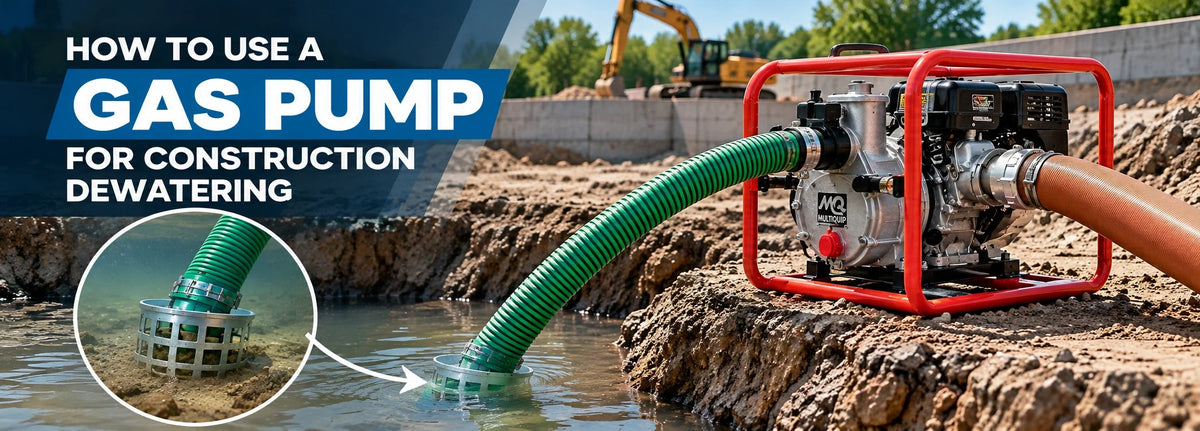
To use a gas pump for construction dewatering, place it on firm, level ground, connect a suction-rated hose and strainer, route the discharge hose, and fill the pump casing as directed before starting. Watch for steady discharge and keep the strainer submerged as the water level falls. If the pump loses prime, stop it and check the setup.
The steps below cover portable, wet-prime centrifugal trash pumps. Diesel-powered versions use a similar hose arrangement, but their engine controls differ. Diaphragm pumps, such as the MQD3HA, have a different pumping mechanism and their own operating instructions.
Before choosing equipment, use the gas and diesel pump selection guide to match the pump to the water, required flow, and discharge route. Then follow the operating manual for the exact model on site.
Check the Water and the Discharge Route First
A gas trash pump for excavation work is a practical choice when water contains debris within the model’s published solids limit. Inspect what the water carries before connecting the hoses. Sand, small stones, and suspended mud create different demands from thick, settled sludge.
Solids capacity describes the size of particles a pump can pass. It does not establish how well the pump handles abrasive sand, fibrous debris, or thick mixtures. For thicker mud or sludge that still flows, consider a diaphragm pump rated for the material. Settled material that barely flows may need another pumping or removal method.
For help identifying that boundary, read the guide to sand, mud and dirty-water pumping.
Confirm where the water will go. Follow the project’s discharge plan, including any sediment treatment and erosion controls. Directing muddy water toward a convenient drain is not a substitute for an approved discharge arrangement.
What You Need Before Starting
A portable dewatering pump for construction needs a complete hose system. Check that these items match the selected pump and the job:
- Suction-rated hose with the correct diameter and compatible fittings.
- A suitable suction strainer and clean, correctly seated gaskets.
- Discharge hose rated for the working pressure and routed to the approved outlet.
- Clean water for initial priming, plus the specified fuel and engine oil.
- The operating manual, suitable transport access and safe access for inspection, refueling and maintenance.
Compare suction and discharge hose separately. A reinforced suction hose resists collapse under vacuum. Layflat discharge hose belongs on the outlet side.
How to Set Up a Trash Pump on a Construction Site
1. Position the Pump on Stable Ground
Set the pump on a firm, level surface close enough to the water to keep the suction run practical. Keep it clear of unstable excavation edges, traffic, and locations where vibration could move it into the water.
Operate gasoline and diesel engines outdoors, with exhaust directed away from workers, excavations, buildings and air intakes. Outdoor placement alone does not make a location safe if exhaust can collect around people.
Measure suction lift vertically from the water surface to the pump inlet. This is different from suction hose length. Check the model’s limit and remember that falling water levels increase that lift. Long hoses, air leaks and site conditions can reduce suction performance.
2. Connect and Seal the Suction Hose
Attach the suction hose to the inlet. Inspect the hose for damage, seat the gasket properly and secure the connection. An air leak on the suction side can prevent priming even when no water leaks outward.
Keep the suction route short and direct where practical. Avoid unsupported connections, unnecessary bends and high points that can trap air. Use the fittings and hose arrangement specified for the pump.
3. Keep the Strainer Submerged and Clear of Sediment
Fit the correct strainer to the intake end and keep it fully submerged. Position it above loose sediment rather than burying it in the bottom of the excavation.
As the water level drops, check that the intake still has enough water around it. A portable pump for trench dewatering can lose prime when the strainer draws air. Stop the equipment and follow the manual’s precautions before clearing debris or adjusting the intake.
4. Route and Secure the Discharge Hose
Connect the outlet hose, remove kinks, and secure the discharge end. Protect the route from vehicle damage and prevent the outlet from washing away soil or flooding another work area. Do not run the pump against a blocked discharge.
A long or undersized discharge hose adds friction loss. The guide to discharge hose size and pump performance explains why hose diameter matters. Total dynamic head combines the elevation change, friction through hoses and fittings, and any required outlet pressure, expressed as a height of water. The pump curve shows how flow changes with head. Use it to check the required flow for your setup.
5. Fill the Casing and Start the Engine
For a wet self-priming centrifugal pump, fill the casing with water before starting, following the model manual. Self-priming means the pump can remove air from a properly sealed suction line after that initial fill. It does not mean the pump can start with a dry casing.
Check the engine oil and fuel, then use the specified starting procedure. Choke, throttle and start controls vary by model. Do not substitute a generic engine sequence for the manual.
Watch for steady water at the outlet. If the pump does not establish discharge within the manual’s permitted priming period, stop it and inspect the setup. Continuing to run it dry can damage the mechanical seal.
6. Confirm Steady Discharge and Monitor Operation
Check discharge, intake submergence, hose movement, and strainer condition while pumping. Falling water levels, incoming rainwater, and shifting sediment can change the job after startup.
The QP3Ti can start and stop through float switches, which helps with recurring inflow. Automatic cycling still requires correct installation, fuel checks, and site monitoring. Follow its automatic-mode instructions rather than treating it as a conventional manual-start pump.
If choosing a diesel pump for a construction site, consider fuel availability, transport and refueling access alongside performance. Diesel power alone does not establish a higher flow rate or longer time between refueling stops; those depend on the model and fuel tank.
7. Shut Down and Clean the Pump
After pumping dirty water, follow the model’s flushing and cleaning procedure. Stop the engine, allow the equipment to cool and release pressure as directed before opening it. Remove debris, inspect the strainer and fittings, and drain or store the pump according to the manual.
A gas trash pump for excavation work needs these checks between jobs. Keeping sediment out of the casing and finding damaged gaskets early helps the next setup start correctly.

When the Engine Runs but Water Does Not Move
| Symptom | Next checks |
|---|---|
| No discharge after startup | Stop and check the initial casing fill, suction connections, intake submergence, and suction lift. |
| Flow stops as the water falls | Check whether the strainer is drawing air or the suction lift has increased beyond the workable setup. |
| Flow becomes weak | Check for a blocked strainer, suction air leaks, a damaged hose or a kinked discharge line. Review head and hose losses if the route changed. |
Stop the engine and follow the manual’s cooling and pressure-release precautions before opening the casing, loosening fittings or servicing the pump. Refuel only after stopping the engine and allowing it to cool.
Ten Gas and Diesel Pumps for Construction Dewatering
The best portable pump for construction depends on the water and the required flow at the site’s operating head. These selected options cover routine excavation drainage, higher-volume removal, automatic cycling, longer deployments and viscous muddy water. The Best for recommendations are based on published specifications and application fit; they are not comparative field-test results.
| Multiquip pump | Fuel | Max flow | Max solids | Best for |
|---|---|---|---|---|
| QP3TH | Gas | 396 GPM | 1.5 in | General excavation dewatering |
| QP2TH | Gas | 211 GPM | 1 in | Smaller trenches and utility excavations |
| QP4TH | Gas | 555 GPM | 2 in | High-volume dirty-water removal |
| QP3Ti | Gas | 396 GPM | 1.5 in | Automatic cycling with recurring inflow |
| QP3THX | Gas | 396 GPM | 1.5 in | Gas-powered sites prioritizing noise control and fuel capacity |
| QP3TK | Diesel | 325 GPM | 1.5 in | Routine dewatering on diesel-equipped sites |
| QP4TK | Diesel | 475 GPM | 2 in | Larger drainage jobs using diesel power |
| QP4TKT28 | Diesel | 475 GPM | 2 in | Trailer-mounted dewatering with larger fuel capacity |
| QP2TK | Diesel | 172 GPM | 1 in | Smaller jobs where diesel is the site fuel |
| MQD3HA | Gas | 90 GPM | 1-5/8 in | Viscous muddy water, sludge and slow seepage |
GPM means US gallons per minute. The solids figures are published maximum particle diameters, not hose sizes. Maximum flow is not the output at every head. Check the curve for the actual suction and discharge arrangement. QP4TKT28 packages the QP4TK pump with a trailer and a fuel cell holding 28 US gallons. The larger fuel capacity changes deployment and refueling needs rather than rated flow.
QP3THX has a manifold designed to reduce operating noise and a fuel tank holding 4.2 US gallons. MQD3HA uses a diaphragm design for thicker fluids containing debris, but its 90 GPM maximum and 25 ft maximum head make it a different choice from a high-flow centrifugal trash pump.
For a complete model selection, compare gas engine trash pumps and diesel engine trash pumps against the job’s required flow, head, and solids conditions.


Before ordering a portable dewatering pump for construction, use the engine-driven pump sizing guide to check the required flow and head. For help selecting a pump and hose system, contact Cleanflow with the water condition, largest expected solid, required flow, suction lift, and discharge hose length.
Frequently Asked Questions
Does a Self-Priming Trash Pump Need Water Before Starting?
A wet self-priming centrifugal trash pump needs water in its casing before startup. Follow the exact model manual; dry-prime systems use a different arrangement.
Why Is My Gas Trash Pump Running but Not Pumping Water?
Possible causes include an unfilled casing, suction air leaks, an exposed or blocked strainer, or excessive suction lift. Stop the pump and check those points before restarting.
Can Layflat Hose Be Used for Suction?
Use suction-rated hose on the inlet. Layflat discharge hose can collapse under vacuum and prevent the pump from drawing water.
What Is the Best Gas Pump for Muddy Construction Water?
For flowing dirty water with debris, choose a trash pump whose solids limit and curve match the job. For thicker mud or sludge that still flows, consider a diaphragm model such as MQD3HA. Thick settled material may need a different pumping or removal method.