

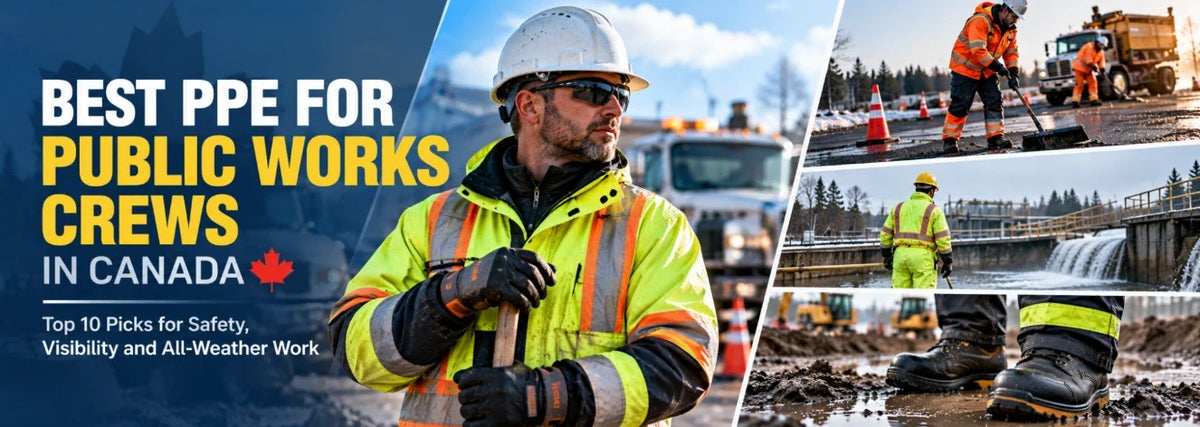
Public works crews move between roadside work, drainage, equipment checks, wet-weather response, and winter maintenance. The best PPE for public works crews helps workers stay visible, dry, and protected as those conditions change.
Start with safety eyewear, high-visibility clothing, protective footwear, and gloves suited to the job. Add head protection, chemical-splash protection, waterproof gear, or insulated PPE when the task requires it.
The ten picks below cover common municipal work and explain where each product fits best. Always follow your employer's hazard assessment, required standards, and work procedures.
Best PPE for Public Works Crews at a Glance
| Product | Best for |
|---|---|
| EP100 Warrior safety glasses | Everyday eye protection |
| EP20 Chem-Splash goggles | Light chemical splash |
| Mont-Blanc Type 2 hard hat | Head-impact hazards |
| Pioneer surveyor vest | Roadside and field visibility |
| Pioneer 5599 rain suit | Wet-weather work |
| Tough Duck SJ25 bomber | Cold, visible outdoor work |
| TEMRES 282-02 gloves | Cold and wet handling |
| Atlas 772 gloves | Long-cuff chemical handling |
| Grisport BOA Constructor | General utility field work |
| Nora Noratherm R+ S5 | Extreme cold, wet sites and metatarsal hazards |
Eye and Head Protection for Daily Public Works Tasks
Dynamic EP100 Warrior Safety Glasses
Best for: Routine maintenance, equipment checks, general field work and tasks involving dust or flying particles.

The EP100 Warrior provides lightweight eye protection for routine field work without a bulky frame. Adjustable swivel nose pads and curved temple ends help keep the glasses secure and comfortable. On the clear-lens EP100BC version, the 4A coating helps resist fogging and scratches so vision stays clearer during long shifts. It is CSA Z94.3-15 certified and meets or exceeds ANSI Z87.1 requirements.
Before you buy: Safety glasses are not a substitute for chemical splash goggles or a face shield when the task calls for more coverage.
Dynamic EP20 Chem-Splash Goggles
Best for: Water-treatment chemicals, cleaning products, and light splash exposure where open safety glasses leave too much of the eye area exposed.

The EP20 covers more of the eye area than open safety glasses, helping reduce exposure during light splash work. Its soft frame and elastic strap create a closer fit, while four cap vents provide indirect ventilation. The wide polycarbonate lens keeps the viewing area open, and the 3A coating adds anti-scratch, anti-static, and UV protection. The goggles are CSA Z94.3-15 certified and meet or exceed ANSI Z87.1 requirements.
Before you buy: The EP20 is intended for light chemical splash. Check the task requirements before using it for concentrated chemicals, heavy spray, or work that also requires face protection.
Dynamic Mont-Blanc Type 2 Hard Hat
Best for: Excavation support, facility maintenance and jobs with overhead or lateral impact hazards.

The Mont-Blanc hard hat protects against impact from the top and sides, making it a practical choice around excavation work, equipment, and overhead hazards. Its four-point ratchet suspension allows quick fit adjustments, which helps the hard hat stay secure as workers move between tasks.
Before you buy: A hard hat should match the hazards and electrical classification required for the job. Replace it after an impact or when the shell or suspension shows damage.
High-Visibility and Weather Protection
Pioneer Hi-Vis Surveyor Vest
Best for: Roadside work, inspections, traffic exposure and field tasks that require visibility plus organized storage.

The Pioneer surveyor vest helps roadside and field crews remain visible while keeping everyday tools within reach. Its 16 pockets organize a phone, radio, pens and small tools, so workers spend less time returning to a vehicle or tool bag. The hi-vis yellow and orange versions use StarTech reflective tape and are listed to CSA Z96-22 Class 2, Level 2 and ANSI/ISEA 107-2020 Class 2, Type P and R.
Before you buy: Confirm the certification of the exact colour and model you order. Dark fashion colours may not provide the same high-visibility classification as yellow or orange.
Pioneer 5599 and 5599BK Hi-Vis Rain Suit
Best for: Road repairs, water-main response, parks work and other outdoor jobs that continue through rain.

The Pioneer 5599 and 5599BK rain suits help workers stay dry and visible when municipal work continues through rain. Poly/PVC fabric and taped, heat-sealed seams provide waterproof coverage, while reflective striping improves visibility in poor weather and low light. The two-piece design lets you use the jacket alone or add the pants when full coverage is needed.
Before you buy: Poly/PVC rainwear prioritizes waterproof protection. For high-exertion work, plan ventilation and layers carefully because the suit may feel warm during extended wear.
Tough Duck SJ25 Hi-Vis Winter Bomber
Best for: Cold roadside, yard, fleet and maintenance work where warmth, durability and visibility are all important.

The SJ25 helps crews stay warmer and easier to see during cold outdoor maintenance. Its 10 oz cotton-duck shell handles regular worksite wear, while 6 oz quilted polyester insulation, knit storm cuffs, and a knit hem help control drafts. The jacket uses 3M Scotchlite reflective material and is listed to CSA Z96-2015 Class 1, Level 2 and ANSI 107-2015 Type O, Class 1.
Before you buy: This is an insulated cotton-duck work jacket, not a waterproof rain shell or a substitute for higher-class hi-vis apparel where the work zone requires it.
Work Gloves for Cold, Wet and Chemical Tasks
Showa TEMRES 282-02 Insulated Gloves
Best for: Snow clearing, wet winter maintenance, cold storage and handling tools in cold, damp conditions.

The TEMRES 282-02 helps hands stay warm, dry and flexible during wet winter work. Its acrylic fleece lining adds warmth, while the waterproof, breathable polyurethane coating keeps moisture out. A rough grip improves control of wet tools, and the drawcord cuff closes over a jacket sleeve to help block snow and slush. The glove remains flexible at temperatures down to -51 C.
Before you buy: This glove is designed for cold, wet, and abrasion exposure. It is not a cut-resistant glove, and a temperature rating does not guarantee comfort for every worker or activity level.
Showa Atlas 772 Nitrile Gloves
Best for: Tank cleaning, wastewater maintenance, chemical application, and work that exposes the hands and forearms to liquids.

The Atlas 772 gives workers 26 inches of coverage, protecting the hand and much of the forearm during wet or chemical-handling tasks. Its fully coated nitrile sleeve limits exposed fabric, while the double-dipped palm adds durability and grip. The rough surface also makes wet, oily, or slippery parts easier to control.
Before you buy: Chemical resistant does not mean resistance to every substance. Check the glove's compatibility with the exact chemical, concentration, contact time, and temperature before use.
Safety Boots for Public Works Crews
Grisport BOA Constructor 8-Inch Waterproof Safety Boots
Best for: General utility work, inspections, construction support and long shifts that move between pavement, gravel and wet ground.

The Grisport BOA Constructor helps keep feet dry and protected through long shifts on pavement, gravel and wet ground. The eight-inch boot combines waterproof construction, a steel toe and a Vibram outsole. Its BOA dial makes the fit easy to adjust without handling wet or muddy laces, which is useful when conditions change during the day.
Before you buy: It is a general waterproof safety boot, not an extreme-cold rubber boot. Confirm the required toe, plate and electrical ratings for your workplace before ordering.
Nora Noratherm R+ S5 Insulated Safety Boots
Best for: Winter maintenance, outdoor utility work and cold, wet sites with toe, metatarsal or puncture hazards.

The Noratherm R+ S5 combines a polyurethane shell with cold insulation rated to -50°C, a steel toe, metatarsal protection, and a steel anti-puncture plate. Its rubber outsole has SR slip resistance, ladder grip, and pronounced ice lugs for cold, wet worksites. The boot also resists oils and several workplace chemicals, making it a practical option for winter maintenance and wet utility work.
Before you buy: The -50°C figure is a cold-insulation rating, not a comfort or slip-proof guarantee. Check fit, chemical compatibility, and the protection required for your site.
View Nora Noratherm R+ S5 Boots
Match the PPE to the Public Works Task
Use the job as the starting point. These combinations cover common public works tasks, but your workplace requirements still determine the final PPE.
Roadside and traffic work
Wear EP100 safety glasses, a certified Pioneer hi-vis vest, suitable safety boots, and a hard hat when the site requires one. This combination helps drivers see the worker and protects against flying particles, foot hazards and nearby equipment.
Wet-weather response
Use the Pioneer rain suit with task-matched gloves and waterproof safety boots. The suit keeps the body and legs dry, while suitable gloves and footwear improve control and footing around standing water and slippery ground.
Water and sewer maintenance
Choose EP20 splash goggles, Atlas 772 gloves, waterproof clothing and boots suited to the site. Together, they increase coverage against splashes, contaminated water and wet surfaces. Add face, respiratory or other protection when the hazard assessment requires it.
Fleet and facility maintenance
Start with EP100 safety glasses, work gloves and Grisport safety boots. Add the Mont-Blanc hard hat where overhead or side-impact hazards are present. This setup supports routine equipment work while protecting the eyes, hands, head, and feet.
Winter operations
Combine the Tough Duck SJ25 bomber, TEMRES insulated gloves, and Nora Noratherm R+ S5 boots for cold, wet outdoor work. The layers help workers stay warm, visible, and able to handle tools around snow and slush.
How to Choose Public Works PPE
Start with the exposure
Traffic, chemicals, cold, rain, impact, and sharp materials require different protection. A product that works for general maintenance may be unsuitable for wastewater chemicals or roadside traffic.
Make sure the pieces work together
Check that goggles seal correctly with the hard hat, jacket cuffs fit over or under glove cuffs as intended, reflective material remains visible, and footwear works with the chosen rain pants. Small gaps can defeat otherwise good PPE.
Prioritize fit and condition
PPE that slips, fogs excessively, restricts movement, or causes pressure points is less likely to be worn correctly. Inspect lenses, shells, suspensions, reflective tape, glove coatings, soles, and closures before each shift.
Do not shop by one feature
Waterproof does not automatically mean slip resistant. Insulated does not automatically mean suitable for every winter temperature. Chemical resistant does not mean universal chemical protection. Read the complete specification and match it to the actual job.
Choose PPE That Fits the Work
The best public works PPE is not the longest shopping list. It is the right combination for the task, weather and exposure. Start with dependable eye protection, visibility, gloves and safety footwear, then add specialized splash, winter or head protection where the work requires it.
Browse the collections below to compare sizes, colours and current availability.
Compare PPE for Public Works Crews
Public Works PPE Frequently Asked Questions
What PPE do public works employees need?
Most crews need a foundation of protective eyewear, suitable gloves, high-visibility apparel and safety footwear. Head protection, chemical splash protection, hearing protection, respiratory equipment, flotation or fall protection may also be required for specific tasks.
What PPE should road maintenance workers wear?
Road maintenance usually requires certified high-visibility clothing, safety footwear and eye protection. Head, hand and hearing protection depend on the tools, equipment, traffic plan and work-zone hazards. The required hi-vis class must follow the applicable workplace and jurisdictional rules.
Can one pair of gloves cover every public works job?
No. Insulated gloves, chemical gloves, and cut-resistant gloves solve different problems. Choose the glove around the primary hazard, then confirm that it still provides the grip and movement needed for the task.
Are waterproof work boots enough for municipal work?
Not by themselves. Waterproofing keeps water out, but the job may also require toe protection, puncture protection, electrical resistance, cold insulation, or a specific level of slip resistance.
When should public works PPE be replaced?
Replace PPE when damage, wear or contamination may reduce protection. Common warning signs include deeply scratched lenses, cracked hard-hat shells, stretched suspensions, peeling glove coatings, damaged reflective tape, worn boot tread and failed closures.
Should I buy PPE before checking workplace requirements?
Check first. If you are buying PPE for yourself, confirm your employer's required standards, colours, classifications and approved equipment. That prevents buying comfortable gear that cannot be used on the job.