

Categories
- Shop All (4410)
-
-
- Hi-Vis Chainsaw Safety (14)
- Hi-Vis Coveralls and Overalls (11)
- Hi-Vis Hoodies and Shirts (33)
- Hi-Vis Jackets (34)
- Hi-Vis Pants (15)
- Hi-Vis Rain Wear (29)
- Hi-Vis Vests (39)
- Winter Hi-Vis Bombers and Parkas (19)
- Winter Hi-Vis Coveralls and Overalls (18)
- Winter Hi-Vis Hoodies (3)
- Winter Hi-Vis Pants (3)
- Winter Hi-Vis Vests (3)
-
-
-
-
- Brooms (3)
- Dust Mops (0)
- Dust Pans and Brushes (5)
- Flow Thru Tools (2)
- Microfiber Mops (0)
- Pool and Tank Tools (2)
- Scrubbers and Scrapers (1)
- Soap and Sanitizer Dispensers (0)
- Sprayers (0)
- Squeegees (1)
- Toilet Brushes and Plungers (3)
- Trash Cans & Bags (7)
- Wet Floor Signs (0)
- Wet Mops and Buckets (4)
-
- Bars and Prying Tools (21)
- Bolt Cutters and Shears (16)
- Chisels and Punches (9)
- Combination Hand Tool Sets (12)
- Extractors (13)
- Files (6)
- Gear Pullers (0)
- Hammers and Mallets (9)
- Hand Saws (8)
- Hex Keys (10)
- Layout and Distance Lasers (1)
- Marking Tools (0)
- Measuring Tools (9)
- Pliers (51)
- Precision Measuring and Testing Tools (24)
- Propane Torches (5)
- Screwdrivers and Nutdrivers (9)
- Sockets (65)
- Tap and Die Sets (11)
- Tool Boxes (26)
- Utility Knives (7)
- VDE Tools (6)
- Wire Cutters and Strippers (14)
- Wrenches (22)
-
- Beveling and Deburring (16)
- Curb and Valve Keys (20)
- Drilling and Tapping (13)
- Extended Impact Sockets (3)
- Flaring and Rerounding (5)
- General Pipe Working Tools (16)
- Guillotine Pipe Cutters (2)
- Hydrostatic Test Pumps (14)
- Internal Pipe Cutters (6)
- Manhole Testing (4)
- PE Peelers (9)
- Pipe Reamers (4)
- Pipe Threading (15)
- Pipe Wrenches (24)
- Plastic Pipe Joint Kits (4)
- Plastic Pipe Saws (5)
- Power Drive (13)
- Quick Release Cutters (13)
- Ratchet Shears (9)
- Ratcheting Wrenches (12)
- Rotary Cutters (3)
- Shut Off Tools (8)
- Soldering Torches (3)
- Vises (6)
-
- Angle Grinders (6)
- Batteries and Chargers (18)
- Bench Grinders (7)
- Circular Saws (3)
- Combo Tool Kits (10)
- Cordless Fans (6)
- Cordless Lighting (15)
- Cut Off Saws (4)
- Drills and Drivers (8)
- Grease Guns (3)
- Impact Drivers (6)
- Jobsite Radios and Speakers (8)
- Lifestyle (6)
- Mitre Saws (1)
- Reciprocating Saws (4)
-
- Angle Grinder Wheels and Brushes (21)
- Bench Grinder Wheels (6)
- Circular Saw Blades (11)
- Drill and Driver Bits (22)
- High Speed Gas Saw Blades (3)
- Holesaws (11)
- Impact Sockets (25)
- Jig Saw Blades (2)
- Oscillating Multi Tool Blades (1)
- Portable Chop Saw Blades (4)
- Power Tool Storage (5)
- Reciprocating Saw Blades (8)
-
-
-
-
- Air Fresheners (1)
- All Purpose Cleaners (22)
- Bowl and Washroom (9)
- Coffee and Breakroom (20)
- Degreasers (3)
- Dishwashing (4)
- Disinfectants and Sanitizers (1)
- Drain Openers (9)
- Hand Cleaners (4)
- Laundry Cleaners (6)
- Paper Products and Wiper Rags (17)
- Scale Removers (4)
- Urinal Pucks and Liquids (6)
- Wet Wipes (3)
-
-
- Ball Valves (10)
- Black and Galvanized Steel Fittings (0)
- Bronze Pipe Fittings and Nipples (13)
- Butterfly Valves (3)
- Check Valves (17)
- Flexible Connectors (4)
- Gate and Globe Valves (3)
- Knife Gate Valves (9)
- Pipe Fitting Accessories (4)
- Schedule 80 PVC Fittings (27)
- Stainless Steel Fittings and Valves (23)
- Victaulic Grooved Fittings (22)
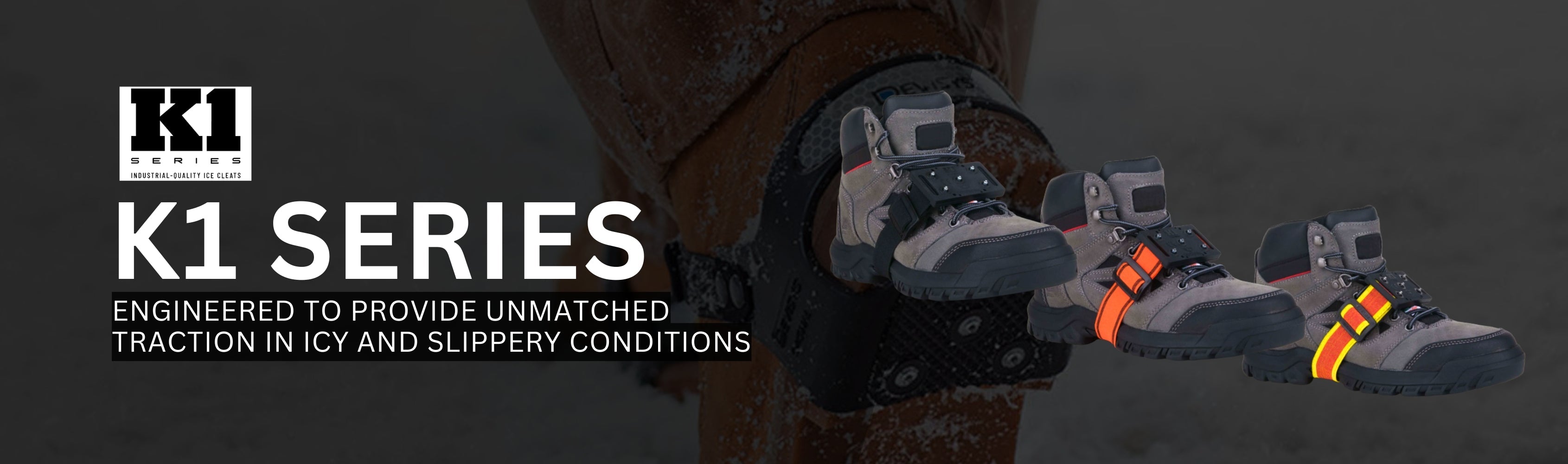
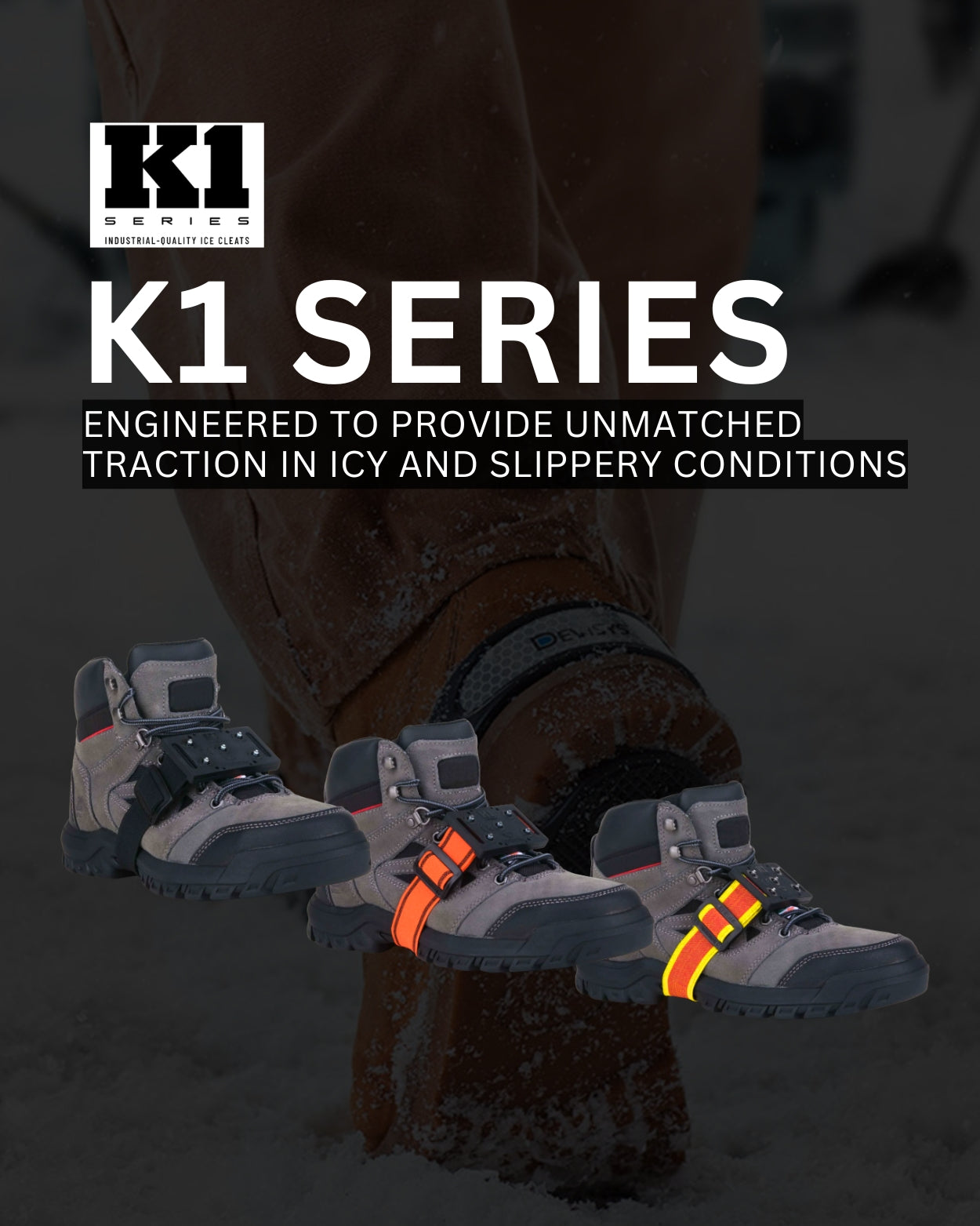
K1 Series Rotating Ice Cleats and Heel Traction Aids
10 products
Showing 1 - 10 of 10 products
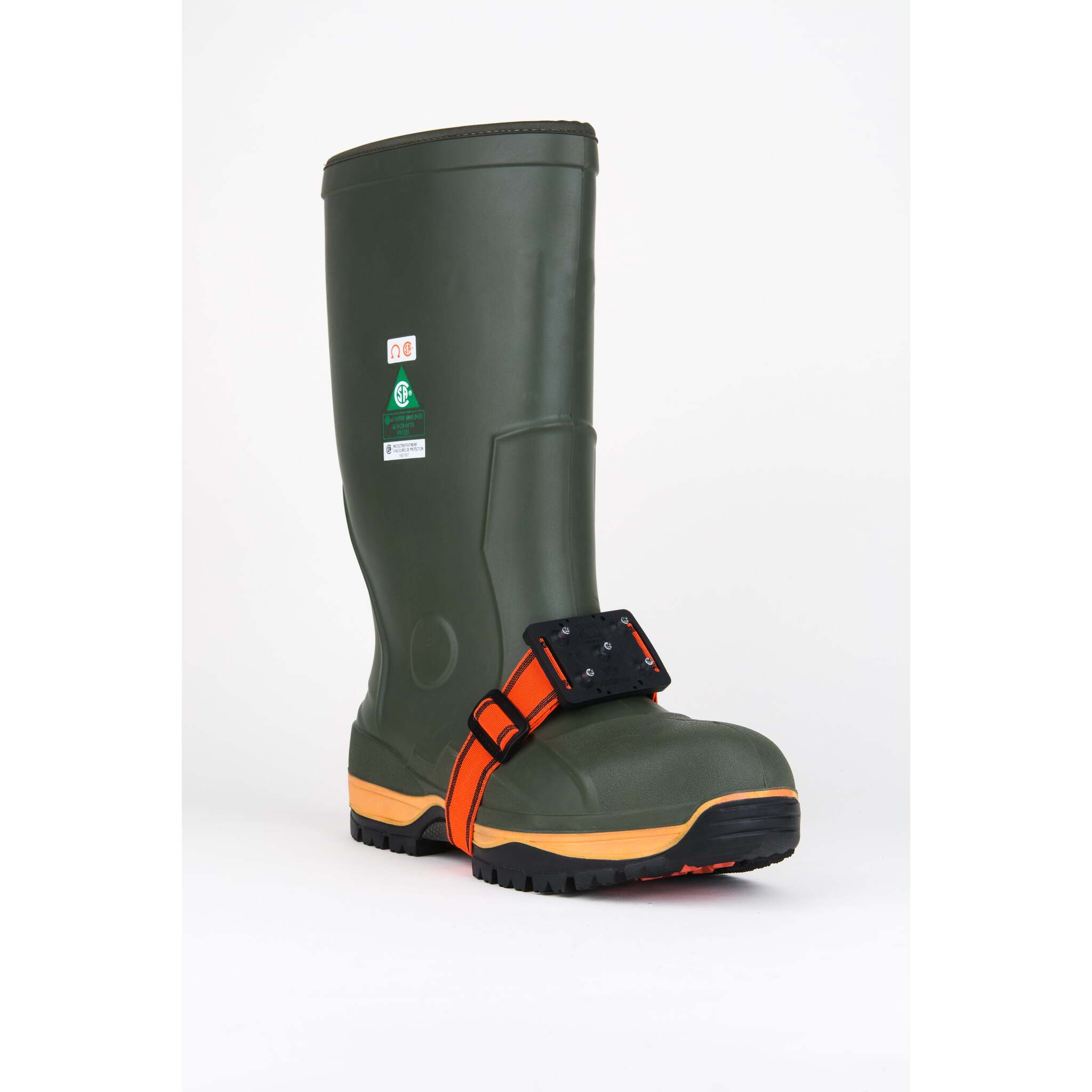
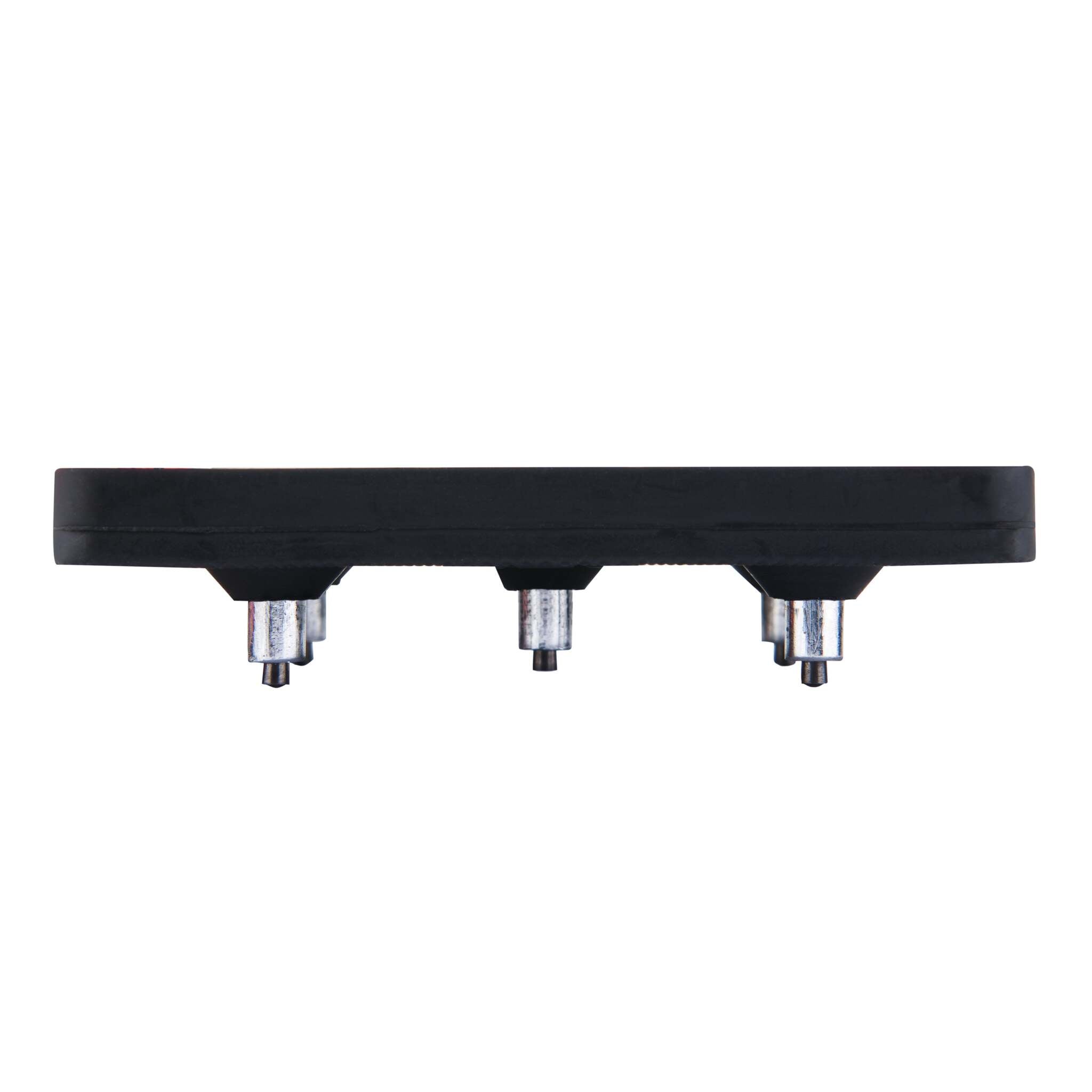
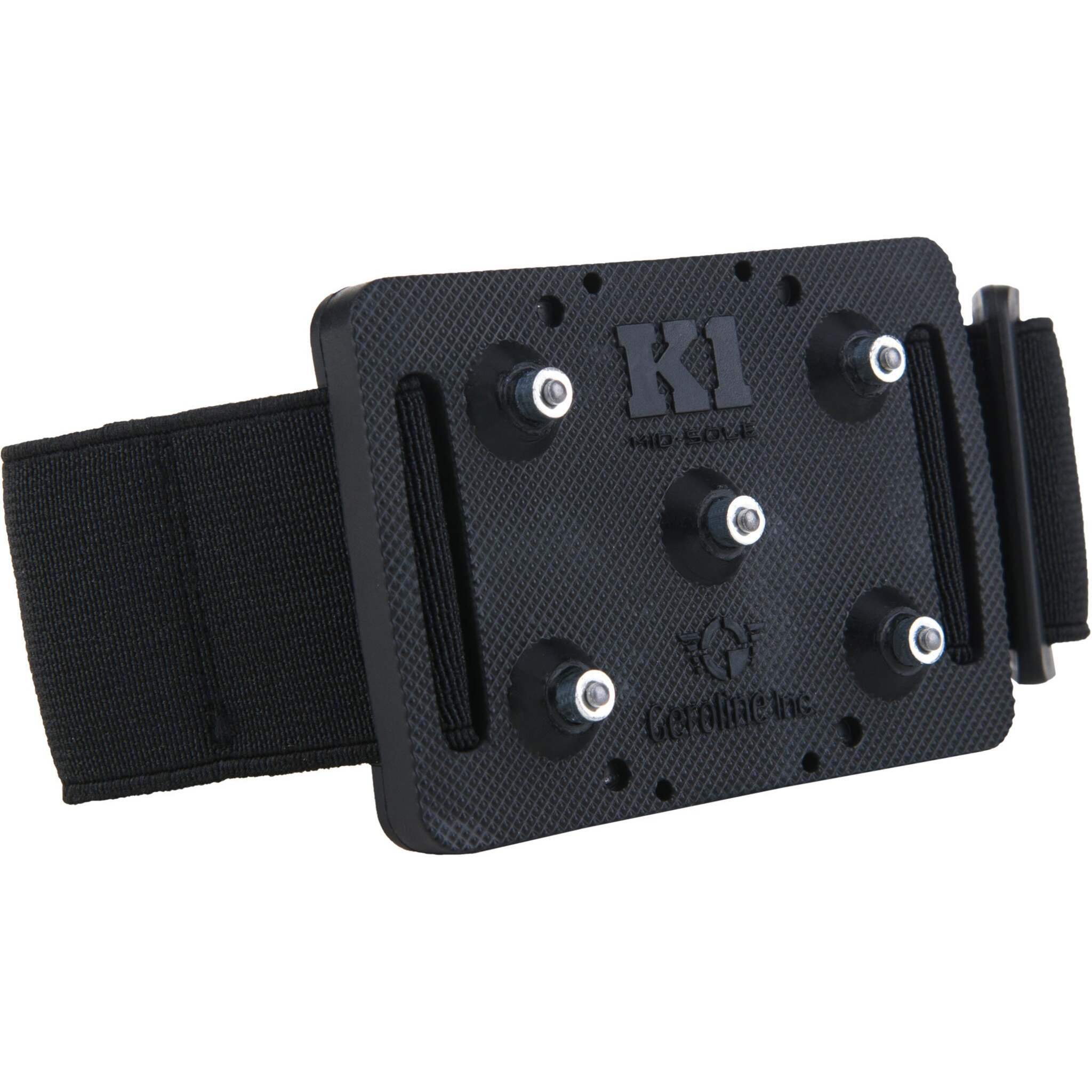
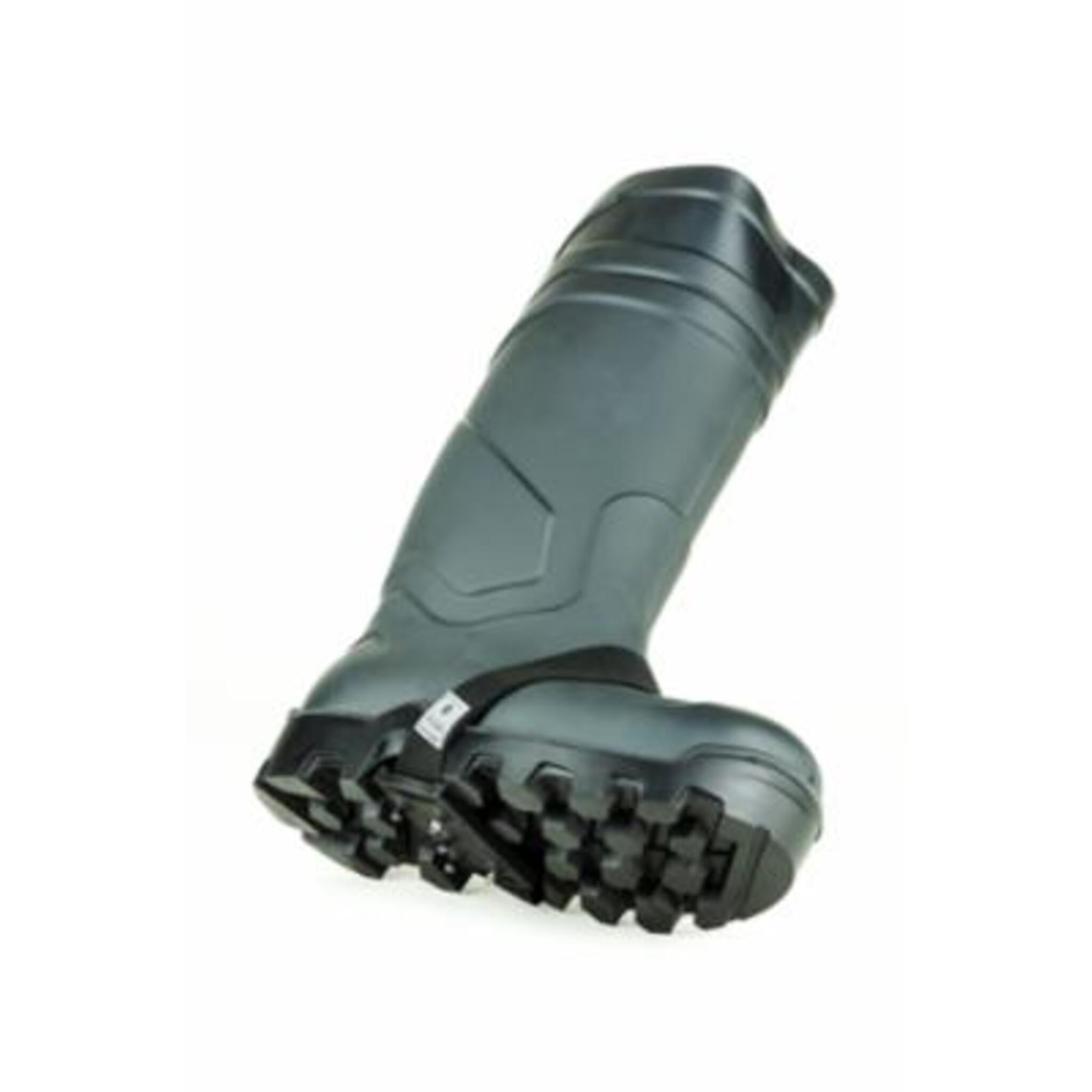
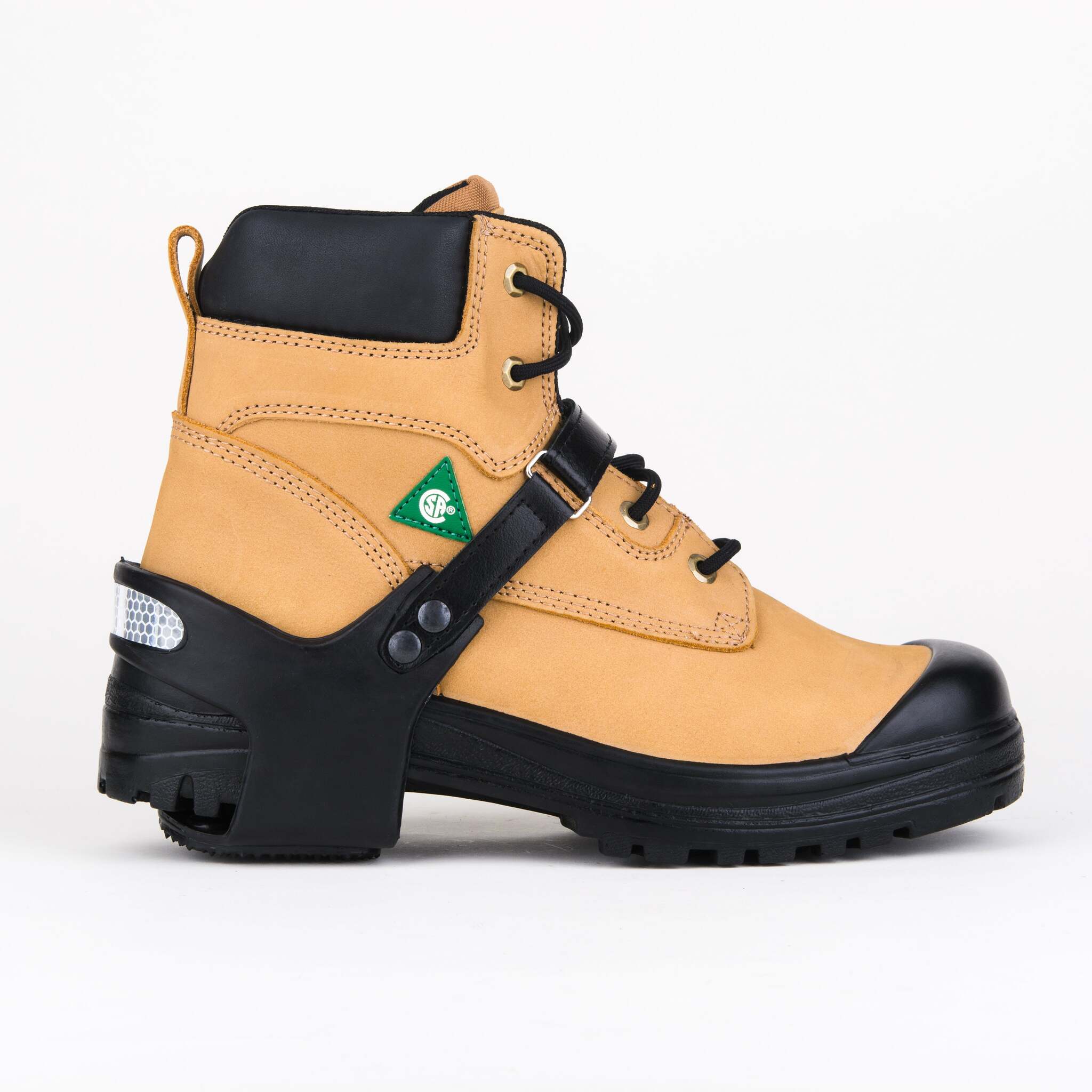
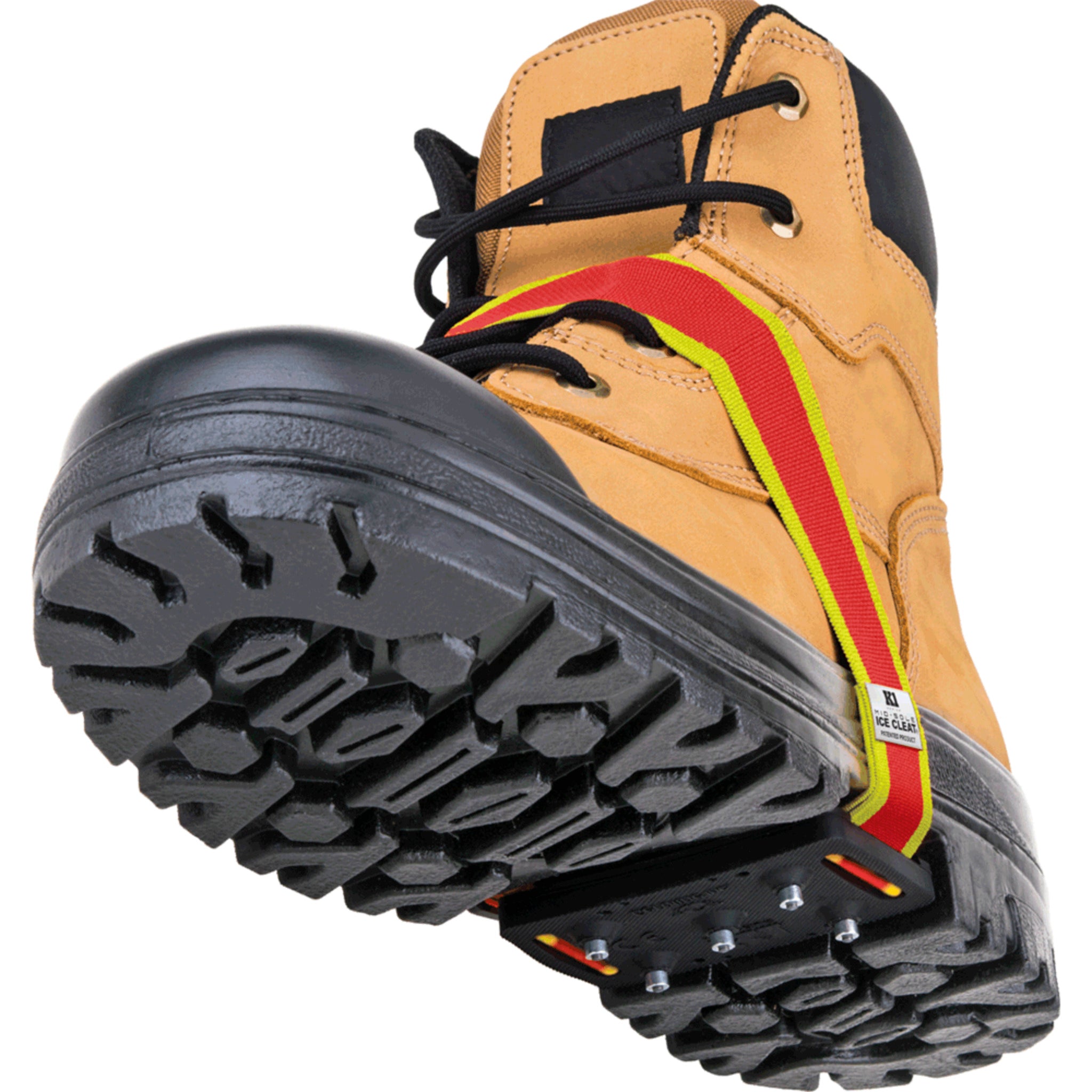
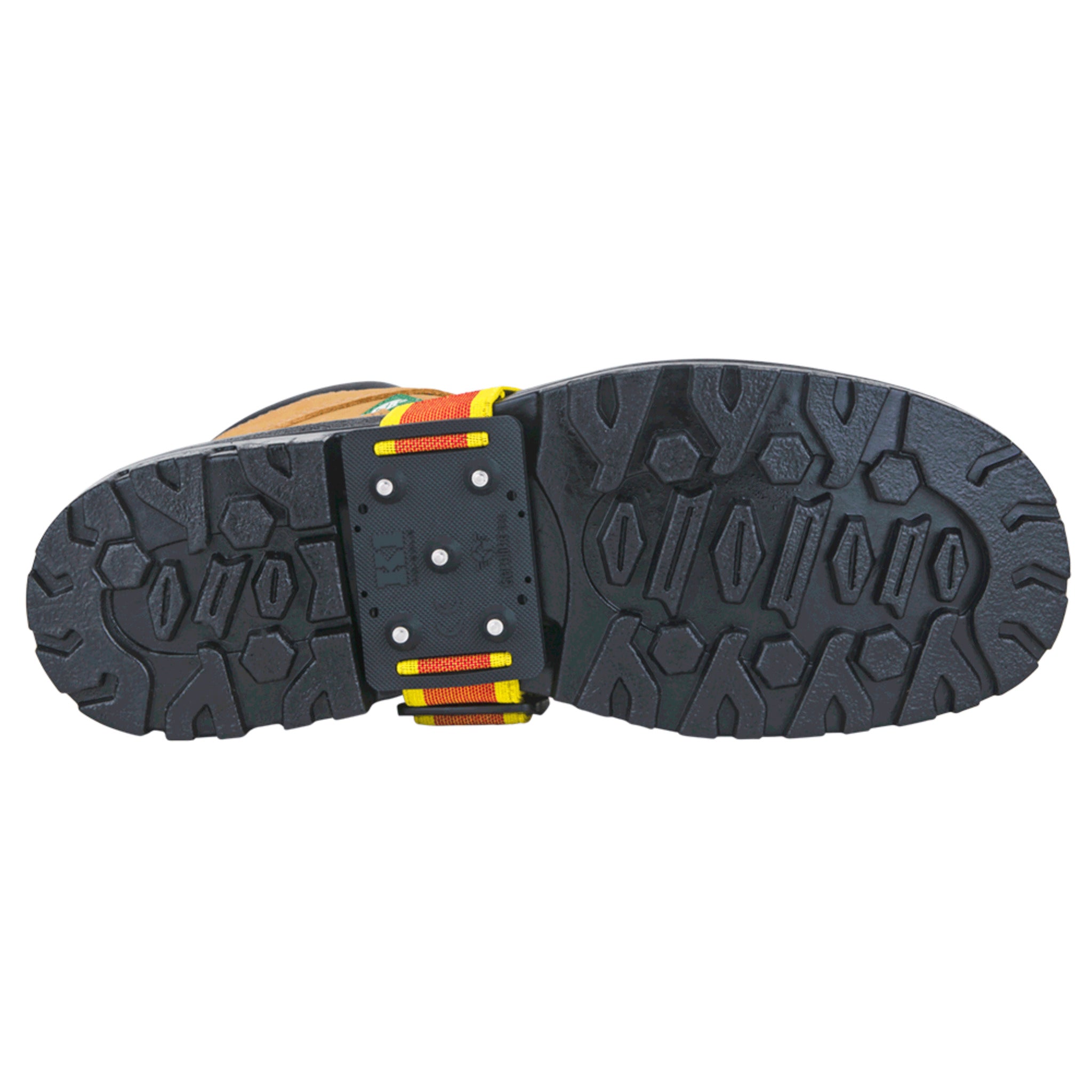
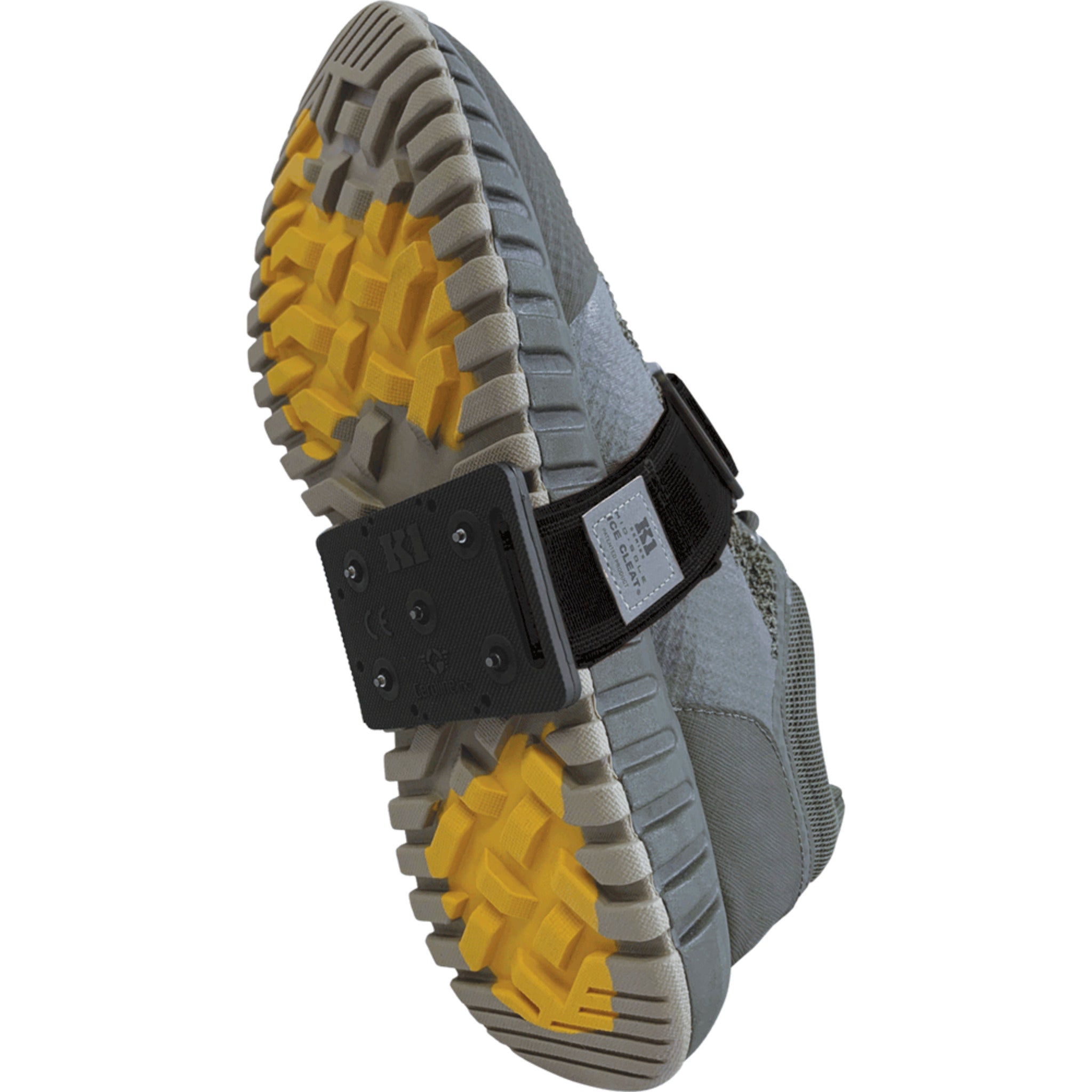
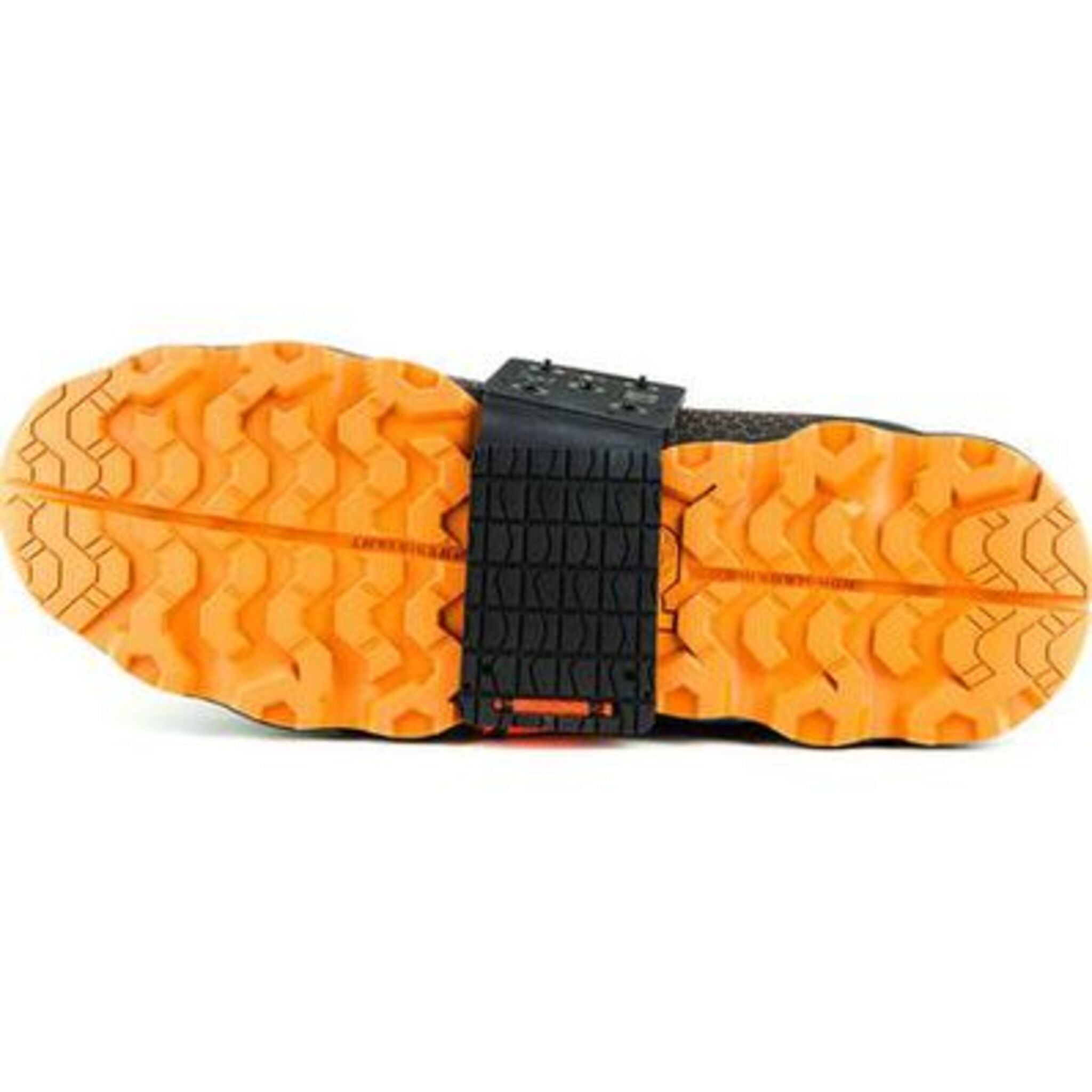
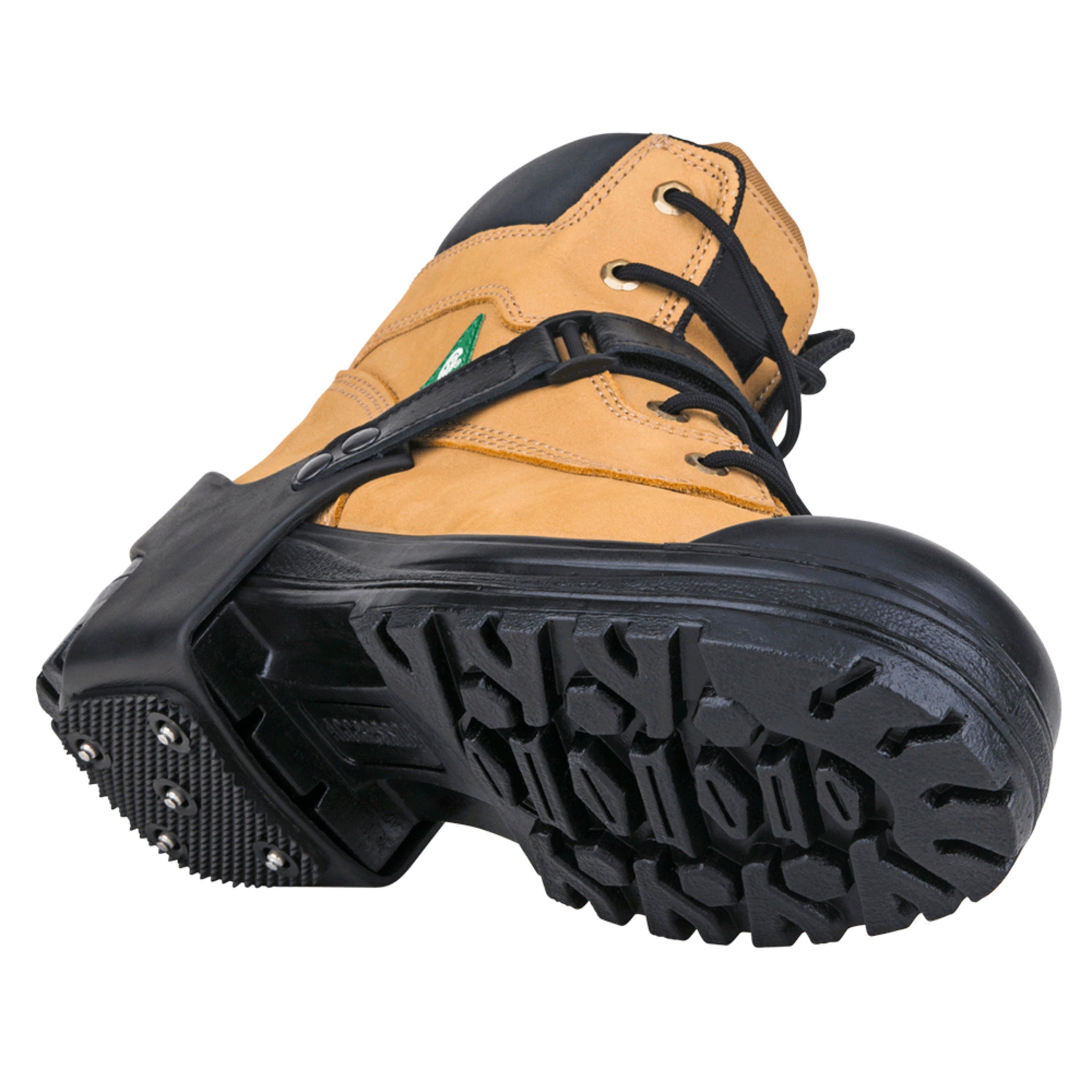
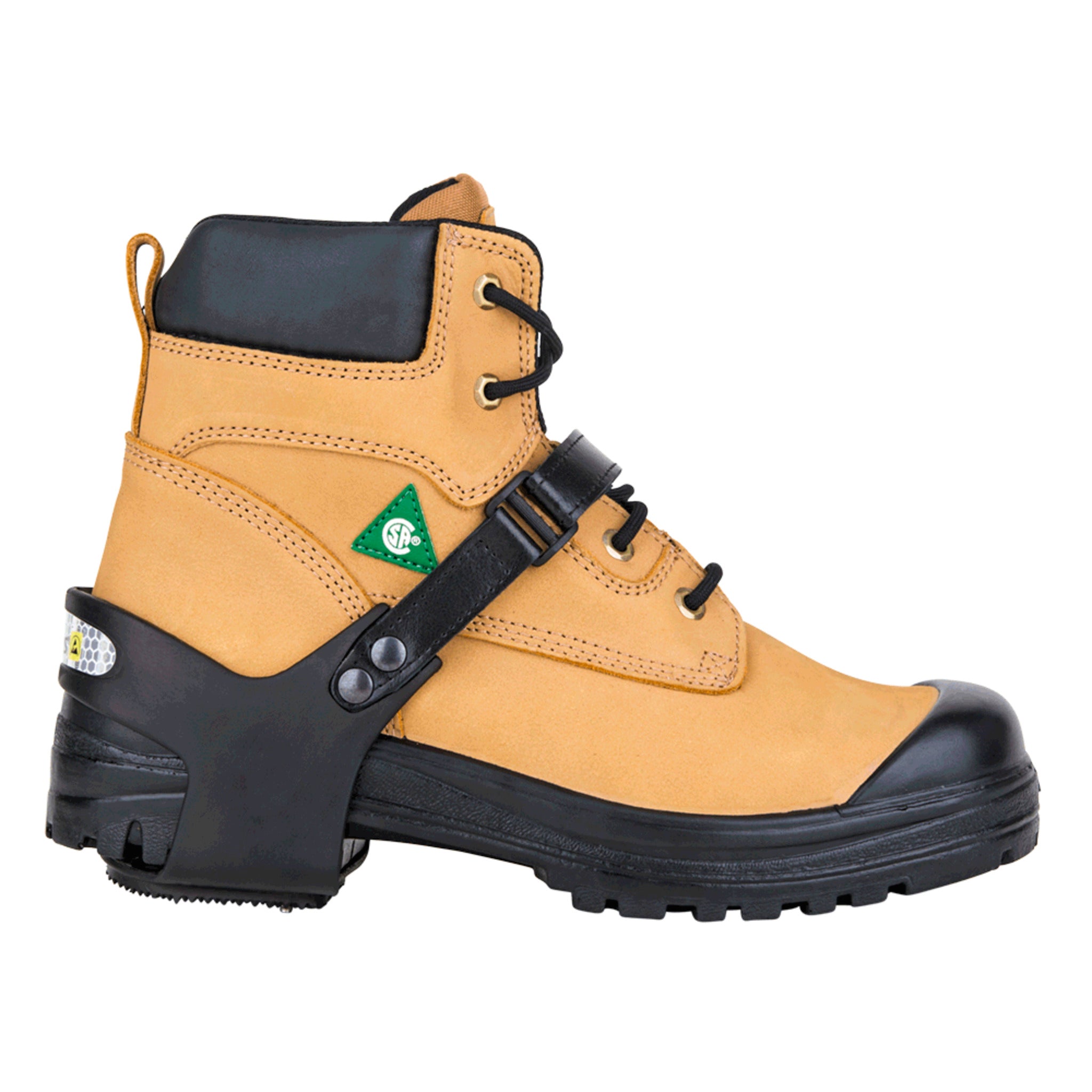
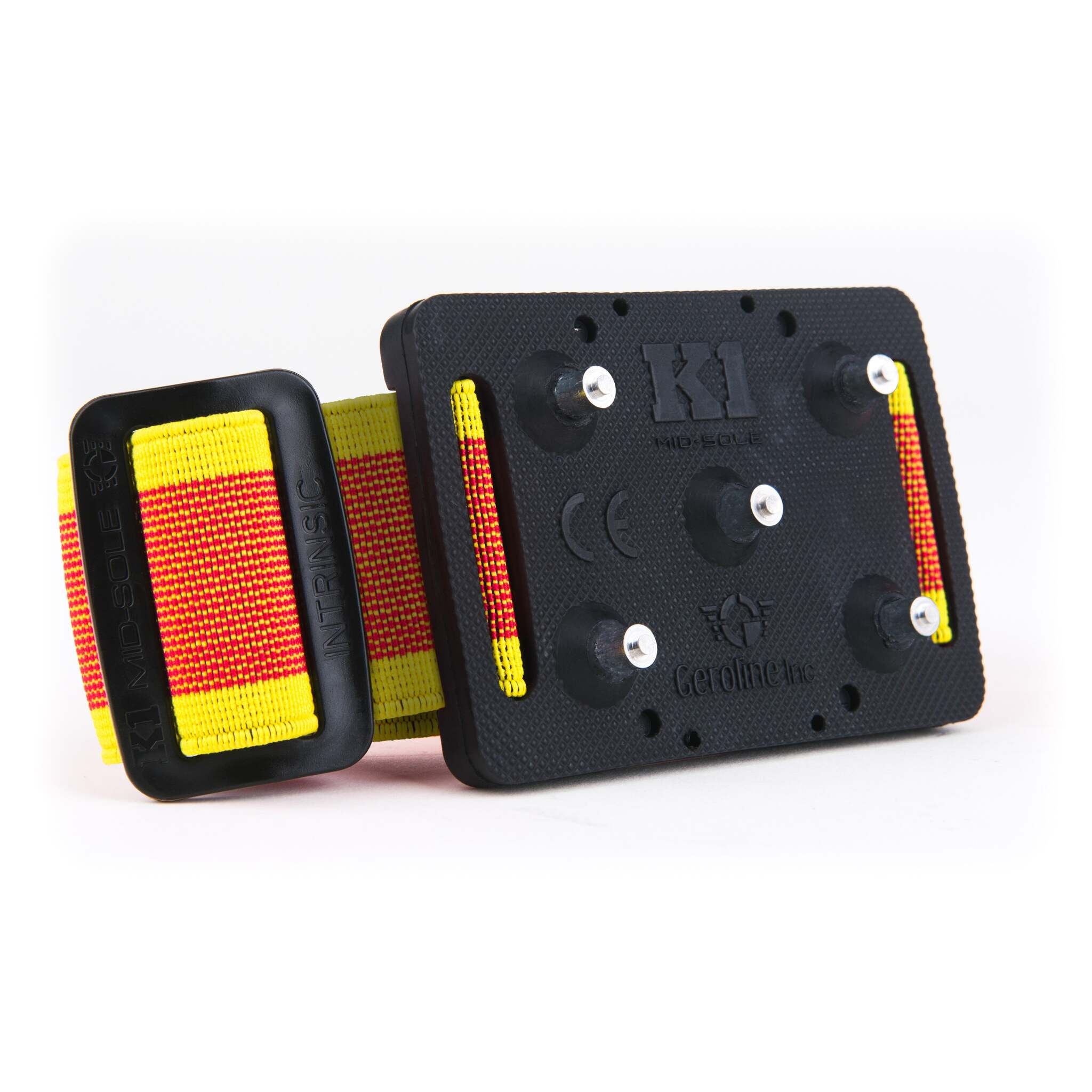
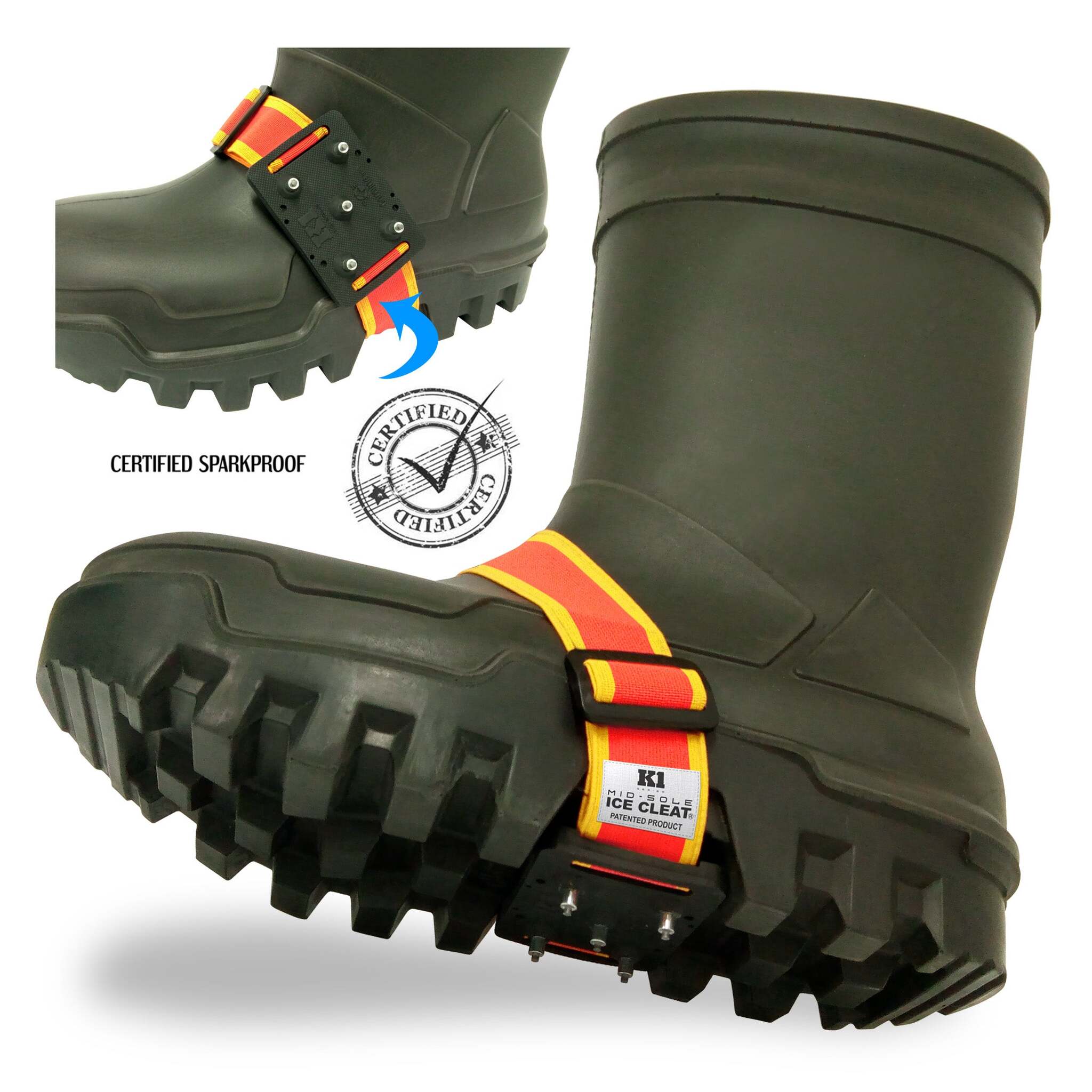
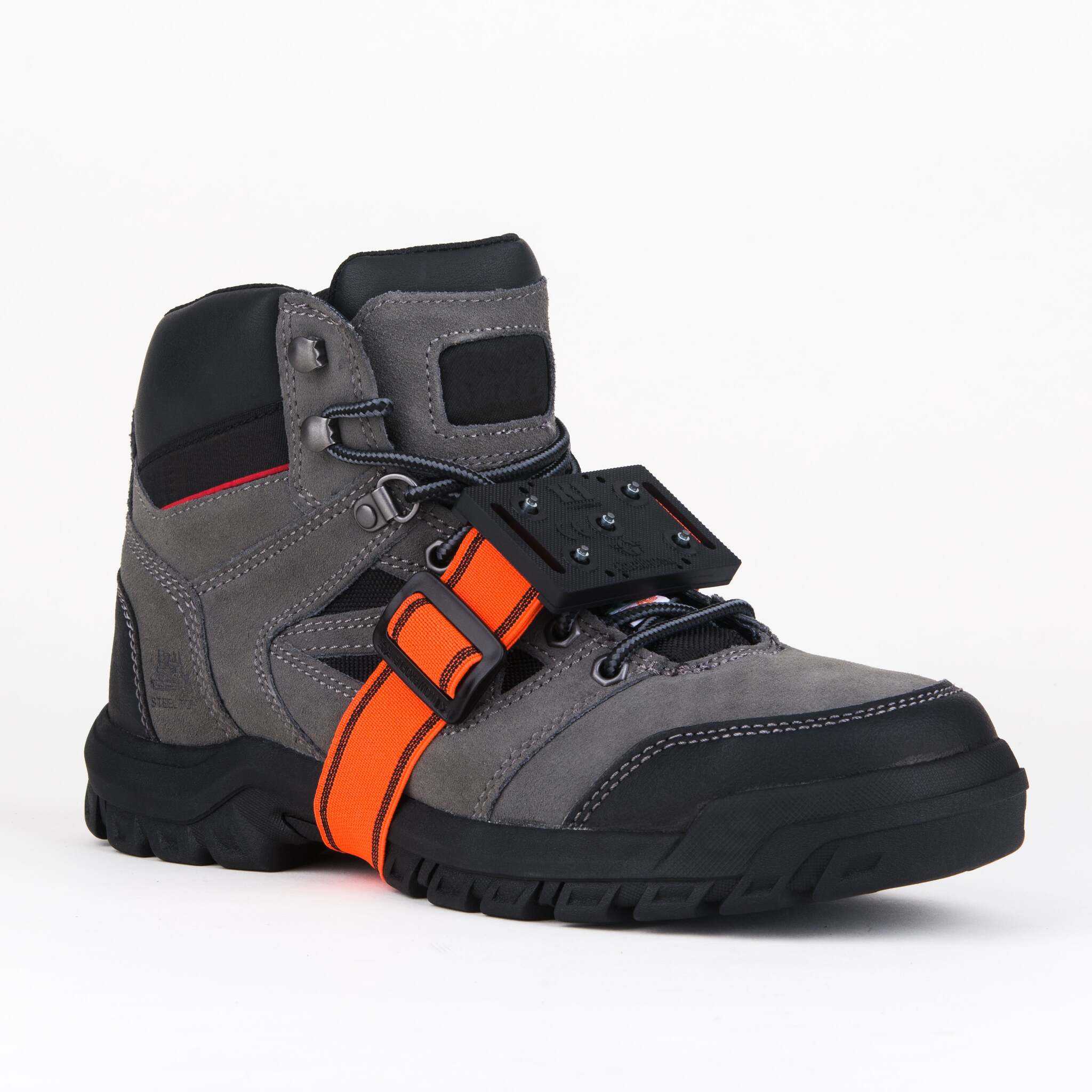
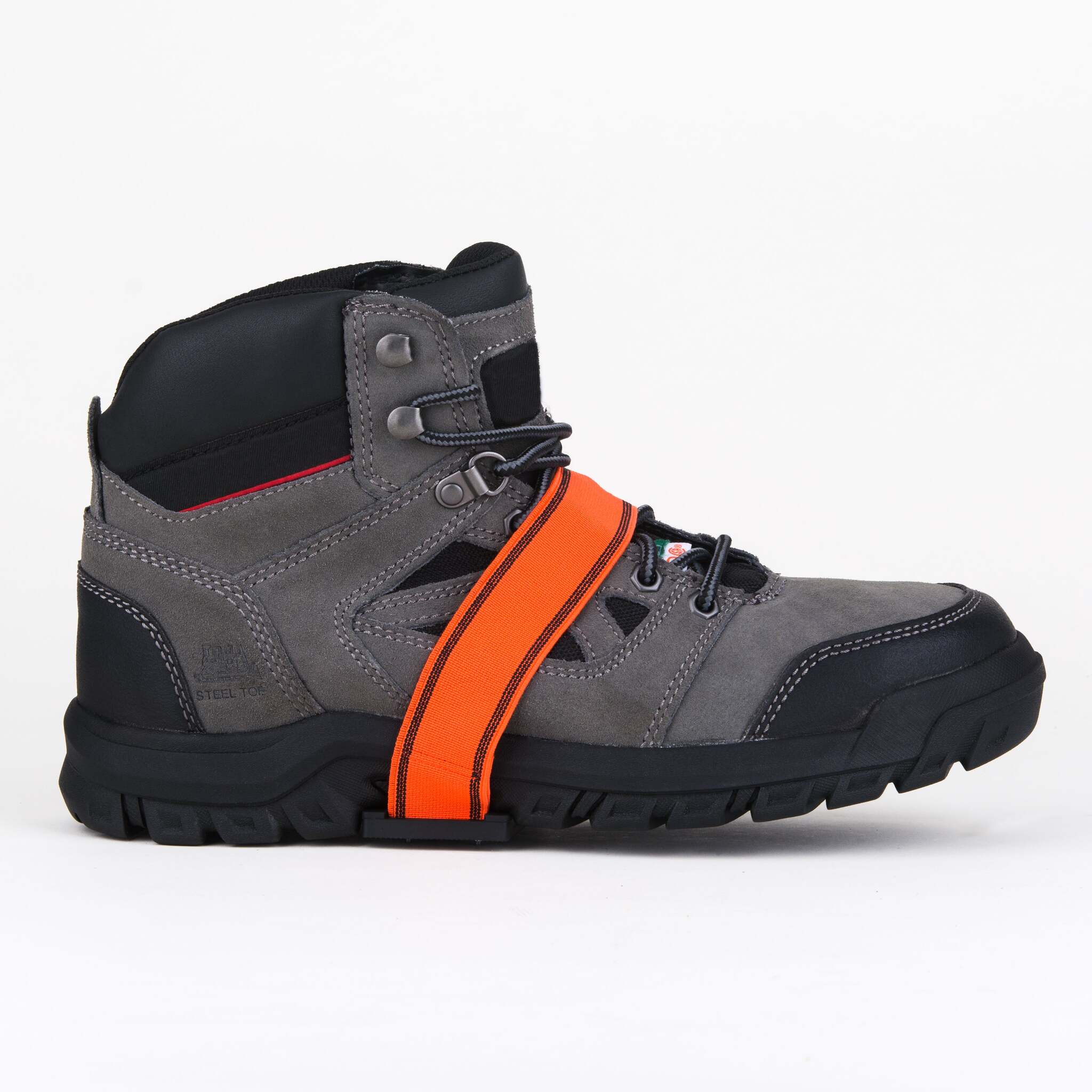
Cleats come off when they should stay on. A worker climbs into a cab, or crosses a plant floor, and pulls them off rather than catch a pedal or mark the surface. Then the next stop happens without them. K1 Series ice cleats rotate to the top of the boot instead of coming off.
The models named Intrinsic carry a certification that prevents sparking. The rest use tungsten carbide spikes on rubber formulated to stay flexible in extreme cold, held either by an adjustable strap or by boot size on the heel models.
Intrinsically Safe Models
Sparking is not a hazard most people associate with footwear. In a classified area it is the reason a traction aid gets left in the truck, which puts the worker back on ice with nothing underfoot. Intrinsically safe ice cleats exist so that does not have to happen.
K1 certifies selected models to prevent sparking caused by electrical and thermal energy, and marks them Intrinsic in the product name. The manufacturer names oil and gas, chemical, wastewater and agricultural work as the applications. Intrinsically safe ice cleats are specified by task, not by brand, and the standard models do not carry the certification.
The certified models are the Heelstop Intrinsic in sizes M through 2XL, the Mid-Sole Intrinsic Low Profile and the Mid-Sole Intrinsic High Profile, both one size. The mid-sole versions are hi-vis and the Heelstop carries reflective strips. If a digester building, a wet well or a chemical storage area is on the route, these are the non-sparking traction aids to order.
One thing the certification does not do on its own. K1 states that the intrinsic models must be worn with appropriate ESD footwear. The cleat is one part of the system and the boot underneath carries its own rating, so a classified area needs both specified together.
Matching the Cleat to the Boot
Mid-sole cleats sit under the middle of the boot. Whether they seat properly depends on the sole underneath them, which is why the same model behaves differently on a safety shoe and a logger boot.
|
Profile |
Suits |
Typical footwear |
|
Low profile |
Low arches, little or no defined heel. Shorter studs on a narrower rubber platform. |
Safety shoes, flat-soled work boots |
|
High profile |
Deep treads, high arches, aggressive heels |
Lineman and logger boots |
The manufacturer names forestry, power and utilities, oil and gas, and pipeline work for the high profile model. If the crew wears a heavy lugged boot, ice cleats for deep tread boots are the ones that will actually make ground contact.
How Rotating Cleats Work
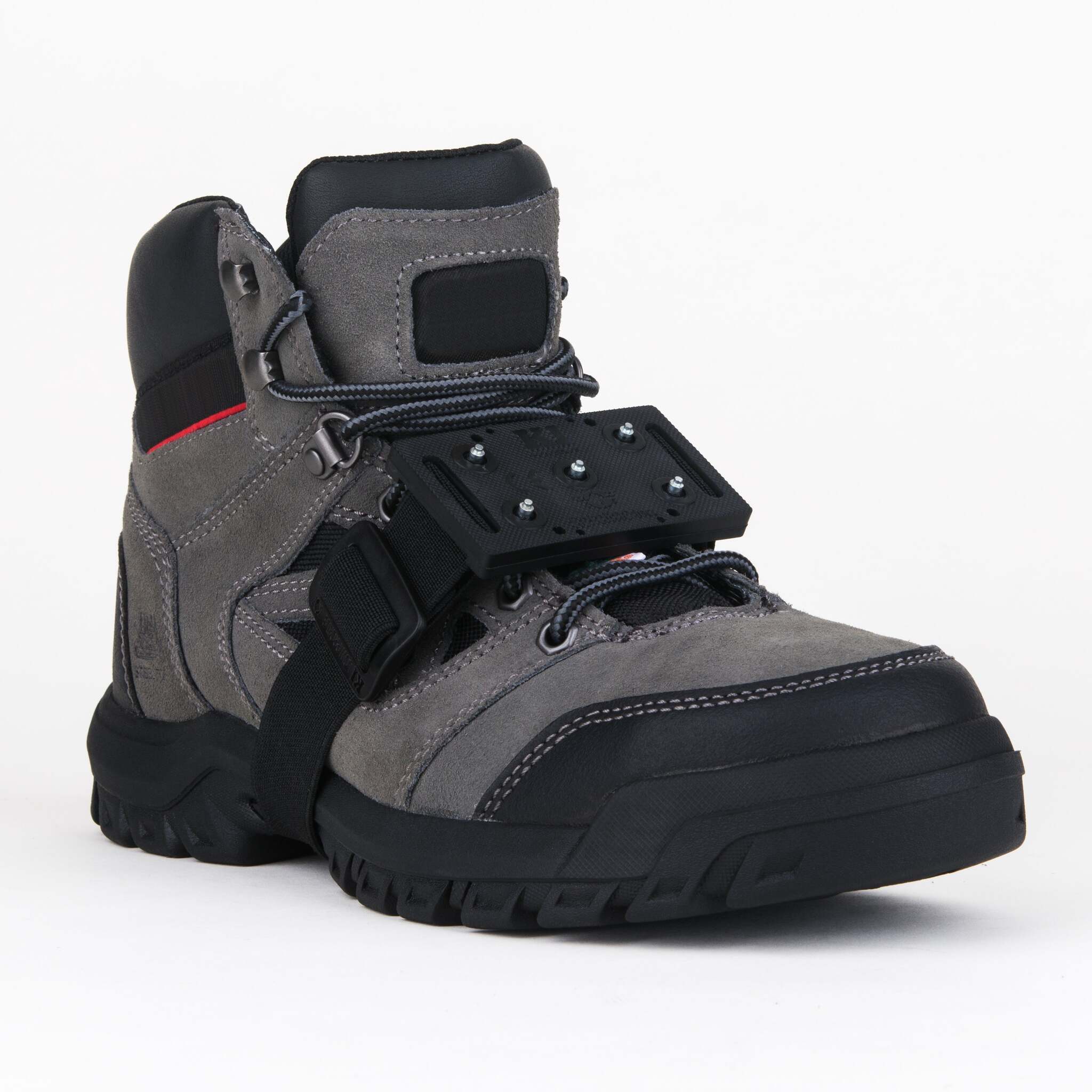
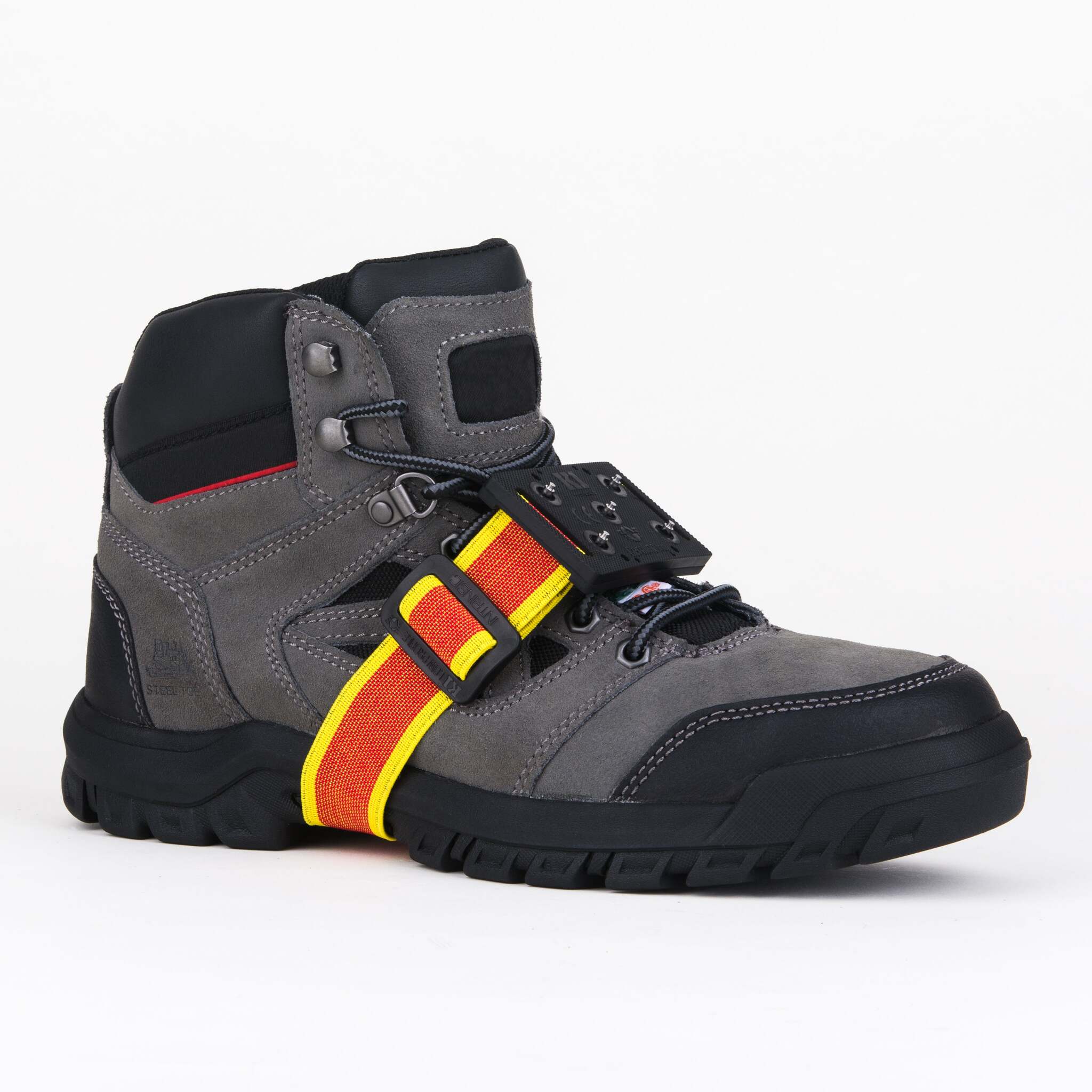
Mid-sole ice cleats sit under the middle of the boot on an adjustable strap that runs around it. When traction is not needed, the spiked pad rotates around the strap to the top of the foot and stays there.
Nothing comes off, nothing gets set down, nothing gets lost. Rotating ice cleats let a worker drive, climb a ladder or walk onto a finished floor without stopping to remove anything, then rotate the pad back down at the next stop. Ease of use is what drives compliance, and the manufacturer ties that directly to fewer slip and fall injuries.
What's in Stock
K1 Series ice cleats split into two positions on the boot. Mid-sole models rotate. Heel models cover the back of the boot and stay put.
Mid-sole models
-
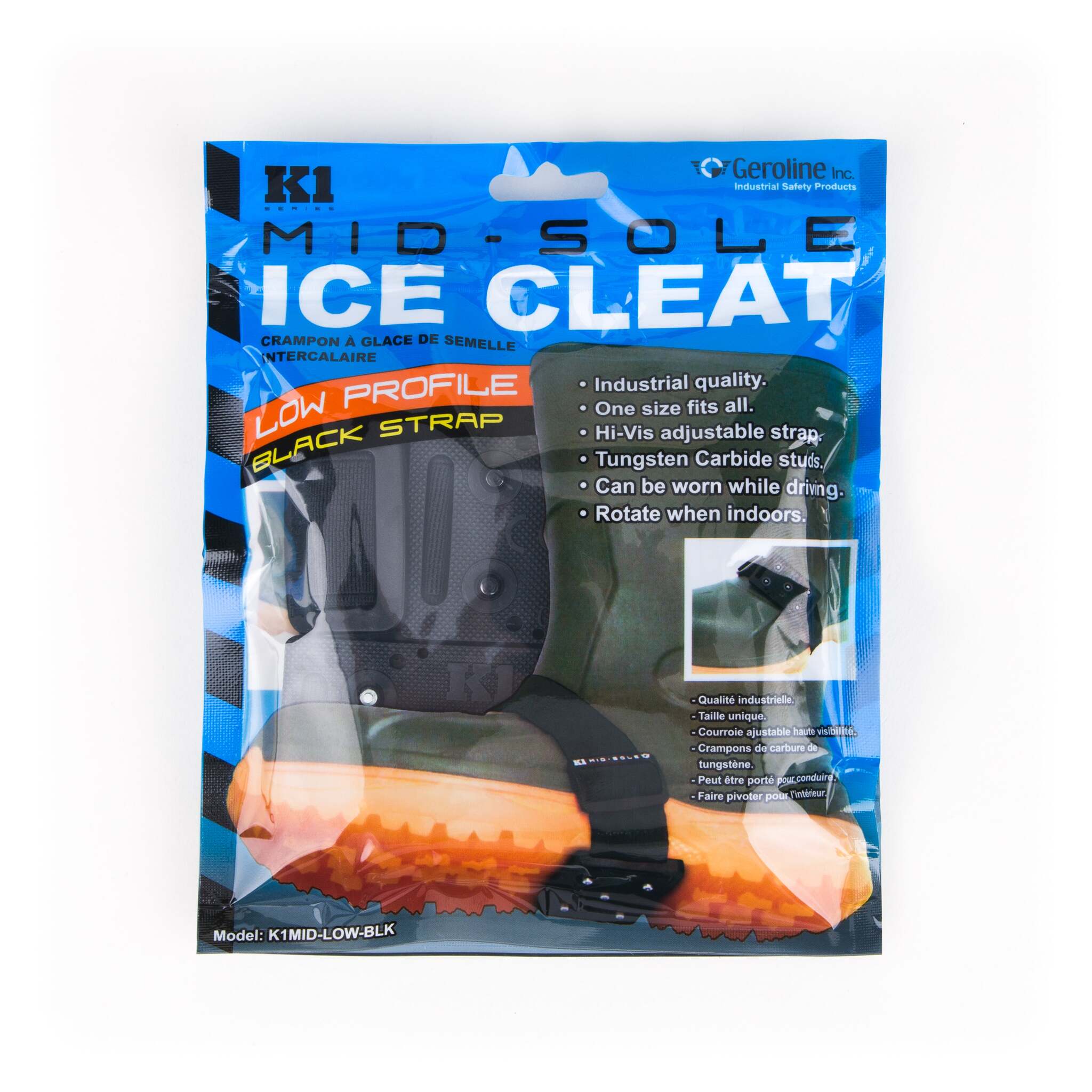
Mid-Sole Low Profile. Tungsten carbide spikes on a black adjustable strap, shaped for boots and shoes with little to no heel.
-
Mid-Sole Low Profile Hi-Vis. The same platform in a high-visibility strap, for crews working roadside or in low light. These are the mid-sole ice cleats to order where the crew is seen before it is heard.
-
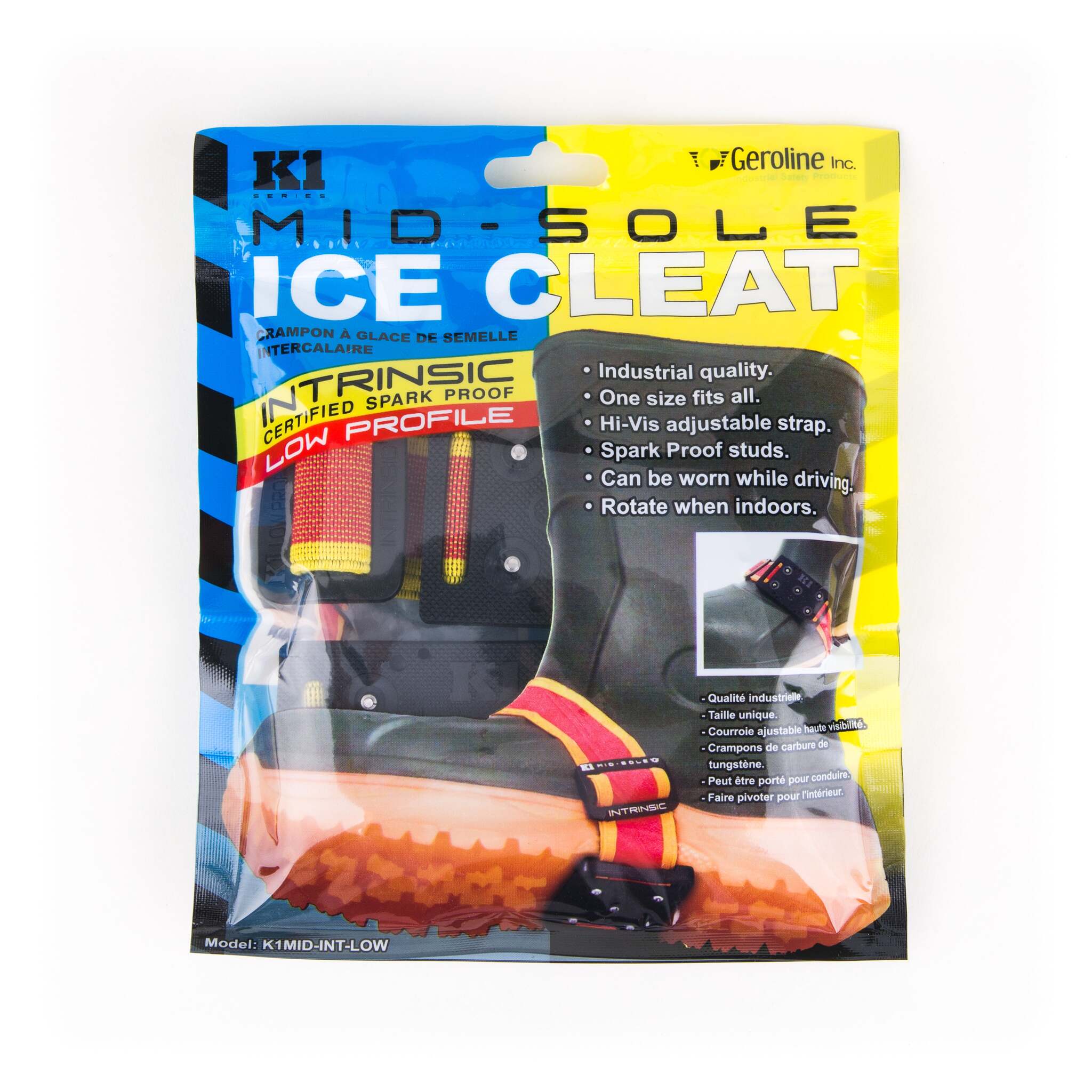
Mid-Sole Intrinsic Low Profile. Certified against sparking, hi-vis, one size. The mid-sole option for classified areas.
-
Mid-Sole High Profile. Ice cleats for deep tread boots, high arches and aggressive heels, where a low profile cleat will not reach the ground.
-
Mid-Sole Intrinsic High Profile. Certified against sparking, hi-vis, one size. The intrinsic option for deep treads and aggressive heels.
Heel models
-
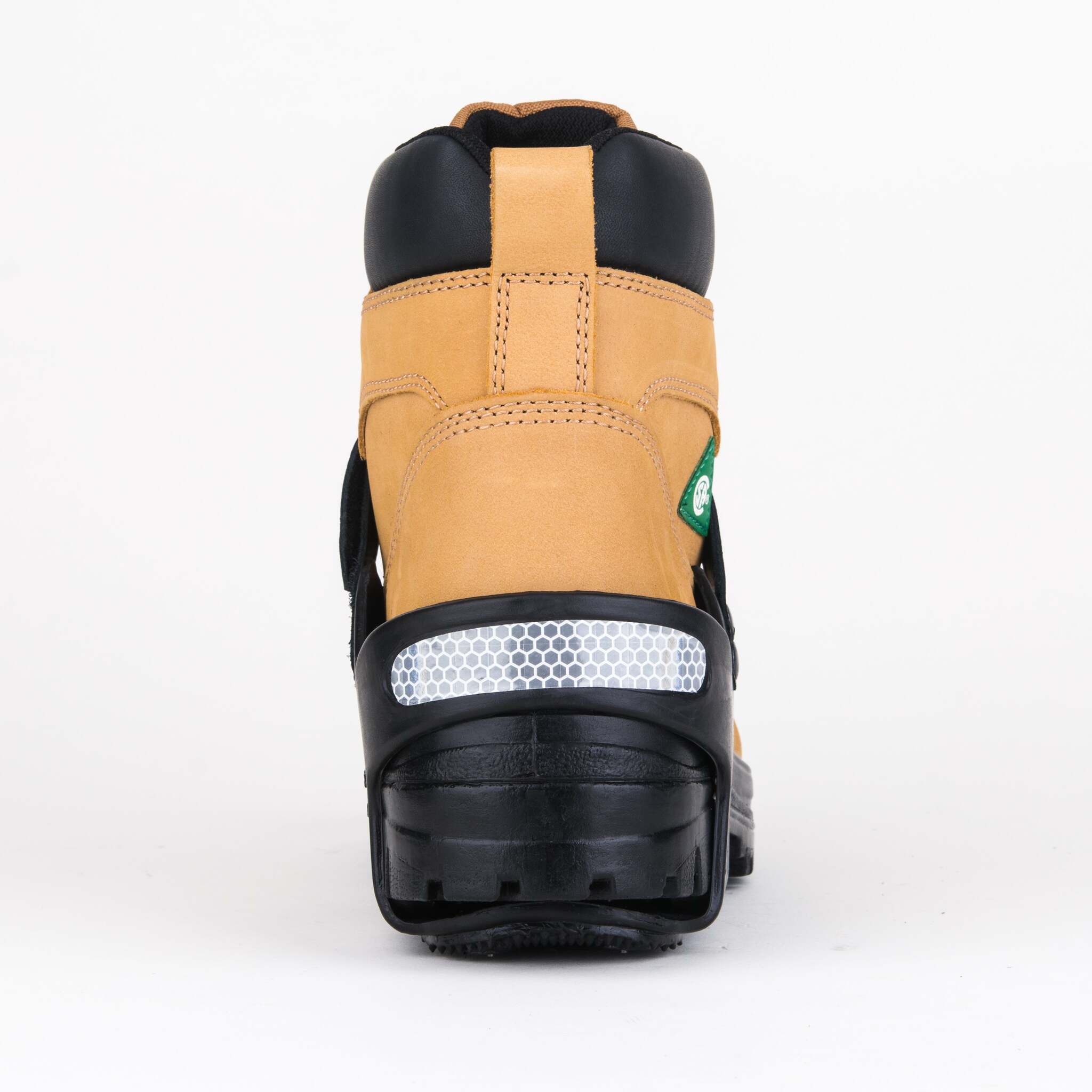
Heelstop. Ten tungsten carbide spikes per pair, five per heel, covering the whole heel surface. Freeze-resistant TR rubber, hook and loop straps, reflective strips, sizes M through 2XL.
-
Heelstop Intrinsic. Tungsten carbide spikes across the heel, with the anti-sparking certification and reflective strips.
Buy K1 Series Ice Cleats Online from Cleanflow
Cleanflow Utility Supply Company stocks K1 Series ice cleats and ships across Canada and the USA from its Winnipeg warehouse. Free shipping on orders over $199. Returns accepted within 30 days at returns.cleanflow.net.
Call 1-866-335-1078 (Canada) or 1-204-888-8469 (USA), or email info@cleanflow.ca. If any part of the site is a classified area, say so on the call and we will make sure the intrinsically safe ice cleats go on the order rather than the standard models. Ask about bulk quantities and net terms.
Frequently Asked Questions
What does intrinsically safe mean on ice cleats?
It means the product is certified not to produce enough electrical or thermal energy to ignite a combustible atmosphere. Not every K1 model is certified. The intrinsically safe ice cleats carry Intrinsic in the product name, so the specification is made model by model rather than by brand.
Do ice cleats spark?
Metal studs striking rock, concrete or steel can produce a spark. In most workplaces that is harmless. In an area where combustible gas, vapour or dust may be present, it is a recognised ignition source. Non-sparking traction aids exist as a separate product category for exactly that reason.
Should I order low profile or high profile ice cleats?
Look at the boot. Low profile suits flat soles and shallow arches, where a taller cleat would sit proud and rock. High profile suits deep treads, high arches and aggressive heels such as lineman or logger boots. If the spikes are not reaching the ground through the lugs, the profile is wrong rather than the product. If a crew wears both, order both.
Can you drive with mid-sole ice cleats on?
Yes, once the pad is rotated to the top of the foot. That is the point of rotating ice cleats. The spikes clear the pedals and the sole of the boot contacts them directly, so nothing has to come off between stops.
Do intrinsically safe ice cleats need ESD boots?
K1 states the intrinsic models must be worn with appropriate ESD footwear. The cleat prevents sparking from its own contact with the ground. It does not change what the boot underneath is rated for, so a classified area needs both specified together rather than one or the other.
What is the difference between K1 and Due North?
K1 rotates out of the way and stays on the boot. Due North comes on and off and covers more of the sole. Choose K1 where the day involves frequent cab and indoor transitions, and Due North where the crew stays on ice. K1 offers certified non-sparking models. Due North does not.