



Description
Battery Powered Hydrostatic Test Pump for Sites Without Power
Product Overview
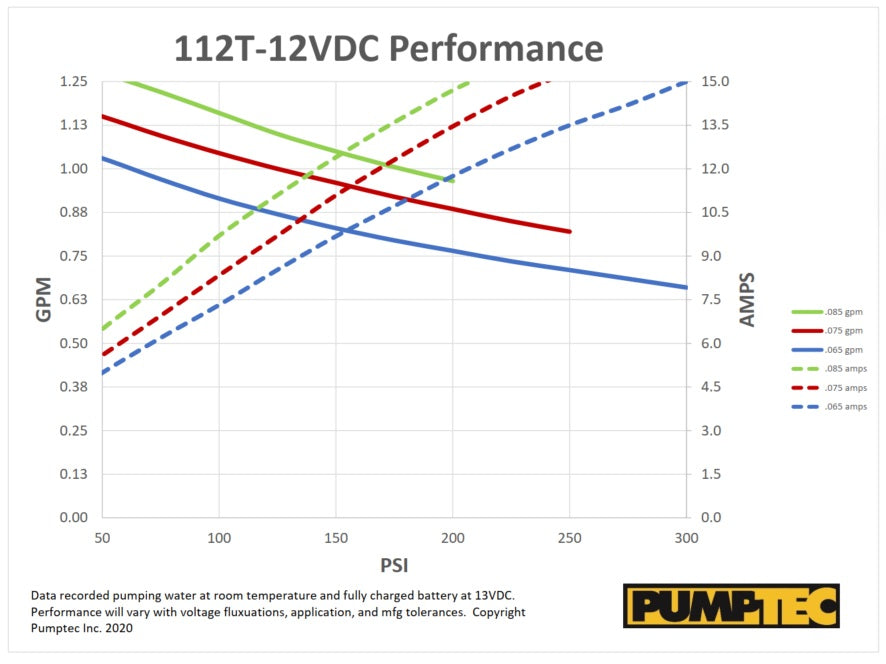
Sprinkler piping and water lines sometimes need testing before the building has working power. The Triple R Tru-Test hydrostatic test pump runs from a 12V battery on a 25 ft cable, so the test does not wait for an outlet. This battery-powered hydrostatic test pump weighs 22 lbs in its metal case and delivers 2.2 GPM open flow and up to 250 PSI.
Key Features and Benefits
- Pumptec calls the Tru-Test its lightest hydrostatic testing pump, and this battery-powered hydrostatic test pump replaces hand pumping. Crews reach test pressure without stroking a manual pump.
- A permanent magnet motor drives the stainless steel plunger and valves for 2.2 GPM open flow, the flow with no system pressure. Pumptec rates the Tru-Test 20% more efficient than the competition, which helps with battery power.
- Brass piping resists corrosion and weighs less than galvanized steel pipe, while the liquid-filled gauge steadies the needle. Readings stay clear while the pump runs.
- The quick-disconnect hose has a built-in check valve that maintains system pressure while the hose stays connected. The pump can be switched off and disconnected from the battery during the hold.
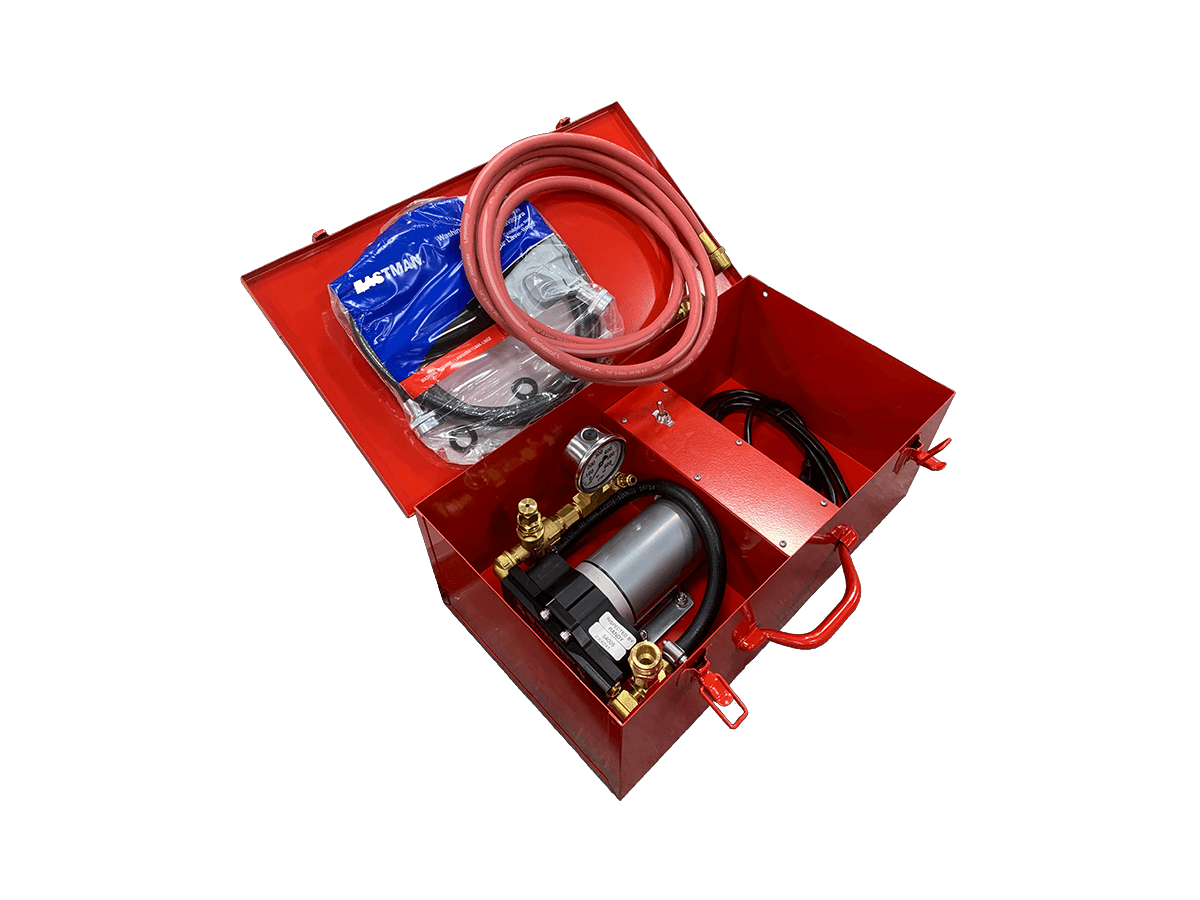
- The Tru-Test comes in a custom metal case with a 5 ft inlet hose, a 10 ft quick-disconnect outlet hose, and the battery cable. Only the 12V battery and a supply hose come from the user.
Setting Up a Test Without Site Power
Fill the piping with water and bleed out air before connecting. Feed the Triple R Tru-Test hydrostatic test pump from a flowing supply, like a hose bib, using a standard water hose on the 5 ft inlet hose. A tank must sit higher than the pump, with gravity flow started before connecting.
With the switch off, connect the quick-disconnect hose to the system and the battery cable to a 12V battery, then switch on and watch the gauge. Drain the pump after each use when temperatures drop below freezing.
Applications
The Triple R Tru-Test hydrostatic test pump suits water-based systems tested at or below 250 PSI, especially where power is not yet available.
- Sprinkler and standpipe systems. Small and medium-scale acceptance and revision tests can go ahead in buildings that do not yet have a functioning power source.
- Plumbing lines. A battery-powered pressure test pump lets plumbers test new water piping before permanent power is connected.
- Water transfer and vent line filling. Pumptec lists vent line filling and water transfer as uses beyond hydrostatic testing.
Choosing a Triple R Test Pump by Power Source
Start with the power the site can supply.
| Triple R Tru-Test 12VDC | Triple R HT-89A | Triple R HT-454 | |
|---|---|---|---|
| Power | 12V battery, 15 A | 115 VAC outlet | 120VAC outlet |
| Maximum pressure | 250 PSI | 300 PSI | 400 PSI |
| Open flow | 2.2 GPM | 3.0 GPM | 4.5 GPM |
| Pressure regulator | None | Built-in, with full-flow bypass | None |
| Weight | 22 lbs | 35 lbs | 34 lbs |
Choose this battery-powered hydrostatic test pump when no outlet is available. The Triple R HT-89A and Triple R HT-454 need outlet power but move more water, and the REED DPHTP500 runs from an 18V cordless or ½" electric drill.
Technical Specifications
| Specification | Value |
|---|---|
| Brand | Triple R |
| Model | Tru-Test 12VDC (Tru-Test-12VDC) |
| Cleanflow SKU | 81952 |
| Maximum pressure | 250 PSI |
| Open flow rate | 2.2 GPM |
| Voltage/amperage | 12VDC / 15 A |
| Power connection | 25 ft battery cable (battery not included) |
| Motor | Permanent magnet |
| Pressure regulator | None |
| Switch | On/off |
| Body | Hard-coat aluminum |
| Plunger | Stainless steel |
| Valves | Stainless steel |
| Seals | NBR |
| Gauge | Liquid-filled |
| Piping | Brass, with inline check valve |
| Inlet port | ¼" female |
| Discharge port | ¼" female |
| Inlet hose | 5 ft |
| Outlet hose | 10 ft, with quick disconnect |
| Case | Custom metal case |
| Maximum fluid temperature | 140°F |
| Dimensions | 20" × 12" × 7" |
| Weight | 22 lbs |
| Not suitable for | Test pressures above 250 PSI, fluids above 140°F, drawing water by suction without a gravity feed |
Buy the Triple R Tru-Test 12V Battery Powered Hydrostatic Test Pump Online from Cleanflow
Cleanflow Utility Supply Company is an authorized Triple R supplier and carries the Triple R Tru-Test hydrostatic test pump. Pumptec covers it with a 12-month limited warranty, excluding wear items such as seals and valves. Orders ship across Canada and the USA, and free shipping applies to most orders over $199. Exchanges are accepted within 30 days of purchase under the Cleanflow refund policy. For help choosing a battery-powered pressure test pump, email info@cleanflow.ca.
Frequently Asked Questions
Can the Tru-Test draw water from a bucket?
It can, but the manufacturer advises against it, because air drawn in with the water can damage the pump. A flowing supply like a hose bib is the better choice. If a container is the only source, keep it higher than the pump so water flows in by gravity.
Is the 12V battery included?
No. The 25 ft battery cable connects this battery-powered hydrostatic test pump to a 12V battery, but the battery itself is not included. A charged vehicle battery works if it can supply the pump's 15 A draw for the length of the test.
Does the Tru-Test have a pressure regulator?
No. On a battery-powered hydrostatic test pump without a regulator, the operator watches the gauge and switches off at the required test pressure. Small piping runs reach pressure fast, so stay at the switch, or choose the Triple R HT-89A for a built-in regulator.
How do I calculate hydrostatic test pressure for a sprinkler system?
Here is how to calculate hydrostatic test pressure under NFPA 13: use 200 PSI for 2 hours, or 50 PSI above working pressure when the system normally runs above 150 PSI. The Tru-Test's 250 PSI rating covers systems working at up to 200 PSI. Check local requirements first.
How long does the Tru-Test take to fill a system?
Expect at least 23 minutes for a 50-gallon system, because the Tru-Test hydrostatic test pump moves 2.2 GPM at open flow. Triple R's guidance puts the minimum fill time at system capacity divided by pump GPM, and pressure only builds once the system is full.
Manuals & Documentation
Similar Products
Featured collection


