




Categories
- Shop All (4542)
-
-
- Hi-Vis Chainsaw Safety (14)
- Hi-Vis Coveralls and Overalls (10)
- Hi-Vis Hoodies and Shirts (25)
- Hi-Vis Jackets (30)
- Hi-Vis Pants (14)
- Hi-Vis Rain Wear (29)
- Hi-Vis Vests (34)
- Winter Hi-Vis Bombers and Parkas (17)
- Winter Hi-Vis Coveralls and Overalls (18)
- Winter Hi-Vis Hoodies (3)
- Winter Hi-Vis Pants (3)
- Winter Hi-Vis Vests (5)
-
-
-
-
- Brooms (2)
- Dust Mops (0)
- Dust Pans and Brushes (4)
- Flow Thru Tools (2)
- Microfiber Mops (0)
- Pool and Tank Tools (2)
- Scrubbers and Scrapers (1)
- Soap and Sanitizer Dispensers (0)
- Sprayers (1)
- Squeegees (1)
- Toilet Brushes and Plungers (3)
- Trash Cans & Bags (8)
- Wet Floor Signs (0)
- Wet Mops and Buckets (4)
-
- Bars and Prying Tools (21)
- Bolt Cutters and Shears (16)
- Chisels and Punches (9)
- Combination Hand Tool Sets (12)
- Extractors (13)
- Files (6)
- Gear Pullers (0)
- Hammers and Mallets (10)
- Hand Saws (16)
- Hex Keys (11)
- Layout and Distance Lasers (1)
- Marking Tools (0)
- Measuring Tools (10)
- Pliers (52)
- Precision Measuring and Testing Tools (24)
- Propane Torches (5)
- Screwdrivers and Nutdrivers (19)
- Sockets (65)
- Tap and Die Sets (11)
- Tool Boxes (26)
- Utility Knives (8)
- VDE Tools (6)
- Wire Cutters and Strippers (14)
- Wrenches (22)
-
- Beveling and Deburring (16)
- Curb and Valve Keys (20)
- Drilling and Tapping (13)
- Extended Impact Sockets (3)
- Flaring and Rerounding (7)
- General Pipe Working Tools (19)
- Guillotine Pipe Cutters (2)
- Hydrostatic Test Pumps (14)
- Internal Pipe Cutters (6)
- Manhole Testing (4)
- PE Peelers (9)
- Pipe Reamers (4)
- Pipe Threading (17)
- Pipe Wrenches (24)
- Plastic Pipe Joint Kits (4)
- Plastic Pipe Saws (5)
- Power Drive (13)
- Quick Release Cutters (13)
- Ratchet Shears (9)
- Ratcheting Wrenches (12)
- Rotary Cutters (3)
- Shut Off Tools (9)
- Soldering Torches (3)
- Vises (7)
-
- Angle Grinders (6)
- Batteries and Chargers (18)
- Bench Grinders (7)
- Circular Saws (3)
- Combo Tool Kits (10)
- Cordless Fans (6)
- Cordless Lighting (15)
- Cut Off Saws (4)
- Drills and Drivers (8)
- Grease Guns (3)
- Impact Drivers (5)
- Jobsite Radios and Speakers (8)
- Lifestyle (6)
- Mitre Saws (2)
- Reciprocating Saws (4)
-
- Angle Grinder Wheels and Brushes (21)
- Bench Grinder Wheels (7)
- Circular Saw Blades (11)
- Drill and Driver Bits (25)
- High Speed Gas Saw Blades (3)
- Holesaws (11)
- Impact Sockets (25)
- Jig Saw Blades (2)
- Oscillating Multi Tool Blades (1)
- Portable Chop Saw Blades (4)
- Power Tool Storage (5)
- Reciprocating Saw Blades (8)
-
-
-
-
- Air Fresheners (0)
- All Purpose Cleaners (19)
- Bowl and Washroom (8)
- Coffee and Breakroom (19)
- Degreasers (3)
- Dishwashing (4)
- Disinfectants and Sanitizers (1)
- Drain Openers (7)
- Hand Cleaners (8)
- Laundry Cleaners (6)
- Paper Products and Wiper Rags (17)
- Scale Removers (4)
- Urinal Pucks and Liquids (6)
- Wet Wipes (2)
-
-
- Ball Valves (10)
- Black and Galvanized Steel Fittings (0)
- Bronze Pipe Fittings and Nipples (13)
- Butterfly Valves (3)
- Check Valves (17)
- Flexible Connectors (4)
- Gate and Globe Valves (3)
- Knife Gate Valves (9)
- Pipe Fitting Accessories (4)
- Schedule 80 PVC Fittings (27)
- Stainless Steel Fittings and Valves (23)
- Victaulic Grooved Fittings (22)
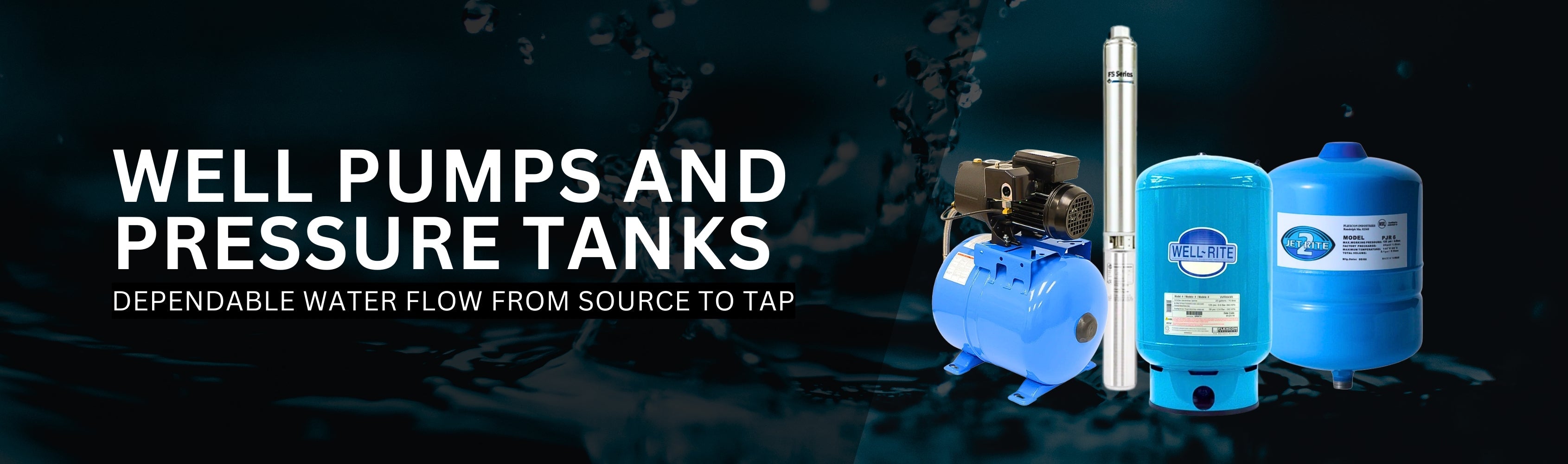

Well Pumps and Pressure Tanks
64 products
Showing 1 - 24 of 64 products


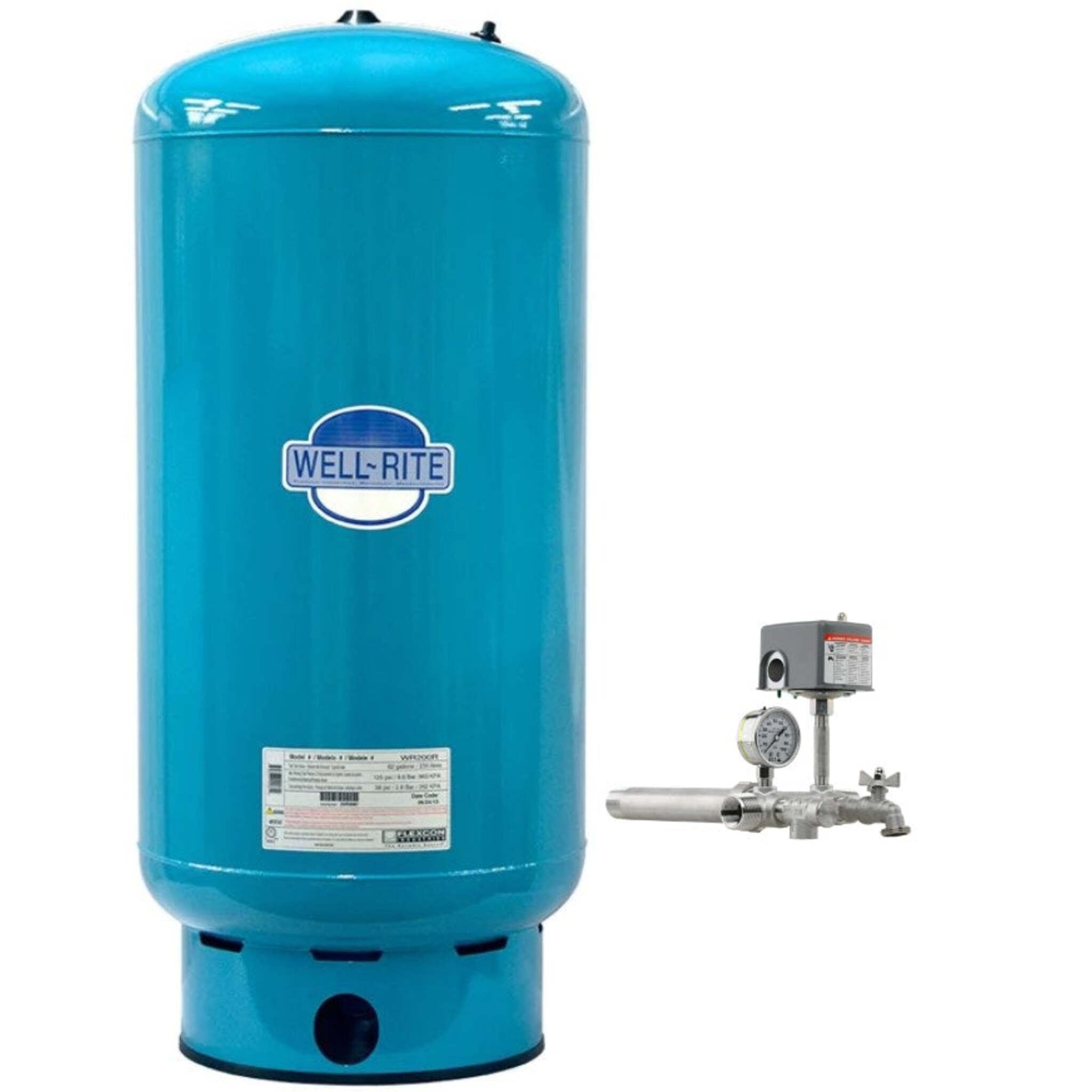
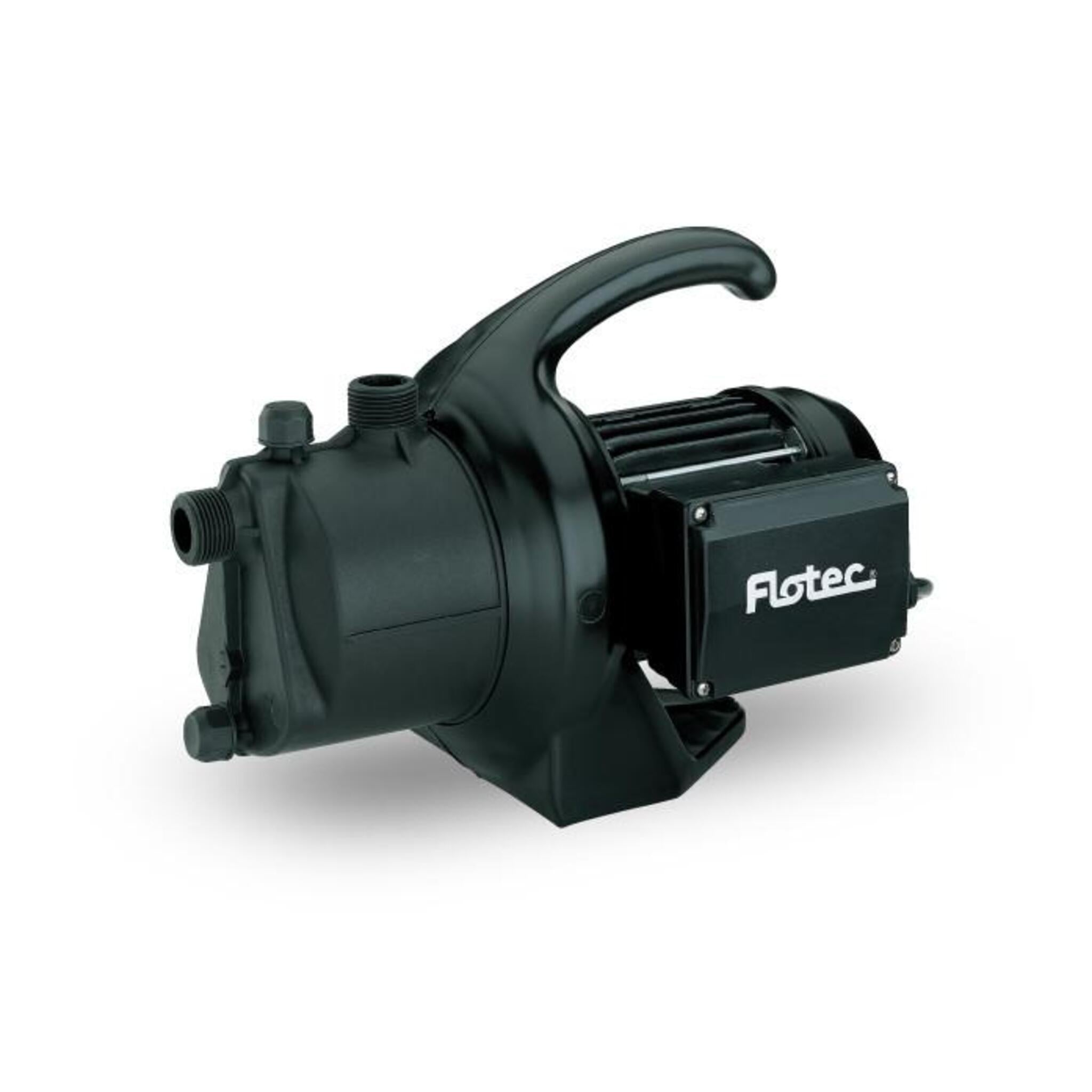


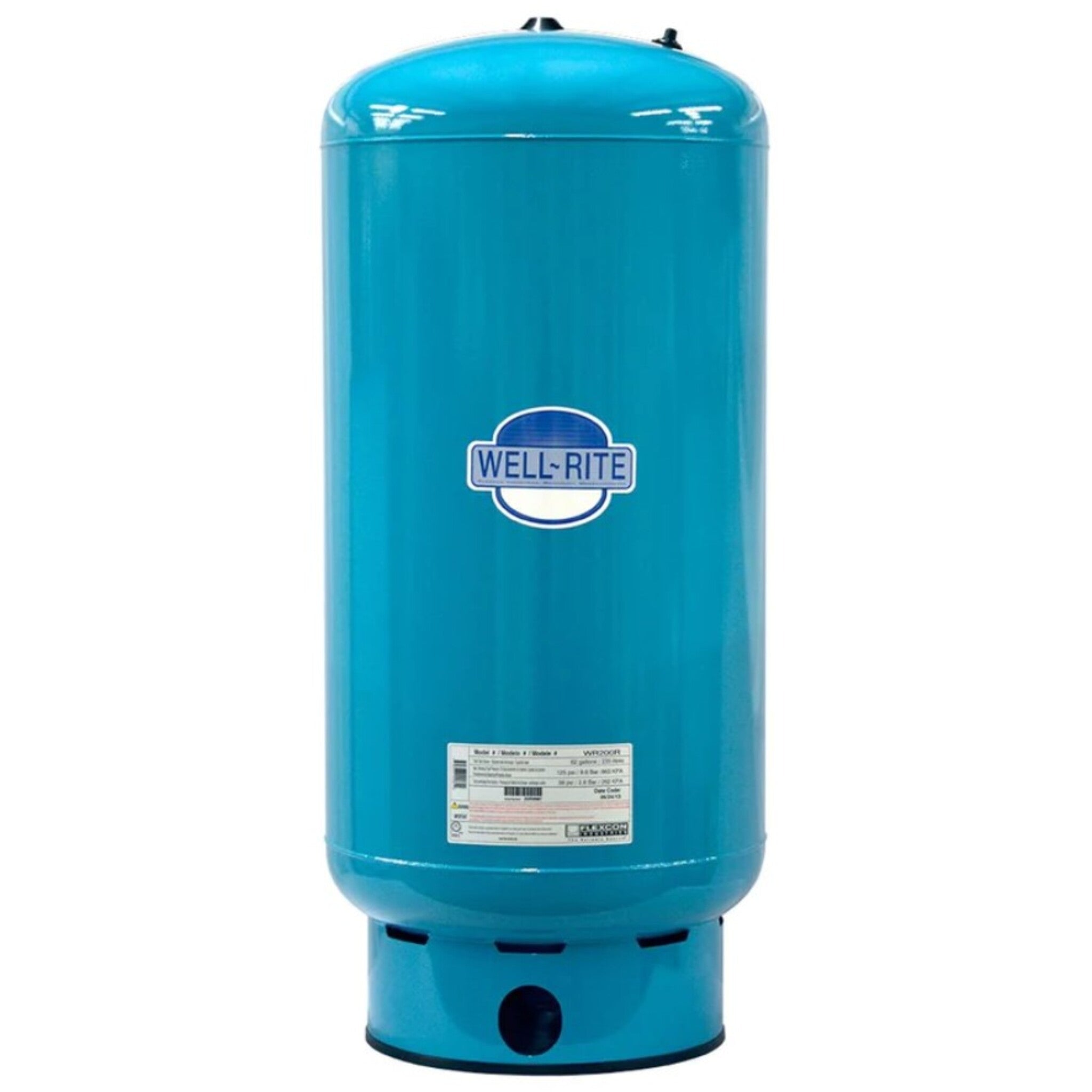
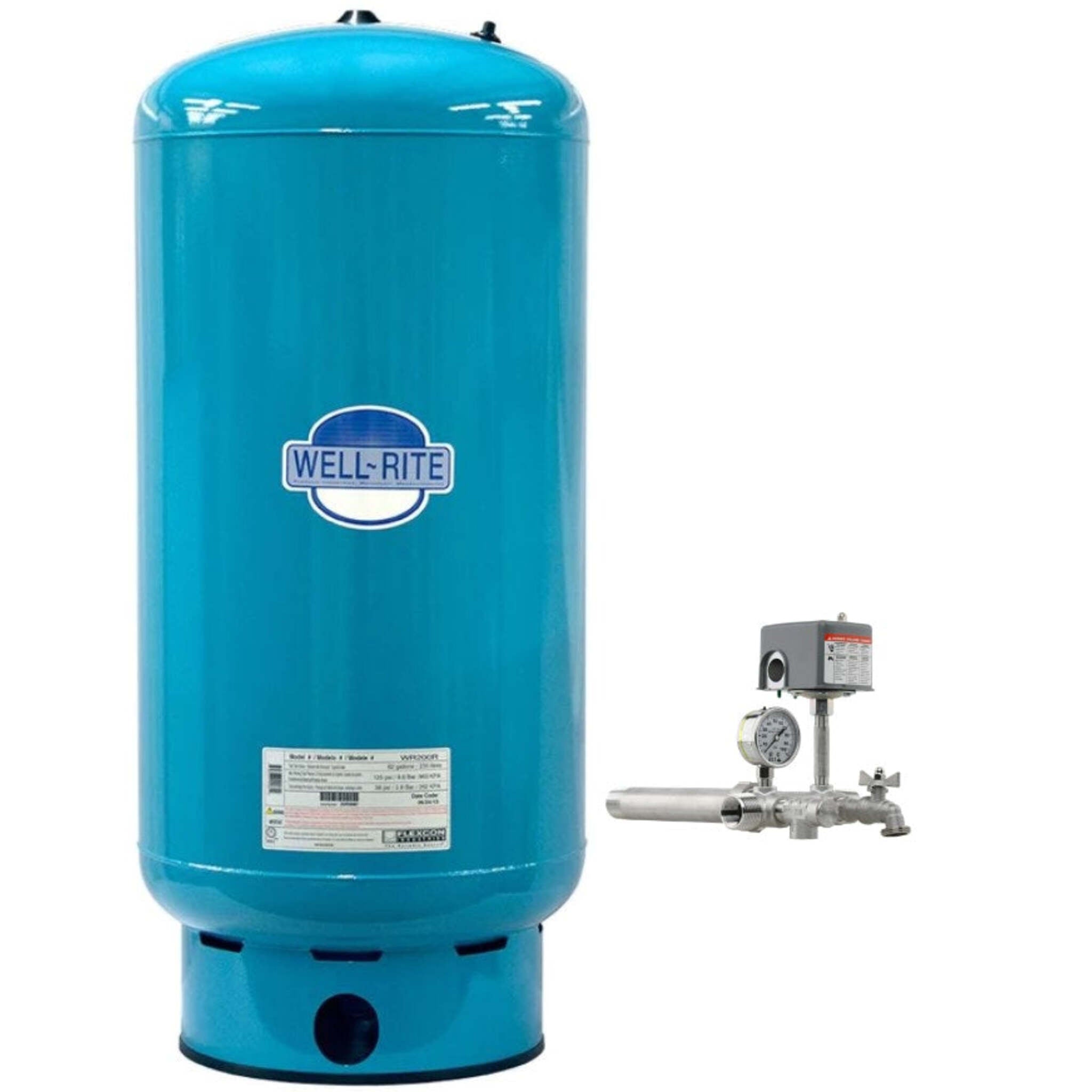






What Are Well Pumps and Pressure Tanks?
Cleanflow stocks a complete range of well pumps, pressure tanks, booster pumps, and well system accessories, everything you need to design, install, or service a well water system. A well pump and pressure tank work together to deliver consistent water pressure: the pump draws water from your well, and the pressure tank stores it under pressure to regulate flow and reduce pump cycling. Booster pumps add pressure for multi-storey buildings, long supply runs, or high-demand applications. Pitless adapters, pressure switches, gauges, and union tank tees complete the system.
Browse in-stock products from Flexcon Well-Rite, Flotec, Franklin Electric, WellMate, Red Lion, and Plumb-Eeze, shipped Canada-wide from our Winnipeg warehouse.
Well Pump
- The well pump is responsible for lifting water from the underground well. It supplies water either directly to the plumbing system or to a pressure tank. Proper sizing based on depth and demand is essential to ensure reliability and efficiency.
Booster Pump
- If the water pressure delivered by the well pump is insufficient, especially in multi-storey buildings, a booster pump is used to increase pressure. It ensures adequate flow across all outlets, particularly on upper floors. Booster pumps are most effective when used in tandem with pressure tanks to prevent constant cycling and premature wear.
Pressure Tank
- A pressure tank stores water under pressure and reduces the frequency of pump activation. This not only extends the lifespan of both the well and booster pumps but also ensures consistent pressure during peak demand. Accessories like pressure switches, gauges, and pitless adapters support optimal system performance and maintenance.
How to Size a Well Pump and Pressure Tank for Your Property
Sizing a well pump and pressure tank correctly matters more than the brand you choose. An undersized system cycles too often (shortening pump life), and an oversized system wastes money. Four variables determine the right setup:
1. Household Demand (peak GPM)
Count fixtures: each bathroom, kitchen sink, washing machine, and outdoor hose bib draws roughly 2-3 GPM at peak. A 3-bedroom, 2-bathroom home typically needs 8-12 GPM at peak demand. Larger properties with multiple bathrooms, irrigation systems, or livestock can need 15-20+ GPM. Match this to the well pump's rated GPM output.
2. Well Depth and Static Water Level
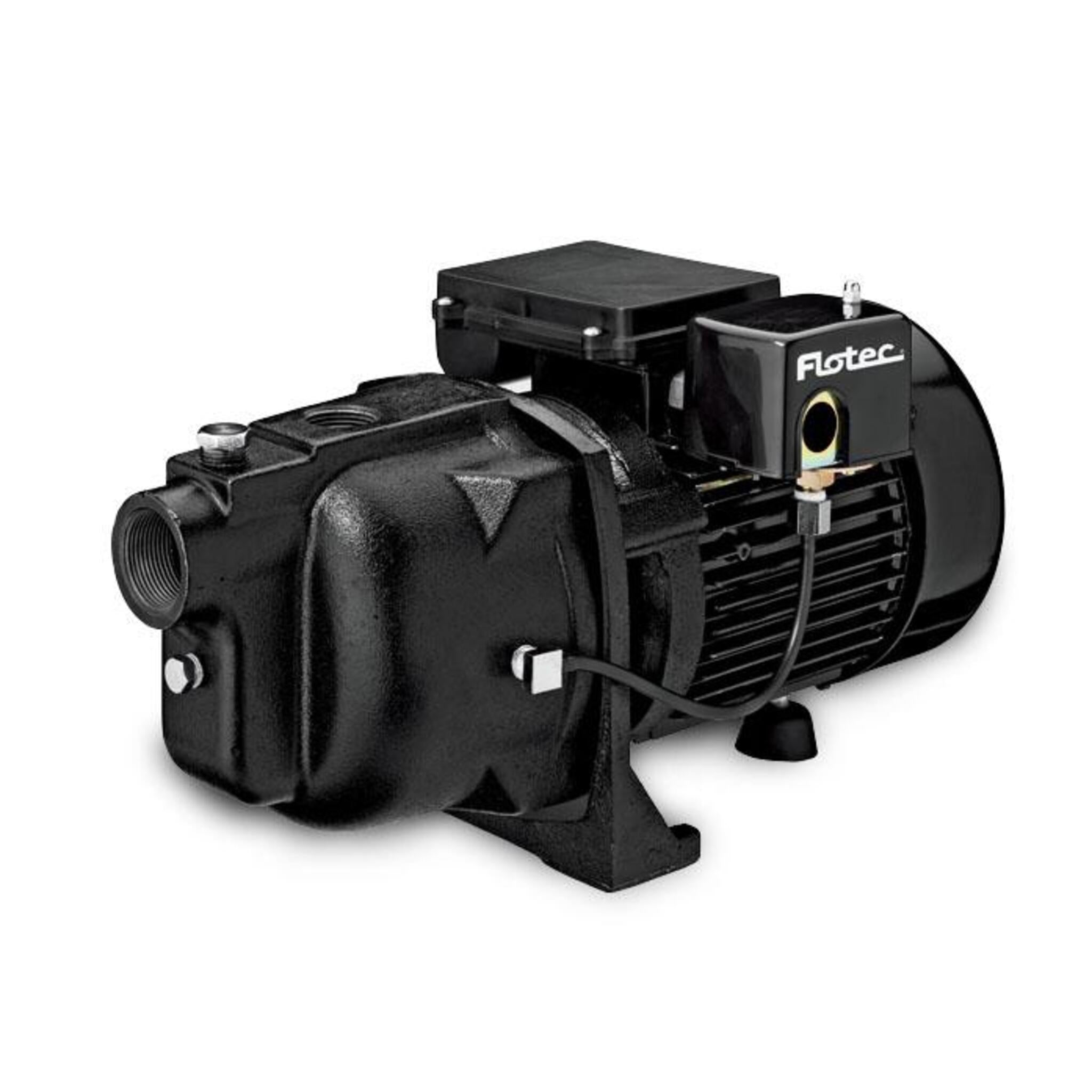
Wells under 25 feet typically use shallow well jet pumps (Flotec FP4105 series, for example). Wells from 25-90 feet often use convertible jet pumps configured for deep-well use. Wells over 90 feet require submersible pumps installed below the water level. Franklin Electric and Flotec submersibles are the dominant options. The well's static water level (depth to the top of the water column) determines submersion requirements.
3. Pressure Tank Capacity (drawdown gallons)
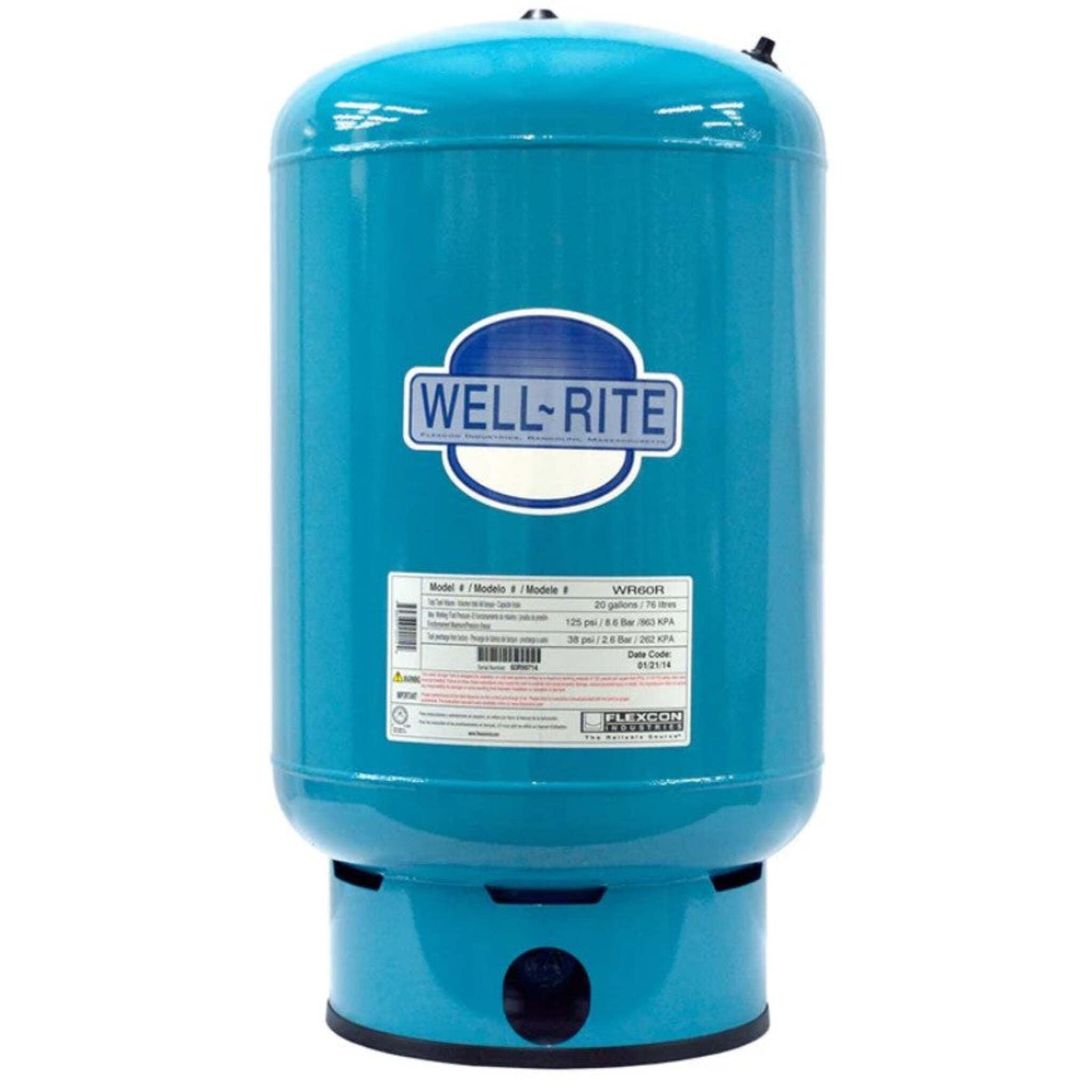
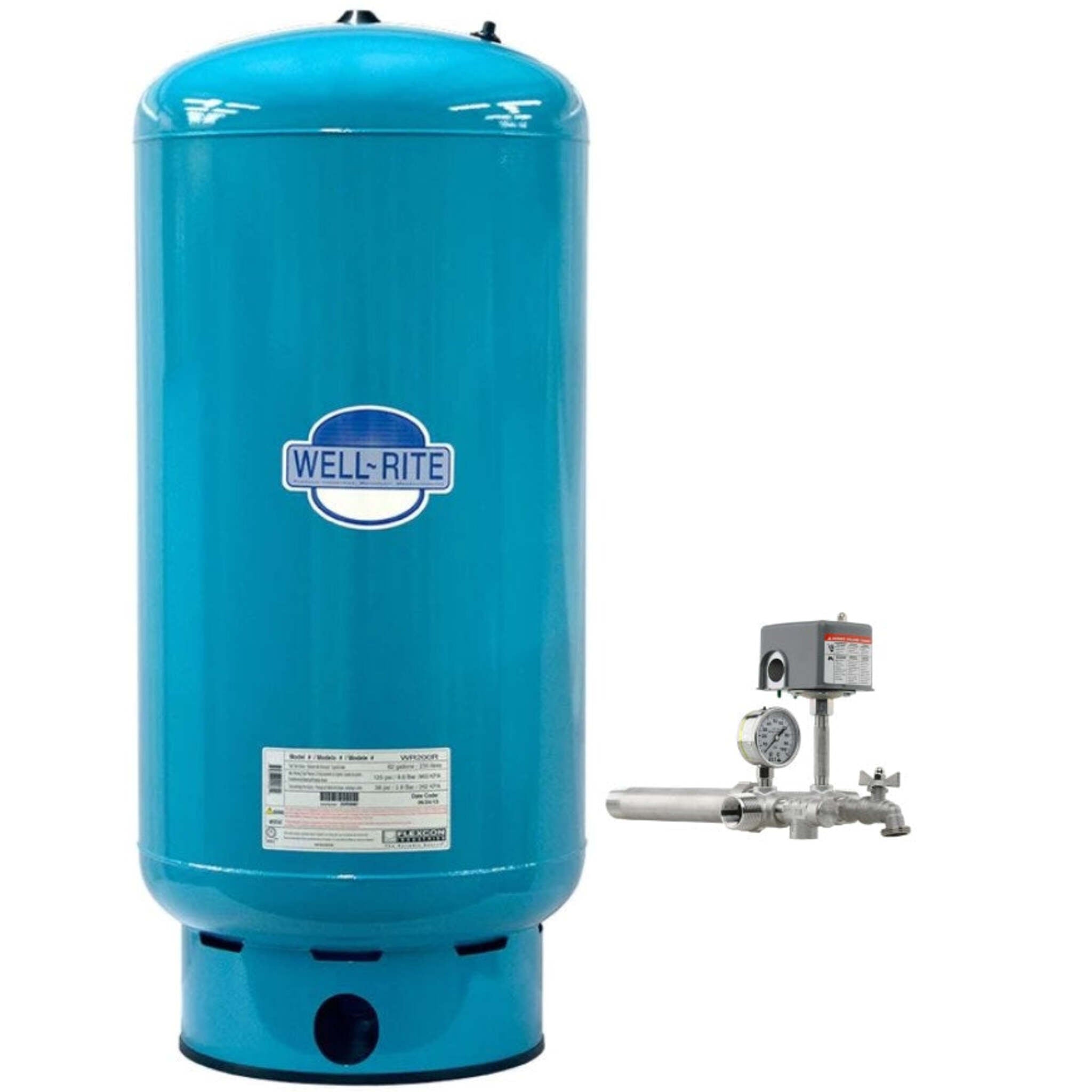
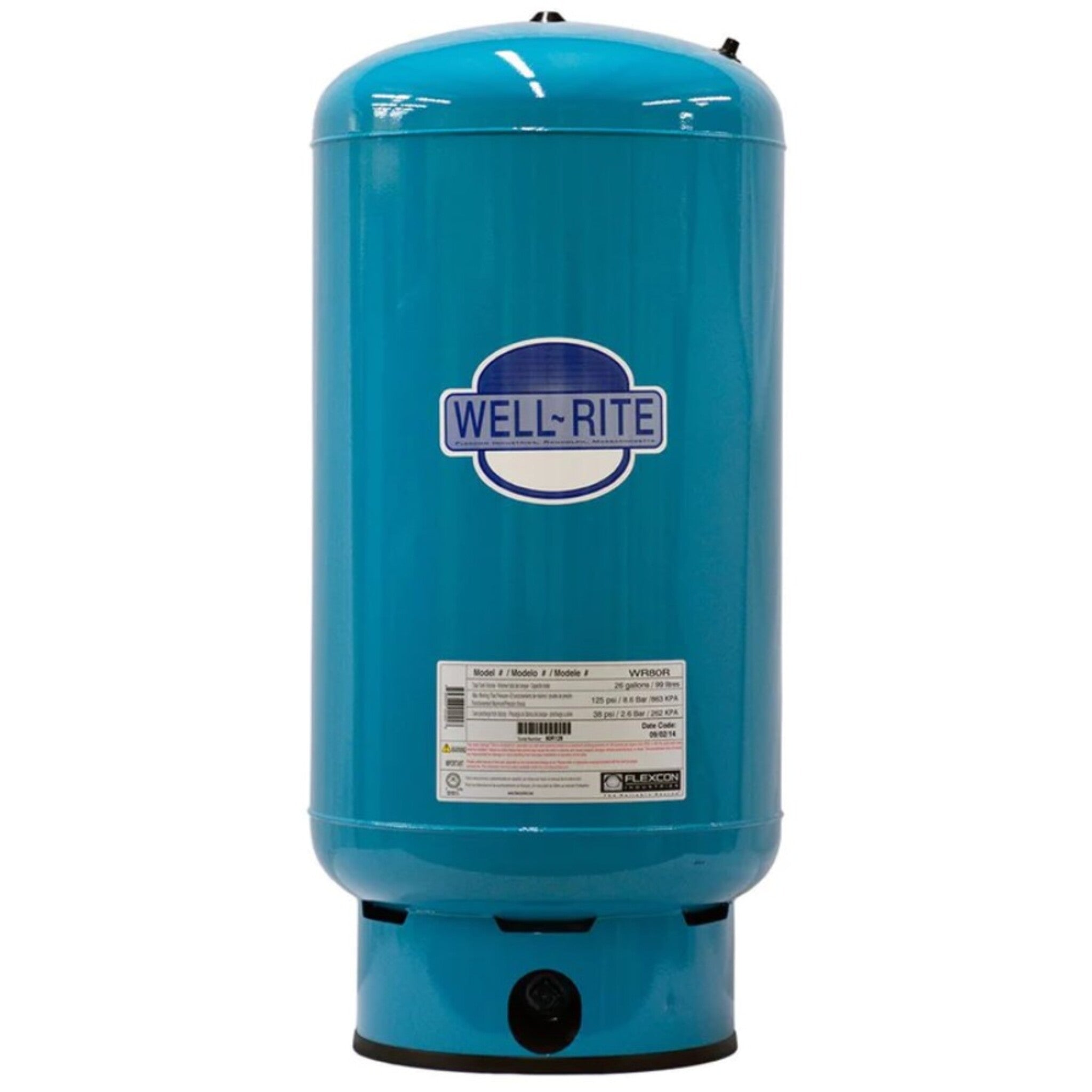
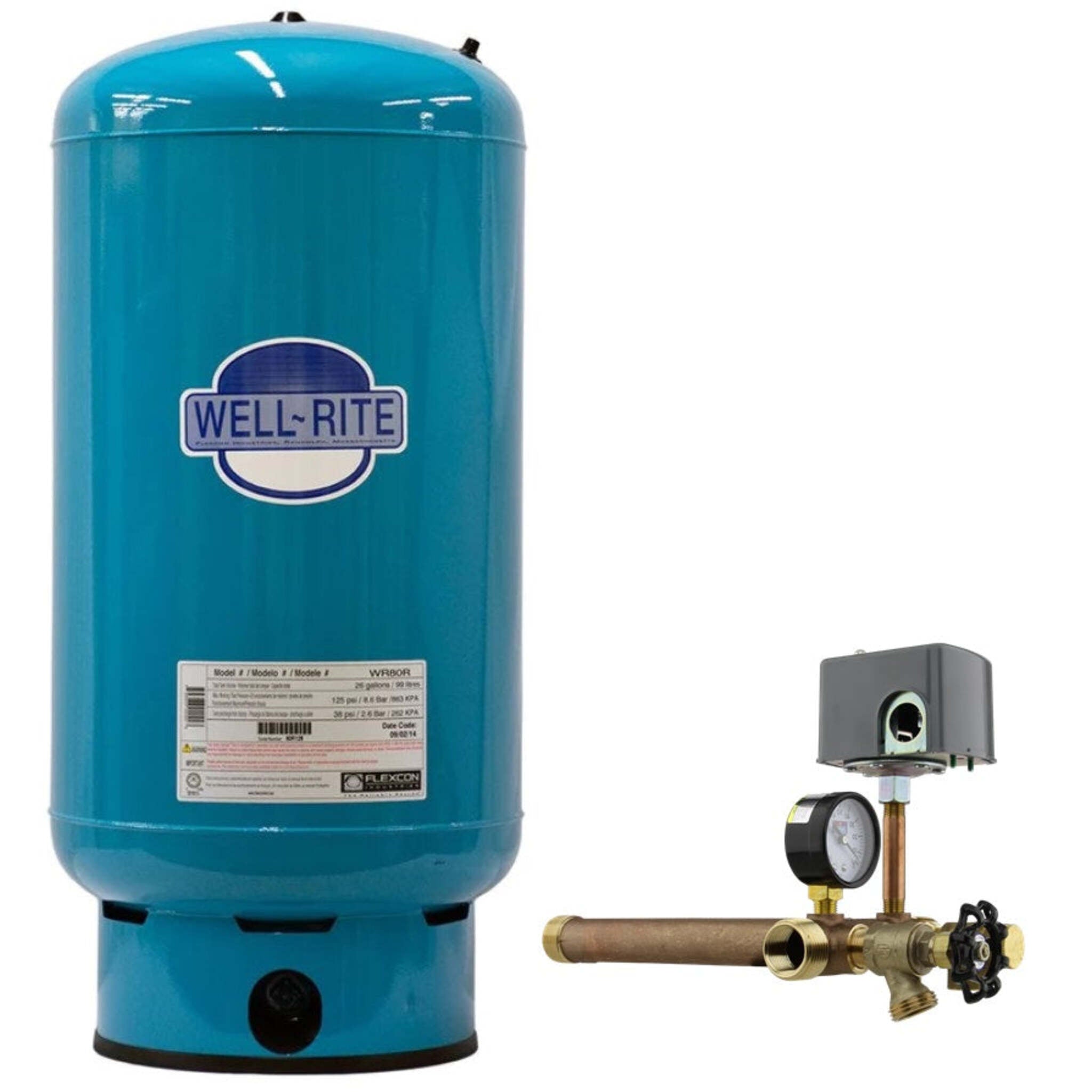
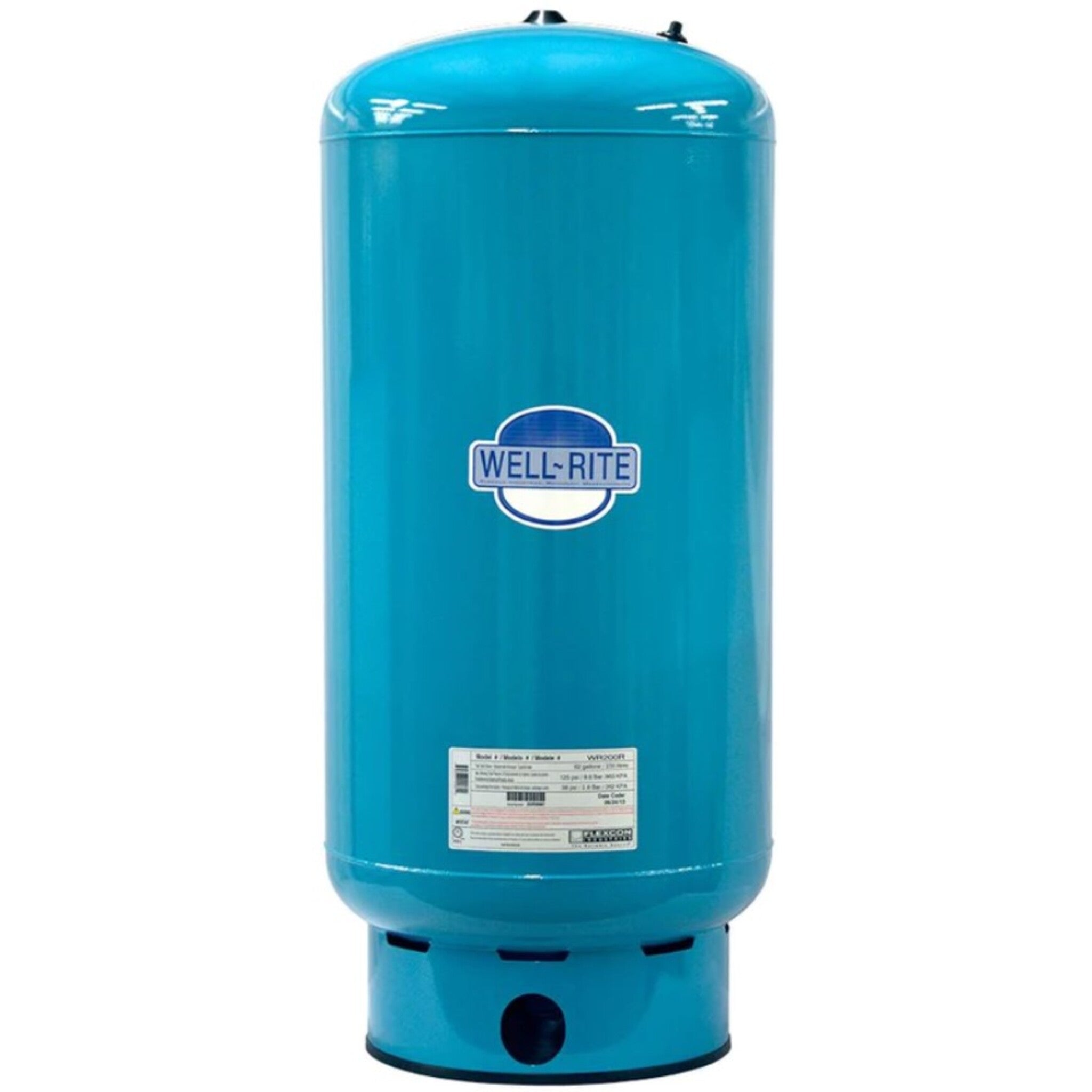
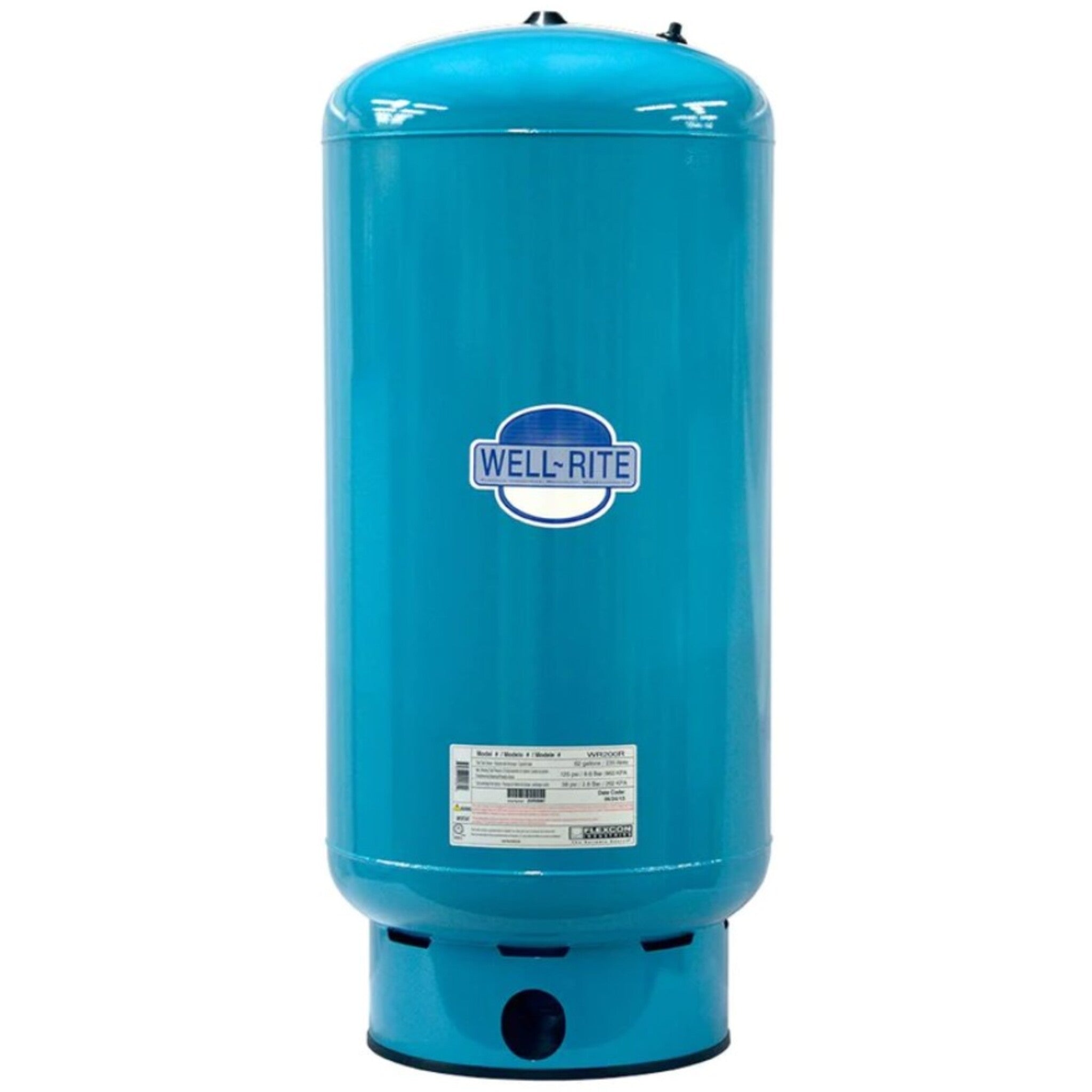
Pressure tank capacity is rated by total volume, but the working capacity, the drawdown, is what matters. A 20-gallon tank typically delivers 5-7 gallons of drawdown between pump cycles. For a 10 GPM pump, you want 1 gallon of drawdown per GPM minimum (so 10+ gallons of drawdown, ~30 gallon tank). The Flexcon Well-Rite WR-60R (20 gal) suits typical 3-bedroom homes; the WR-140R (44 gal) covers larger households or higher-demand systems.
4. Pressure Switch Settings
Most residential systems use a 30/50 PSI switch (pump turns on at 30 PSI, off at 50). Higher-pressure setups (40/60 or 50/70 PSI) suit multi-storey homes or longer plumbing runs. The pressure tank's pre-charge pressure must match the switch's cut-in setting, minus 2 PSI.
Need help sizing for your specific well, household, or system requirements? Contact our team. We'll work through the variables with you and confirm the right pump-tank-switch combination before you order.
How to Drain a Pressure Tank
Draining a pressure tank is a routine maintenance task done before checking the air pre-charge, replacing a faulty bladder, or winterizing a well system. Here's the safe procedure for a typical pre-charged residential pressure tank:
Step 1: Turn off the power to the well pump
Switch off the breaker that powers the well pump at your main electrical panel. Do not skip this step. Running the pump against a closed system or empty tank can damage the motor.
Step 2: Close the supply valve from the pump
Locate the shutoff valve between the pump and the pressure tank, and close it. This isolates the tank from the well system.
Step 3: Open a fixture or the tank's drain valve to relieve pressure
Open the nearest hot or cold water fixture (a hose bib works well) and let the system drain. The pressure gauge on the tank should drop to 0 PSI. If your tank has a dedicated drain port, open it as well. Most pressure tanks have a hose bib threaded fitting at the base.
Step 4: Check the air pre-charge with a tire gauge
With the tank fully drained and at 0 PSI water pressure, remove the cap on the air valve at the top of the tank (it looks like a tire valve). Use a tire pressure gauge to read the air pre-charge. The reading should be 2 PSI below your pressure switch's cut-in setting for a 30/50 PSI switch; the pre-charge should read 28 PSI.
Step 5: Adjust pre-charge if needed, then refill
If the pre-charge is low, add air with a bicycle pump or compressor. If high, release air with the valve. Once correct, close the drain valve, close any open fixtures, restore power to the pump, and re-open the supply valve. The tank will refill and pressurize automatically.
If the tank won't hold pre-charge pressure, the bladder or diaphragm has likely failed, and the tank needs replacement. Cleanflow stocks Flexcon Well-Rite, Flotec, Franklin Electric, and WellMate replacement tanks in sizes from 2 to 119 gallons. For waterlogged or chronically-cycling systems, contact our team. We'll diagnose whether you need a new tank, a new pressure switch, or a system rebuild.
Top Well Pump and Pressure Tank Brands at Cleanflow
Cleanflow stocks major well-system brands across in-stock products. Each brand specializes in a different part of the system. Here are the top picks from each:
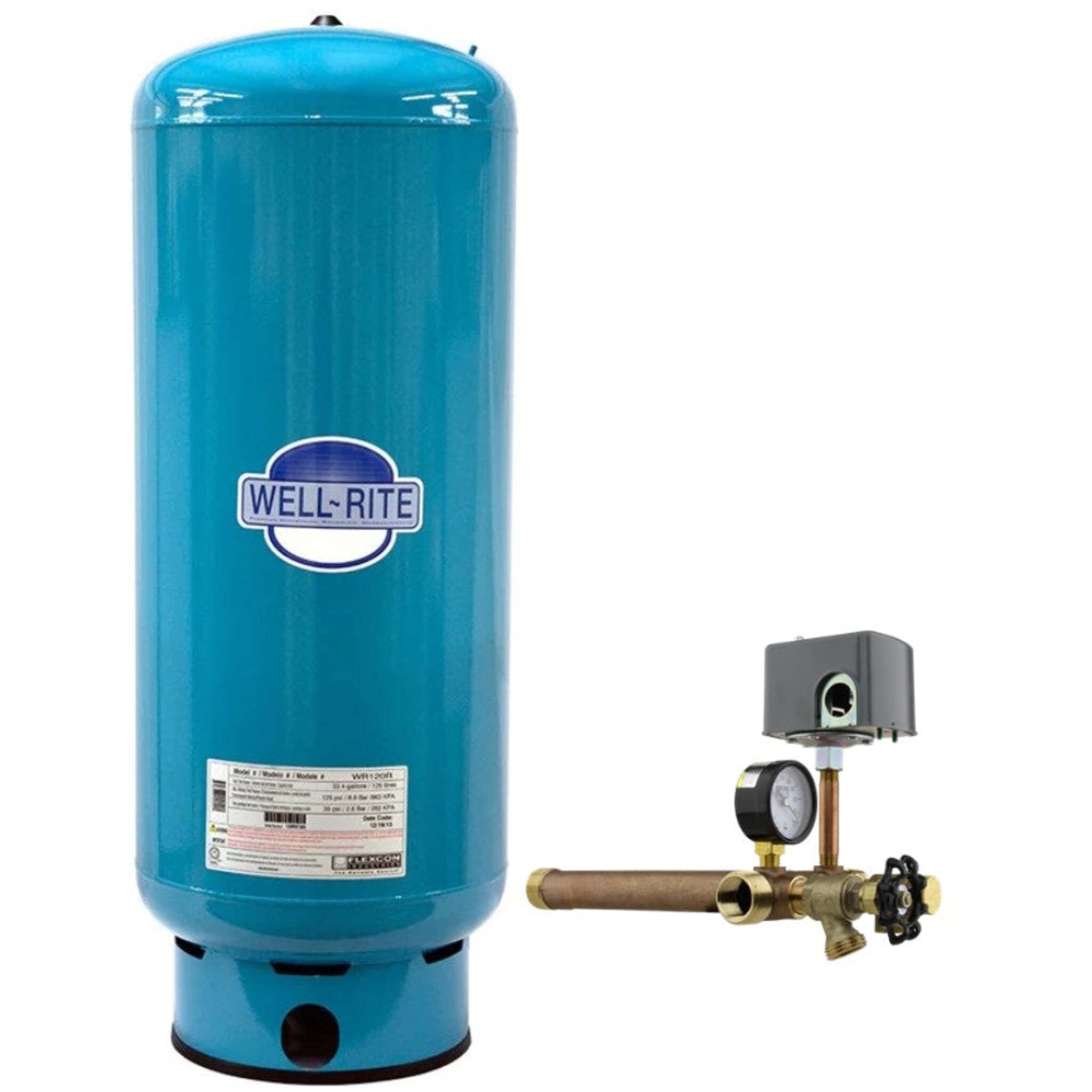
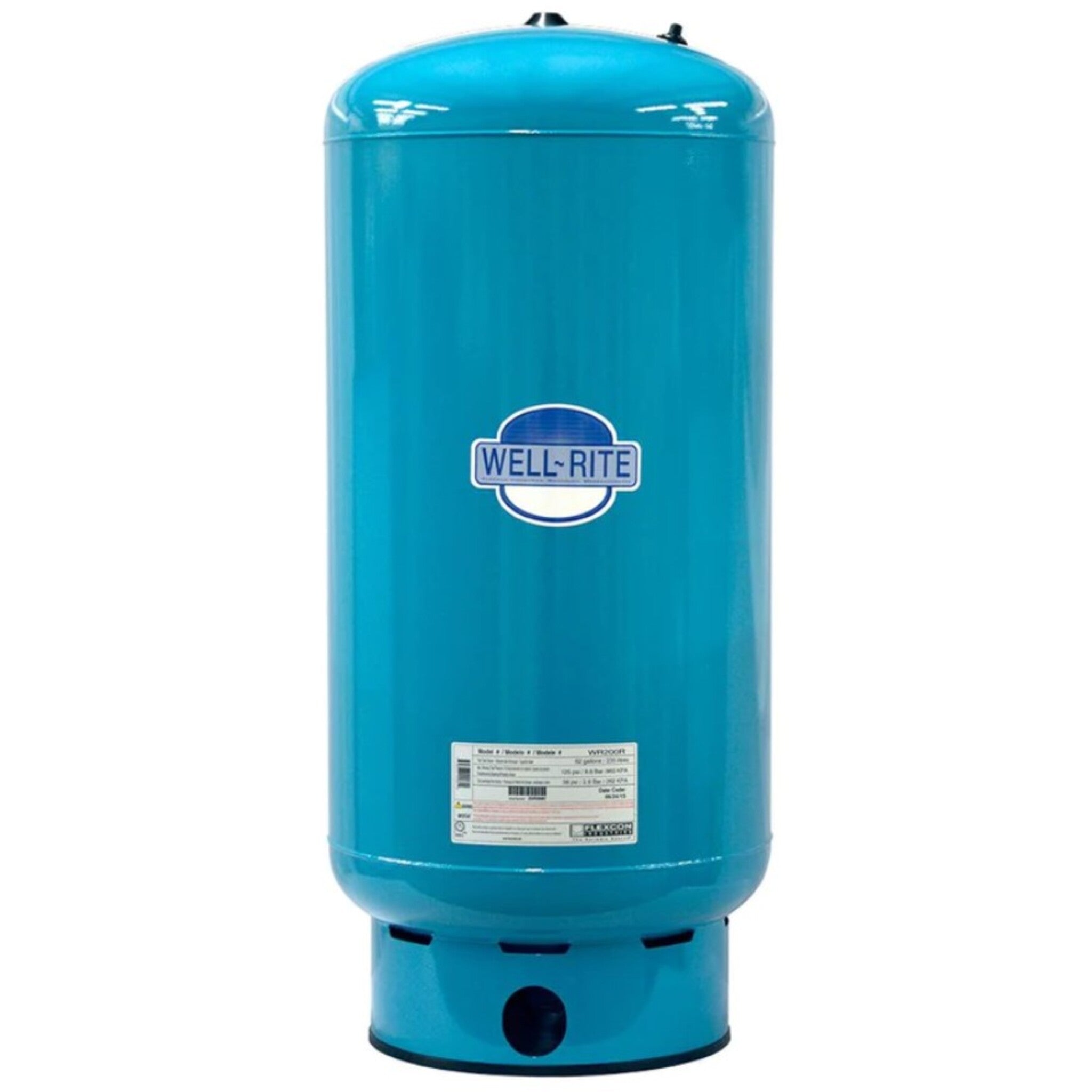
Flexcon Well-Rite - Canadian Market Leader for Pressure Tanks
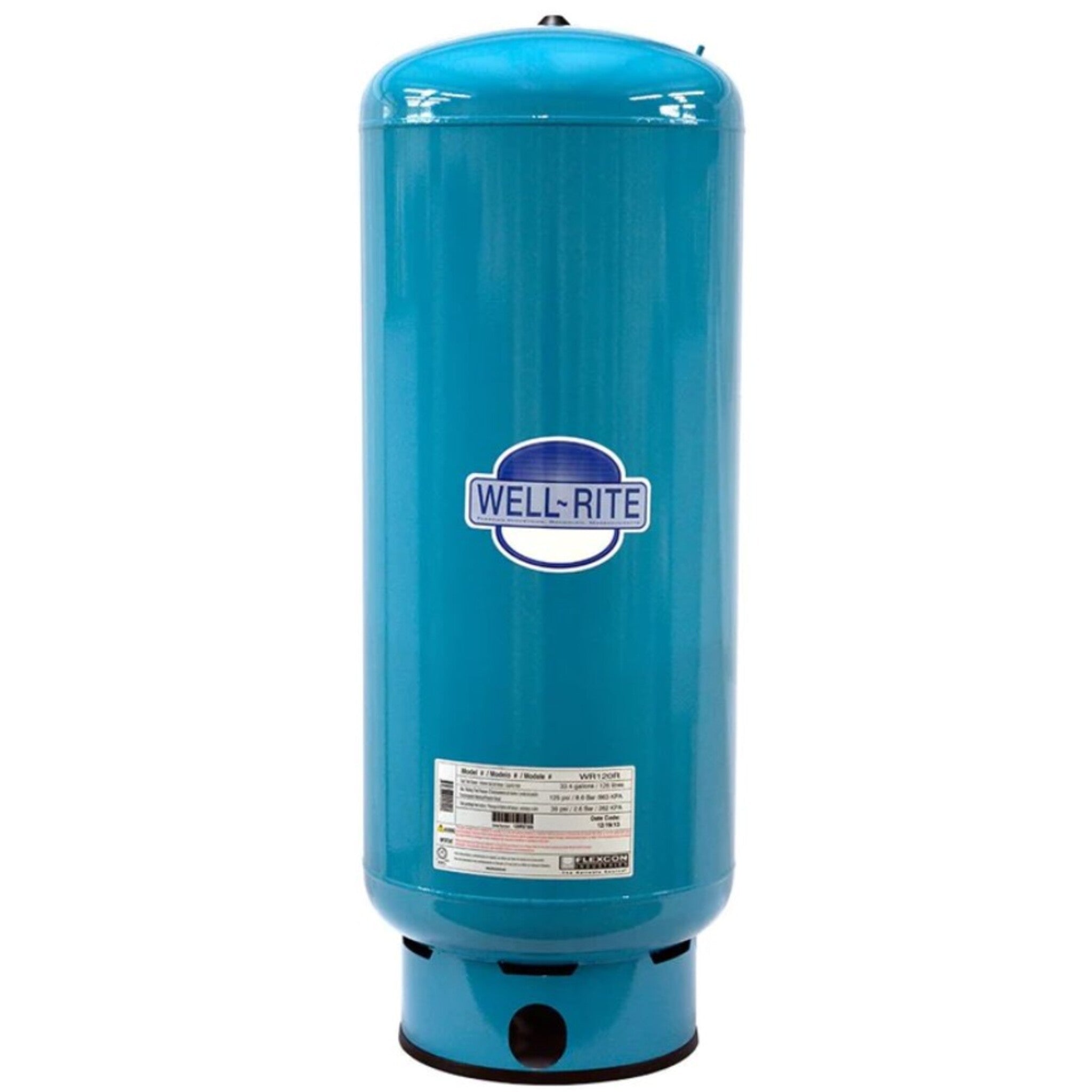
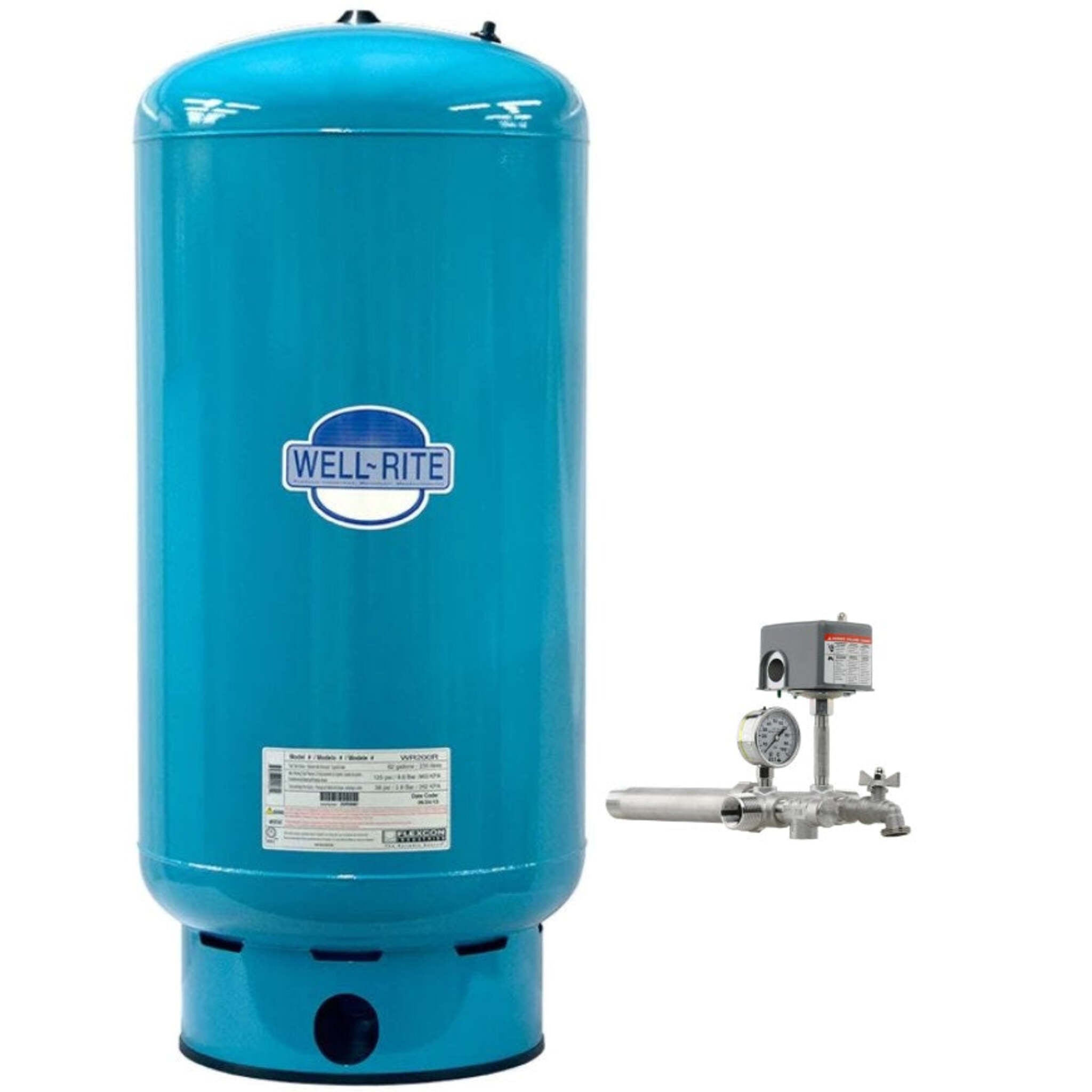
Flexcon Industries is the Canadian market leader for residential pressure tanks. Every Well-Rite tank uses its patented CAD-2 controlled-action diaphragm technology and is rated for 125 PSI working pressure with NSF/ANSI 61 and 372 certification.
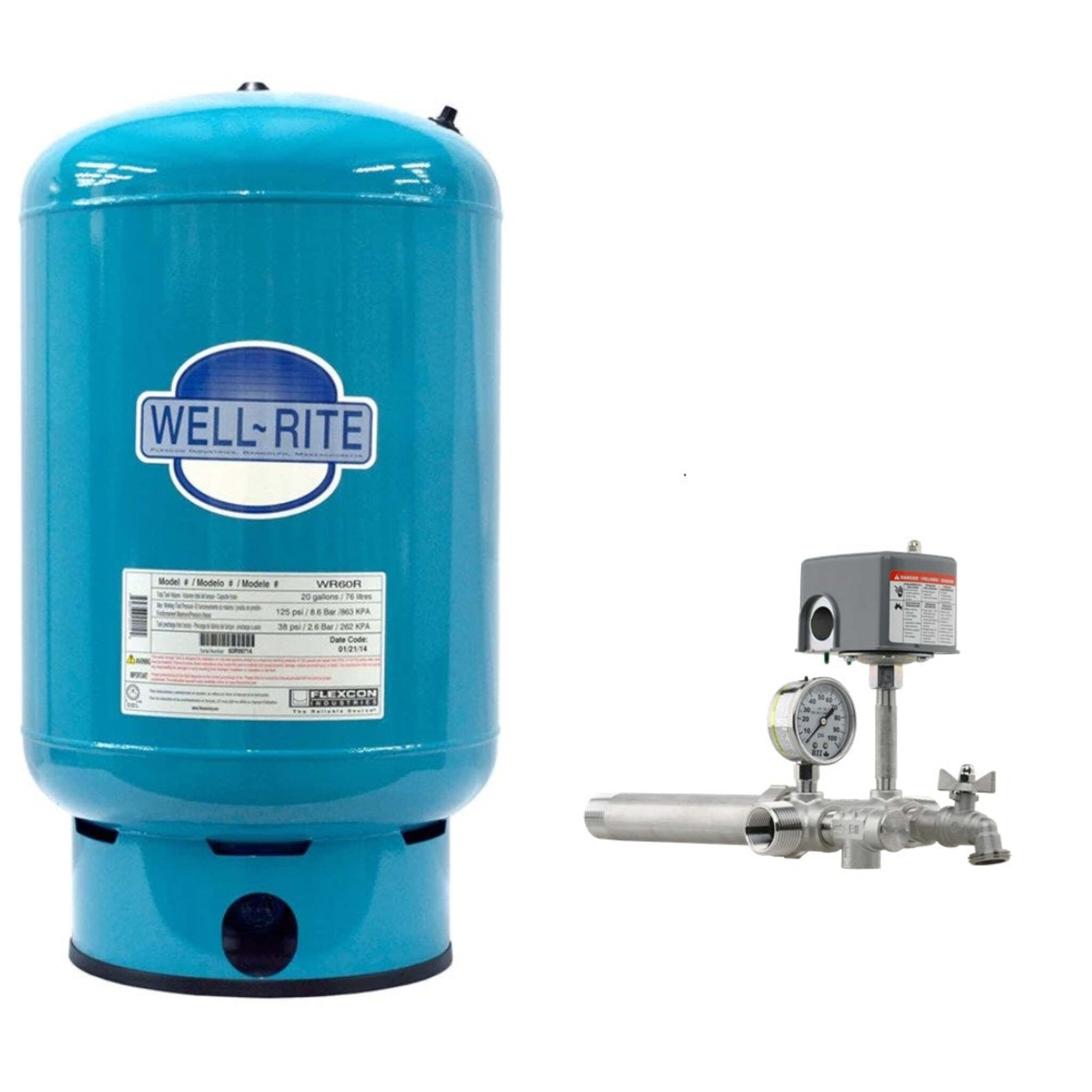
- Flexcon WR-60R Well-Rite (20 Gallon, 1" NPT) — the standard pick for 3-bedroom homes with 7-10 GPM pumps.
- Flexcon Well-Rite WR-140R (44 Gallon, 1-1/4" NPT) — covers larger households or systems running 10-15 GPM.
- Flexcon Well-Rite WR-360R (119 Gallon, 1-1/4" NPT) — built for farms, acreages, and high-demand commercial systems.
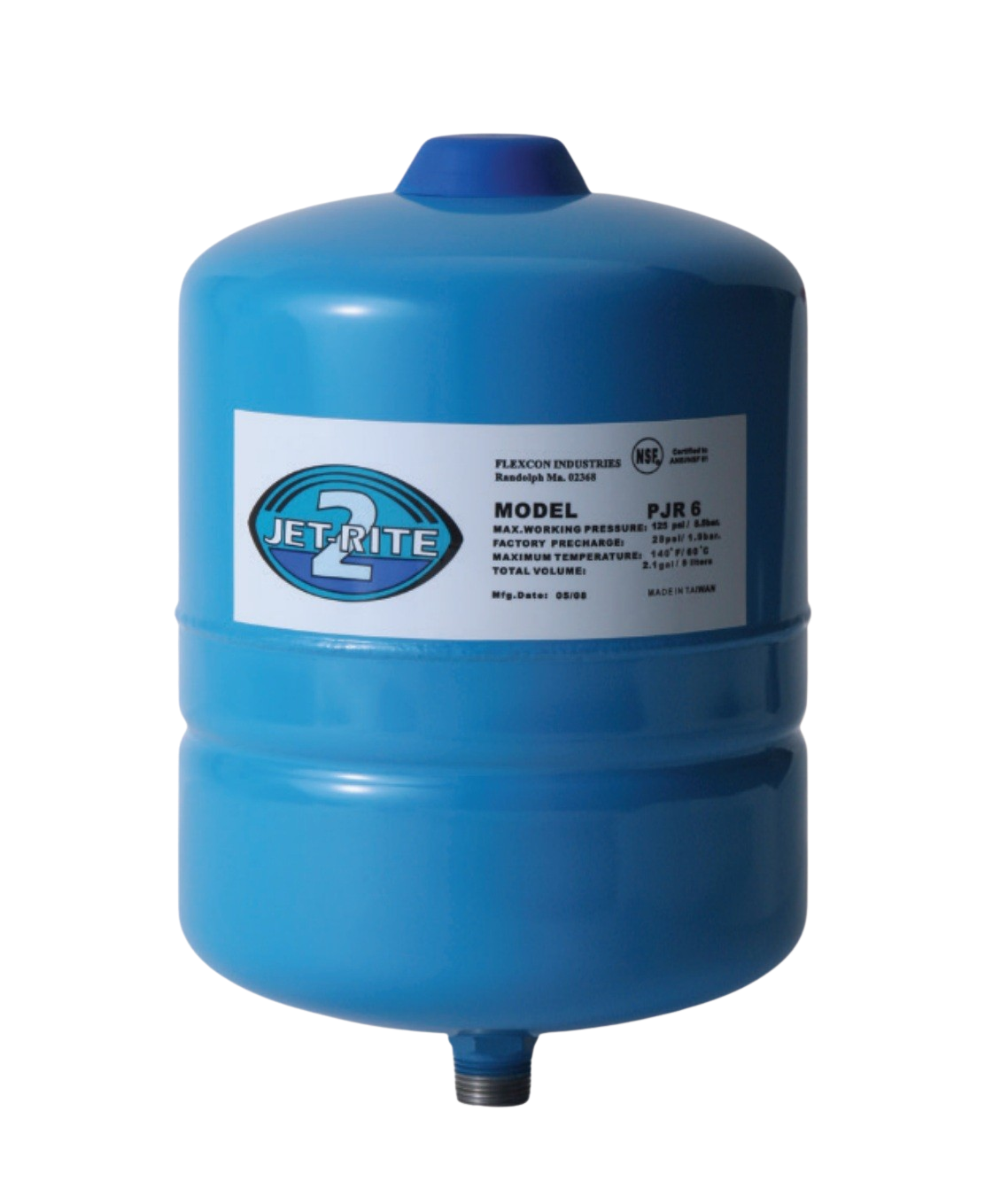
Browse the full Flexcon collection at Cleanflow for additional sizes (WR-80R 26 gal, WR-120R 33 gal, WR-200R 62 gal, WR-240R 81 gal, WR-260R 85 gal) and the inline Jet-Rite booster series.
Flotec — Pentair-Backed Residential Pump Range
Flotec is one of North America's most widely-stocked residential pump brands, part of the Pentair family of water-management products. Cleanflow stocks 11 Flotec products covering jet pumps, booster pumps, and complete pump-and-tank systems.
- Flotec FP410515H 1/2 HP Cast Iron Shallow Well Jet Pump/Tank System — complete drop-in solution for shallow wells under 25 feet, includes pump and tank.
- Flotec FP5712 1/2 HP MultiStage Booster Pump (13 GPM) — boosts low pressure for multi-storey homes and long supply runs.
- Flotec FP5722 3/4 HP Multistage Booster Pump (13 GPM at 150 PSI) — higher-capacity booster for high-demand applications.
Browse the full Flotec collection at Cleanflow for the FP5112 portable utility pump, the cast iron shallow well jet pump line, and Flotec accessory parts.
Franklin Electric — The Original Submersible Motor
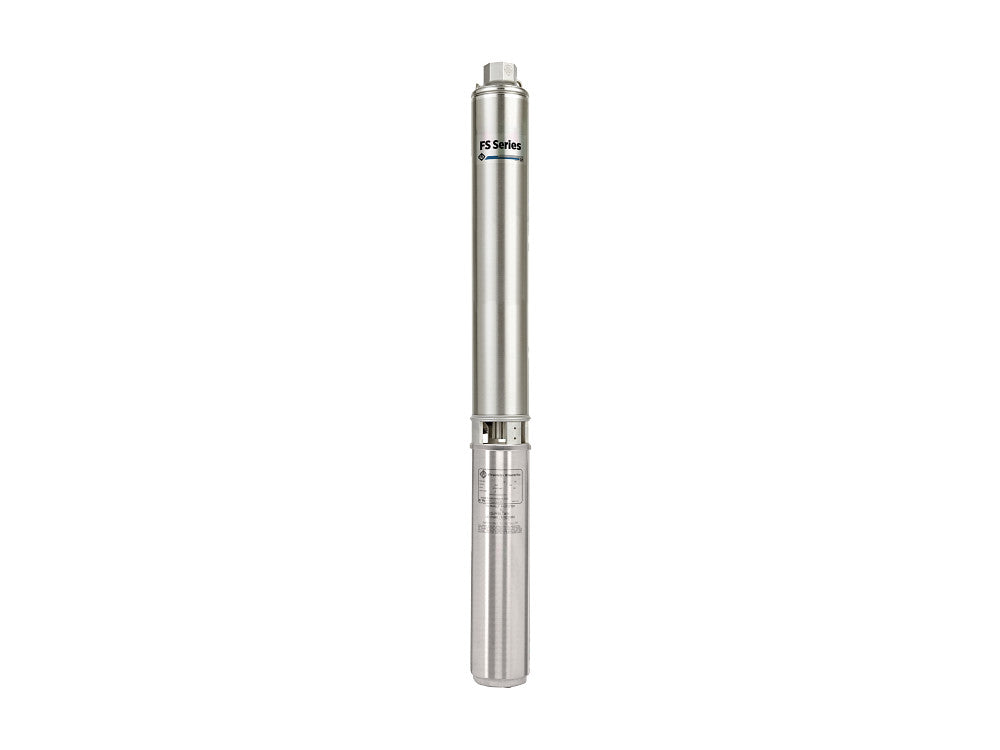
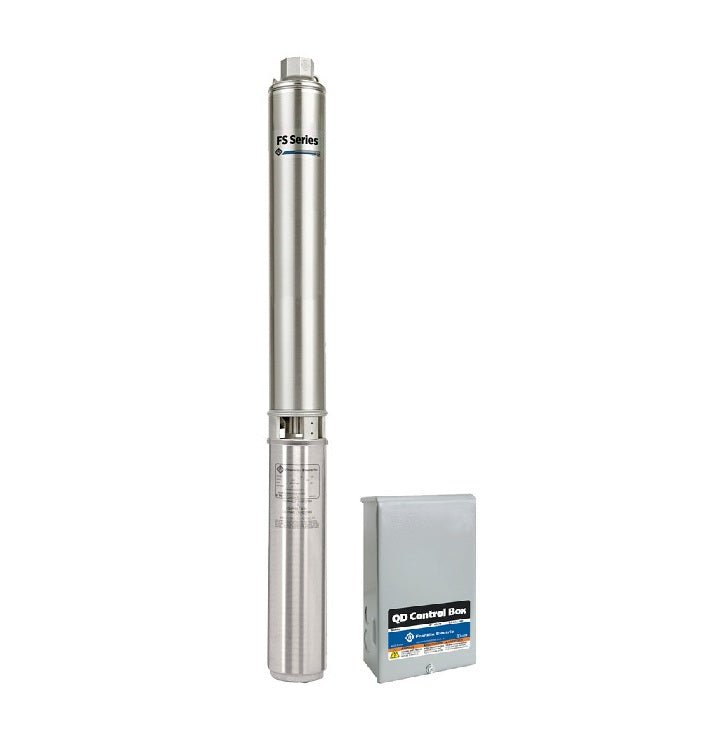
Franklin Electric invented the modern submersible motor in 1950 and remains the global leader in submersible pump technology. The FS Series is their flagship line of 4-inch stainless steel submersibles with floating stage hydraulics, NSF 61 certified for potable water, and built-in check valves.
- Franklin Electric FS Series 1/2 HP Submersible Well Pump (10 GPM, 230V, 3-wire) for smaller homes and cottages with moderate water needs.
- Franklin Electric FS Series 3/4 HP Submersible Well Pump (10 GPM, 230V) the standard residential choice for 3-bedroom homes on deep wells.
- Franklin Electric FS Series 1.5 HP Submersible Well Pump (10 GPM, 230V) for deep wells, high-demand households, or light agricultural use.
Browse the full Franklin Electric collection at Cleanflow for the 1 HP FS Series, control boxes (required for 3-wire pumps), and the complete range of Franklin submersible accessories.
WellMate — Composite Pressure Tanks That Won't Rust
WellMate composite pressure tanks are the choice when corrosion is a concern. The fiberglass-wrapped, blow-molded construction eliminates the rust failures that affect steel tanks in coastal, agricultural, or aggressive-water environments. Lighter weight also makes them quicker and less costly to install.
- WellMate WM-6 Composite Pressure Tank (19.6 Gallon, 1" NPT, 125 PSI) — entry-size composite tank for smaller residential systems.
- WellMate WM-12 Composite Pressure Tank (40.3 Gallon, 1" NPT, 125 PSI) — mid-size standard for typical 3-bedroom homes. WellMate WM-25WB Composite Pressure Tank (86 Gallon, 1-1/4" MNPT, 125 PSI) — large-capacity composite tank for farms and high-demand systems.
Browse the full WellMate collection at Cleanflow for the WM-9 (29.5 gal), WM-14WB (47 gal), and additional composite tank sizes — all with NSF/ANSI 61 listing and 5-year limited warranty.
Plumb-Eeze — Installation Kits, Pitless Adapters, and System Accessories
Plumb-Eeze is Cleanflow's most-stocked accessory brand for well systems with 19 SKUs covering installation kits, pitless adapters, foot valves, check valves, union tank tees, and cable splice kits. Most products feature 304 stainless steel construction or lead-free brass with NSF/ANSI certifications for potable water systems.
- 304 Stainless Steel Pressure Tank Installation Kit (Lead-Free, 30-50 PSI Switch, 75 PSI Relief Valve, 1" or 1¼" MPT), complete installation kit including union, gauge, and hose bib.
- Stainless Steel Pitless Adapters (NSF/ANSI 371 Certified, up to 6000 lbs Load Capacity) — frost-proof well-casing connection for above- and below-grade transitions.
- 304 Stainless Steel Union Tank Tees (Lead-Free, Replacement for Pre-Charged Pressure Tanks) — corrosion-resistant union tee for tank installations and replacements.
Browse the full Plumb-Eeze collection at Cleanflow for foot valves (PVC and stainless), check valves, pressure tank relief valves, sub-well pump heat-shrink cable splice kits, and the lead-free brass installation kit option.
Red Lion — Budget-Friendly Residential Pressure Tanks
Red Lion pressure tanks offer budget-friendly residential options with patented Leak Safe Technology, 20-gauge steel construction, and NSF/ANSI/CAN 61 certification. The Leak Safe polypropylene liner provides clean-water protection and an extended residential warranty.
- Red Lion RL20A Pre-Charged 21-Gallon Pressure Tank — for residential systems with up to 6 fixtures and 7 GPM output.
- Red Lion RL34A 34-Gallon Pressure Tank with Leak Safe Technology — for systems with 10-13 fixtures and 12-15 GPM output.
- Red Lion RL44A 44-Gallon Pressure Tank with Leak Safe Technology — for systems with up to 14 fixtures and 15-20 GPM output.
Choosing the Right Brand for Your Well System
Cleanflow stocks five major well-system brands. Each has a strength worth knowing before you buy:
| Brand | Strength |
|---|---|
| Flexcon Well-Rite | Canadian market leader for pressure tanks; CAD-2 diaphragm technology since the late 1980s |
| Flotec (Pentair) | Most widely-stocked retail pump brand in North America; complete jet/booster/submersible range |
| Franklin Electric | Invented the modern submersible motor in 1950; global leader in submersible technology |
| WellMate | Composite (fiberglass-wrapped) pressure tanks — corrosion-immune, lighter weight |
| Red Lion | Patented Leak Safe Technology; budget-friendly with a strong residential warranty |
Most well-system installers pair brands rather than building a single-brand system: a Flexcon Well-Rite pressure tank with a Flotec or Franklin Electric pump is the most common North American configuration. Cleanflow's accessory inventory, Plumb-Eeze pitless adapters, pressure switches, foot valves, and union tank tees, is brand-agnostic and works across the major pump-and-tank combinations.
Not sure which brand fits your install? Contact our team with your well depth, household demand, and existing system details, and we'll recommend a configuration that fits your budget and service-life expectations.
How long do well pumps and pressure tanks typically last?
Well pumps and pressure tanks typically last 10–25 years, depending on maintenance, usage, and water quality.
Can well pumps and pressure tanks be installed in any well?
Yes, but the system type must suit the well’s depth and flow rate. A professional assessment is recommended to ensure proper sizing and performance.
Are well pumps and pressure tanks energy-efficient?
Yes. When properly sized and maintained, well pumps and pressure tanks are energy-efficient. Variable Frequency Drive (VFD) systems can further improve efficiency.
Can well pumps and pressure tanks handle high water demand?
Yes. As long as the system is correctly sized for your household or property’s water usage, it can handle high demand reliably.
Can well pumps and pressure tanks work with water treatment systems?
Absolutely. Well pumps and pressure tanks integrate seamlessly with filtration, softening, and water purification systems for complete water solutions.
What size pressure tank do I need for my well system?
As a general rule, choose 1 gallon of drawdown capacity per GPM of pump output. Most 10 GPM residential pumps pair well with a 30-44 gallon tank. Drawdown is typically 25-30% of total tank volume, so a 20-gallon tank delivers about 5-7 gallons of working capacity. For specific recommendations, contact our team with your pump GPM and household demand.
What's the difference between Flexcon, Flotec, and Franklin Electric pumps and tanks?
Flexcon Well-Rite is the Canadian market leader for pressure tanks. Flotec (a Pentair brand) covers residential jet, booster, and submersible pumps. Franklin Electric invented the modern submersible motor in 1950 and is the standard for deep-well applications over 90 feet.
Can I install a well pump and pressure tank myself, or do I need a licensed professional?
Pressure tank replacement is generally DIY-feasible on an existing system. Well pump replacement is more complex: submersible pump replacement typically requires a licensed well contractor with pulling equipment, since the existing pump must be lifted from 100+ feet of well casing. Send us a photo of your setup if you're unsure. We'll tell you honestly whether the job is DIY-feasible.